

Engineering
Sub-15ms LLM Gateway Routing with Warm HTTP/2 Pools
How connection pooling, in-memory preflight gating, and multiplexed HTTP/2 streams eliminate cold TCP/TLS handshakes and keep routing overhead under 15ms.
nRouter team
12 minRead →An enterprise LLM gateway serves as the mission-critical reverse proxy between client applications and downstream foundation model providers. As generative AI shifts from exploratory prototypes to production-critical user-facing applications, proxy latency, connection reliability, protocol translation, and request validation dictate overall system viability. A modern LLM gateway must sustain tens of thousands of concurrent streaming connections while maintaining sub-5ms proxy overhead.
Traditional Python or Node.js proxies introduce significant garbage collection pauses, serialization bottlenecks, and event loop delays. At enterprise scale, added proxy latency degrades real-time streaming user experiences and increases time-to-first-token.
Large language model inference produces long-lived Server-Sent Event (SSE) HTTP streams. Gateways must efficiently manage thousands of concurrent open TCP sockets without running out of file descriptors or leaking memory.
Disparate providers utilize diverging API schemas, error representations, and parameter naming conventions. Gateways must translate requests and responses transparently while maintaining strict OpenAI wire specification compatibility.
Upstream provider outages, rate limit rejections (HTTP 429), and internal server errors (HTTP 500/503) demand instant, state-preserving fallback execution across secondary providers without breaking active client streams.
Non-blocking I/O event loop delivering sub-5ms p99 routing overhead and zero-copy streaming buffers.
Pre-warmed HTTP/2 and mTLS connections to OpenAI, Anthropic, Google Vertex AI, and AWS Bedrock.
Deterministic RFC 7807 problem details and OpenAI-compatible error payloads for all upstream failures.
Built from the ground up in memory-safe Rust using Tokio and Axum, nRouter delivers industry-leading throughput exceeding 15,000 requests per second per node with sub-5ms proxy overhead. By combining asynchronous multi-provider connection pooling with preflight in-memory validation, nRouter inspects credentials, enforces rate limits, executes guardrails, and reserves credits before forwarding payloads. Developers connect using standard OpenAI SDKs by merely pointing their base URL to api.nrouter.ai, instantly gaining enterprise-grade resilience, unified observability, and exact list-price billing with zero per-token markup.
Review the technical architecture teardowns and benchmark results below to see how nRouter achieves extreme performance under heavy production concurrency.
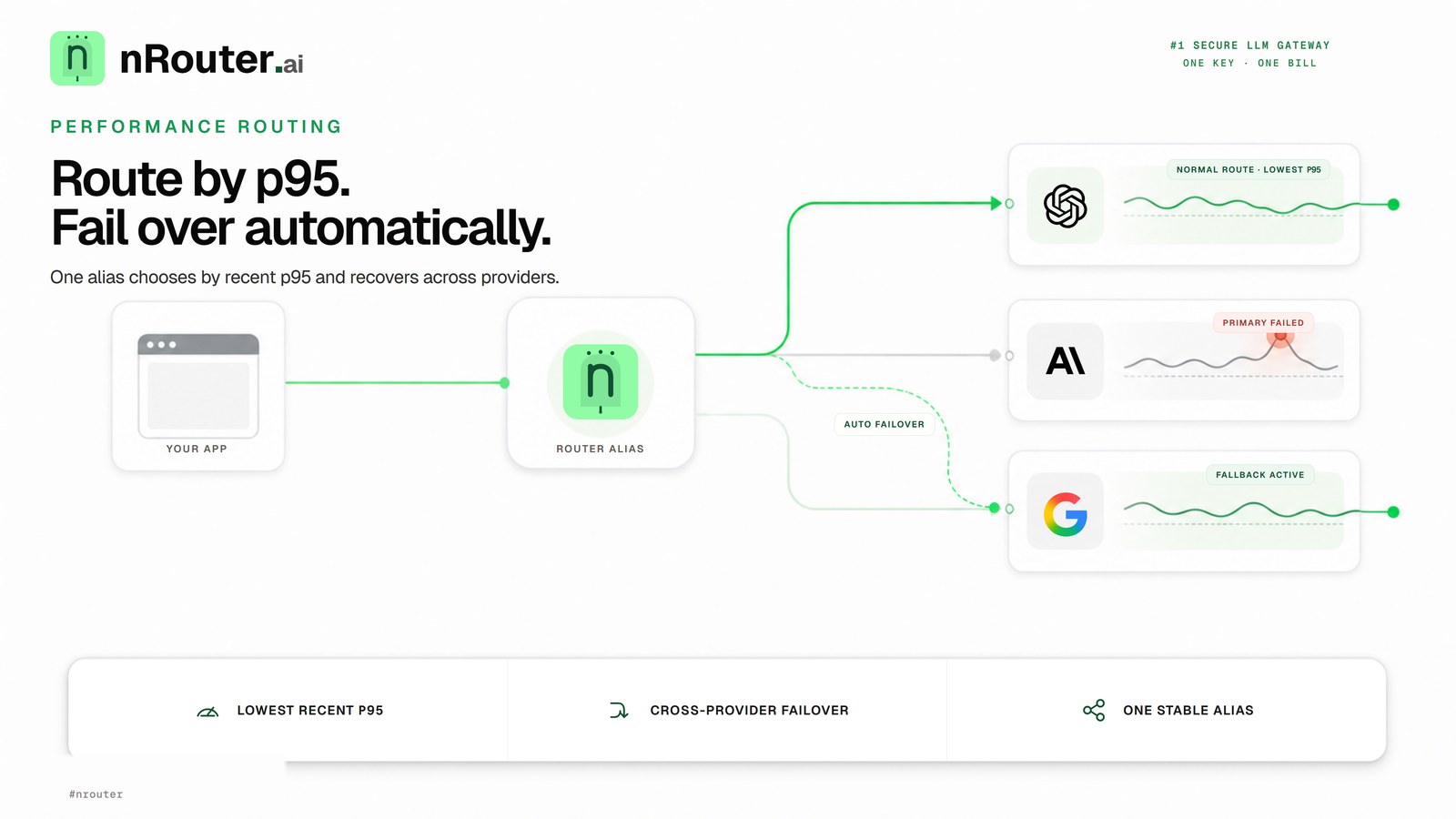
How connection pooling, in-memory preflight gating, and multiplexed HTTP/2 streams eliminate cold TCP/TLS handshakes and keep routing overhead under 15ms.
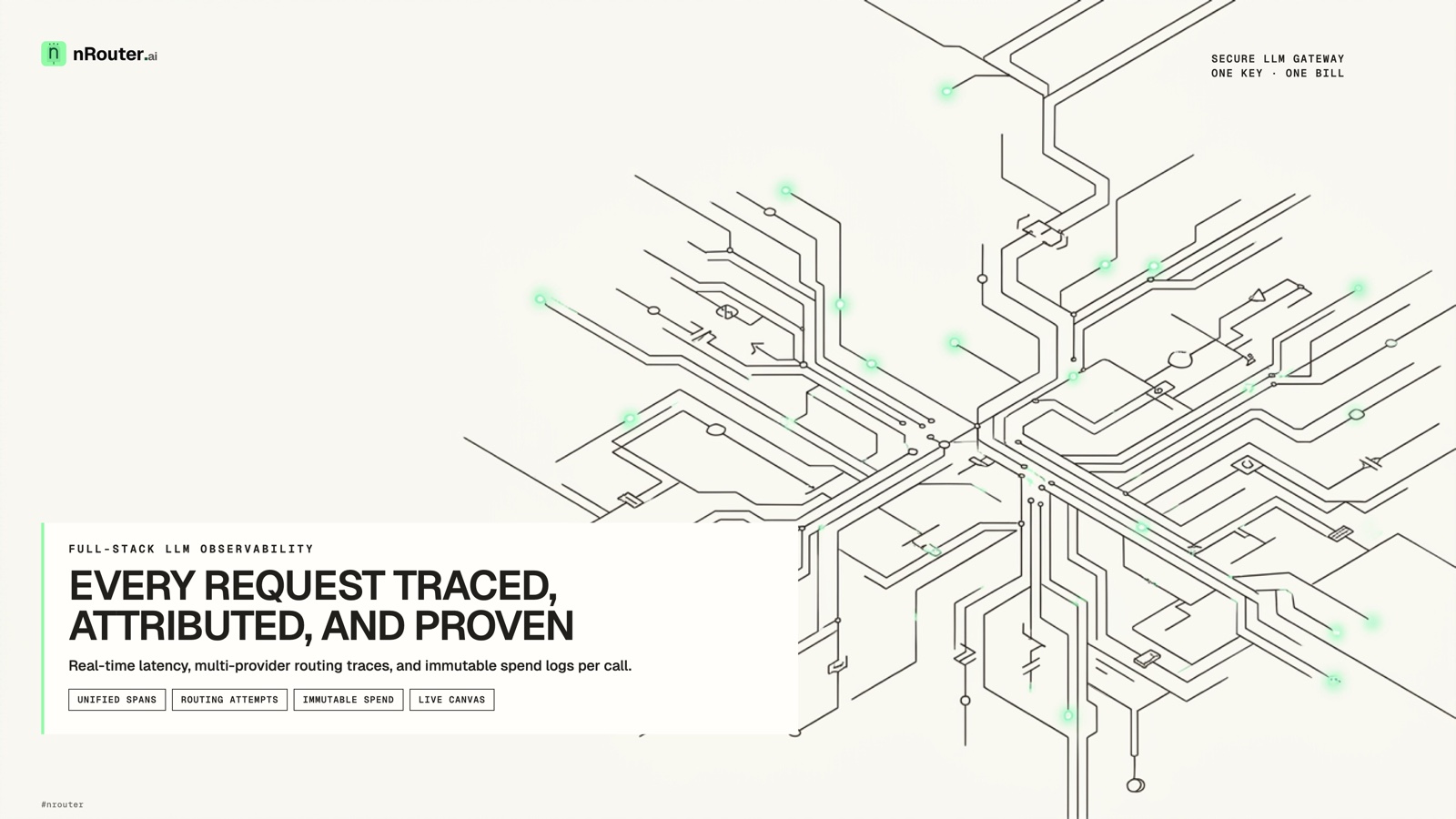
Inspect end-to-end inference traces, exact-cent spend rows, and multi-provider routing decisions in real time with unified OpenTelemetry spans and edge headers.
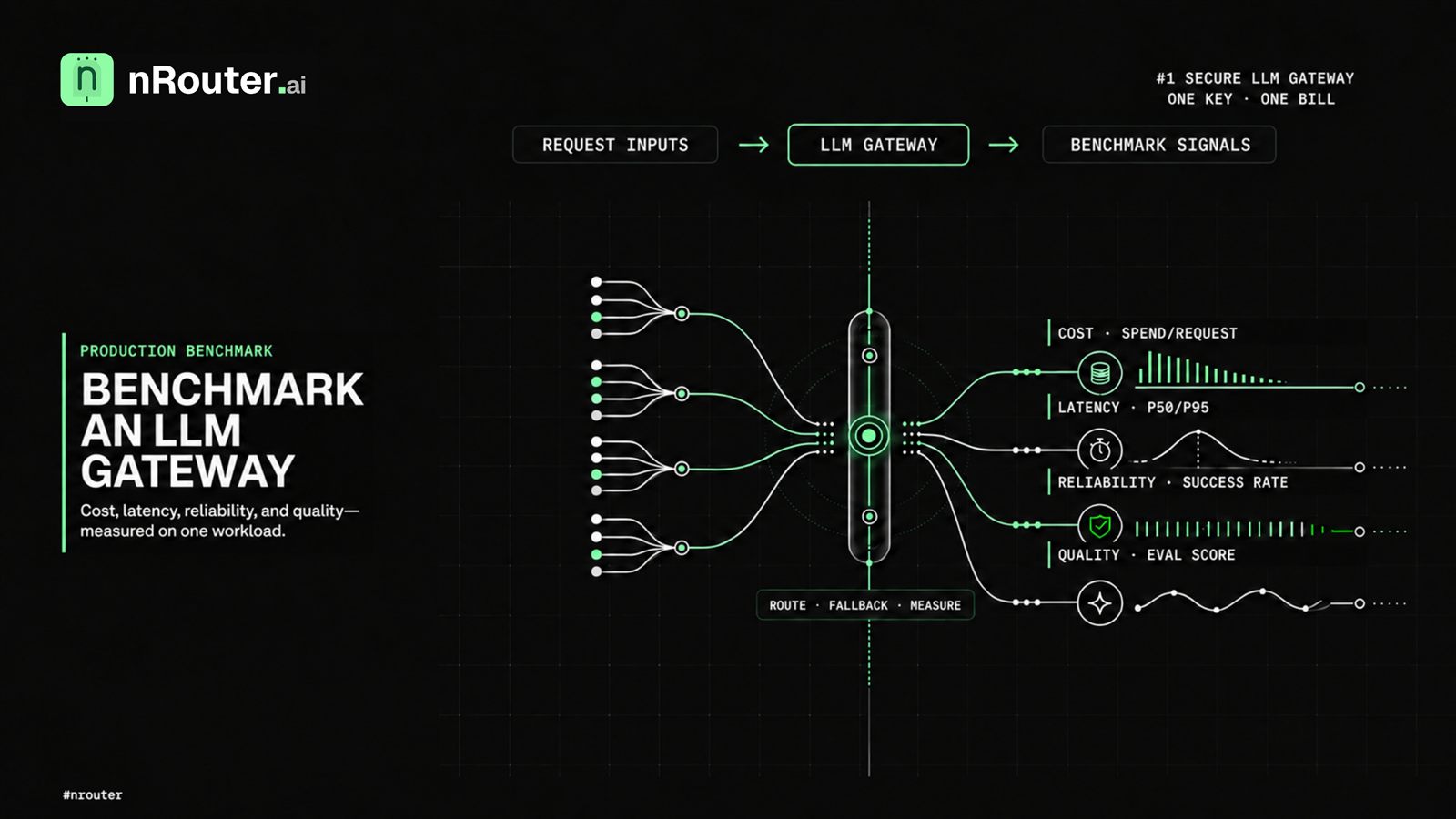
Benchmark an LLM gateway under production load with repeatable measurements for provider cost, tail latency, fallback recovery, and answer output quality.
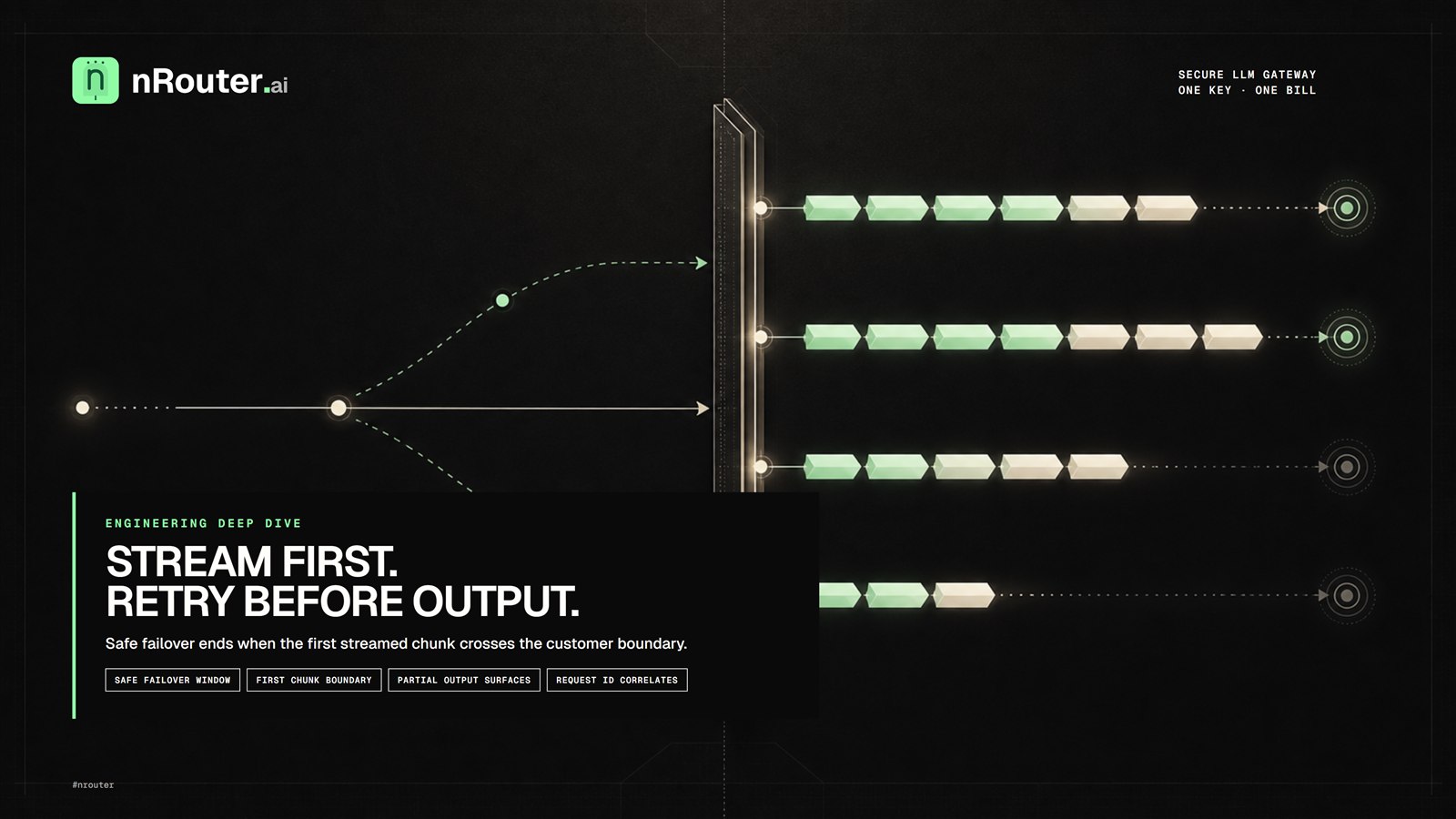
Understand where LLM streaming failover stops being safe, why partial output cannot be replayed silently, and how clients recover without duplicated text.
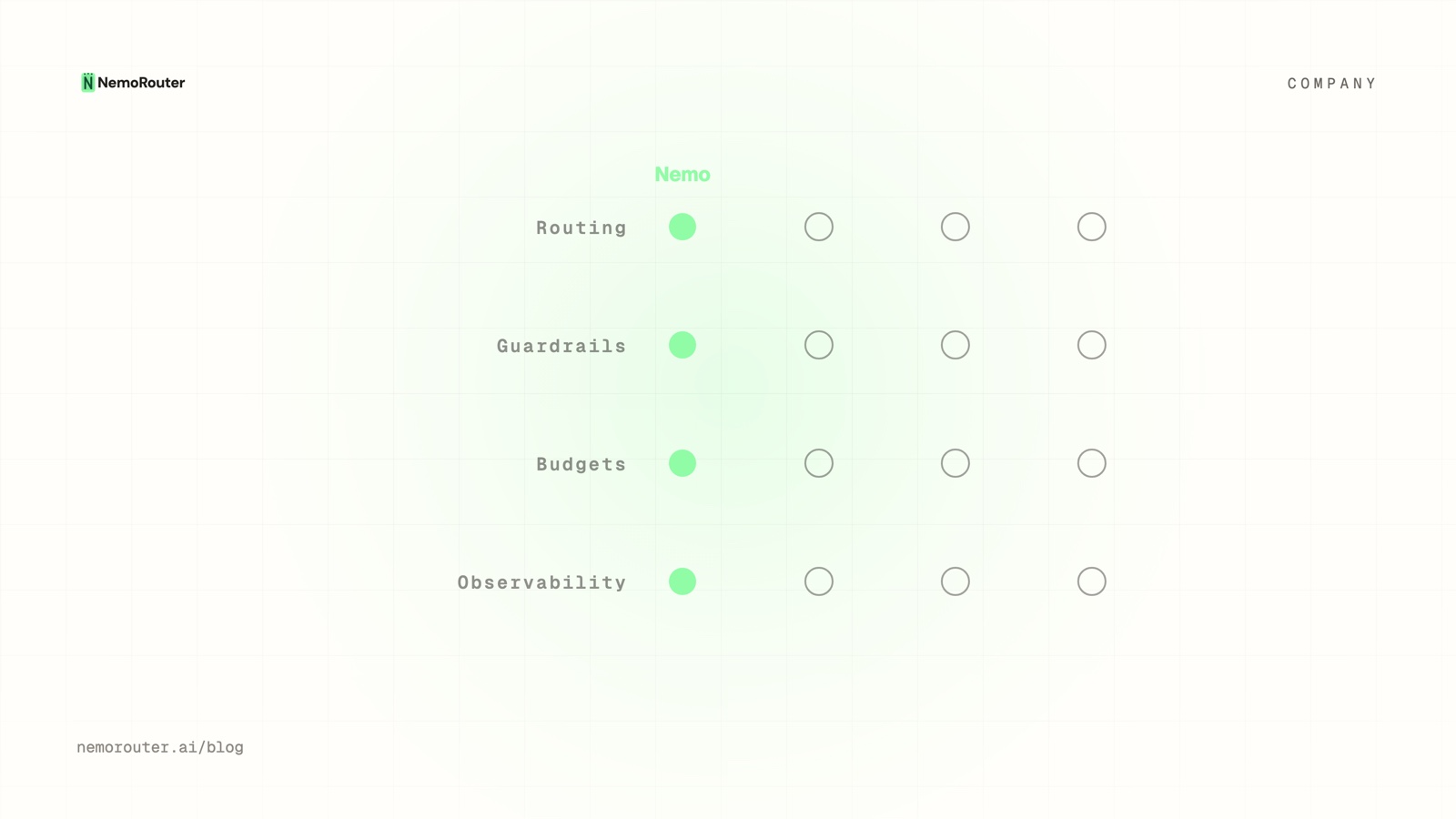
Build the internal business case for an LLM gateway on four quantifiable outcomes: total spend reduction, cost per call, tail latency, and developer speed.
A forecast is only a forecast if the worst case is bounded. Set hard dollar ceilings at the org, team, user and key scope, decompose next month's number into them, and know exactly which code your client gets when one bites.
A step-by-step path from a funded nRouter account to a production LLM call with a spend ceiling on it — create a scoped key, point your existing OpenAI client at one base URL, cap the key, and verify the cost header came back.

Point a router alias at a candidate set with the Latency strategy, keep the automatic cross-provider failover, tune the two settings that decide how fast a bad provider is abandoned, and prove the effect on your own p95.

Routing is the one cost lever you can pull from a dashboard. Point an alias at a set of models, choose cost or latency or weighted, and change what a request costs without touching a line of application code.
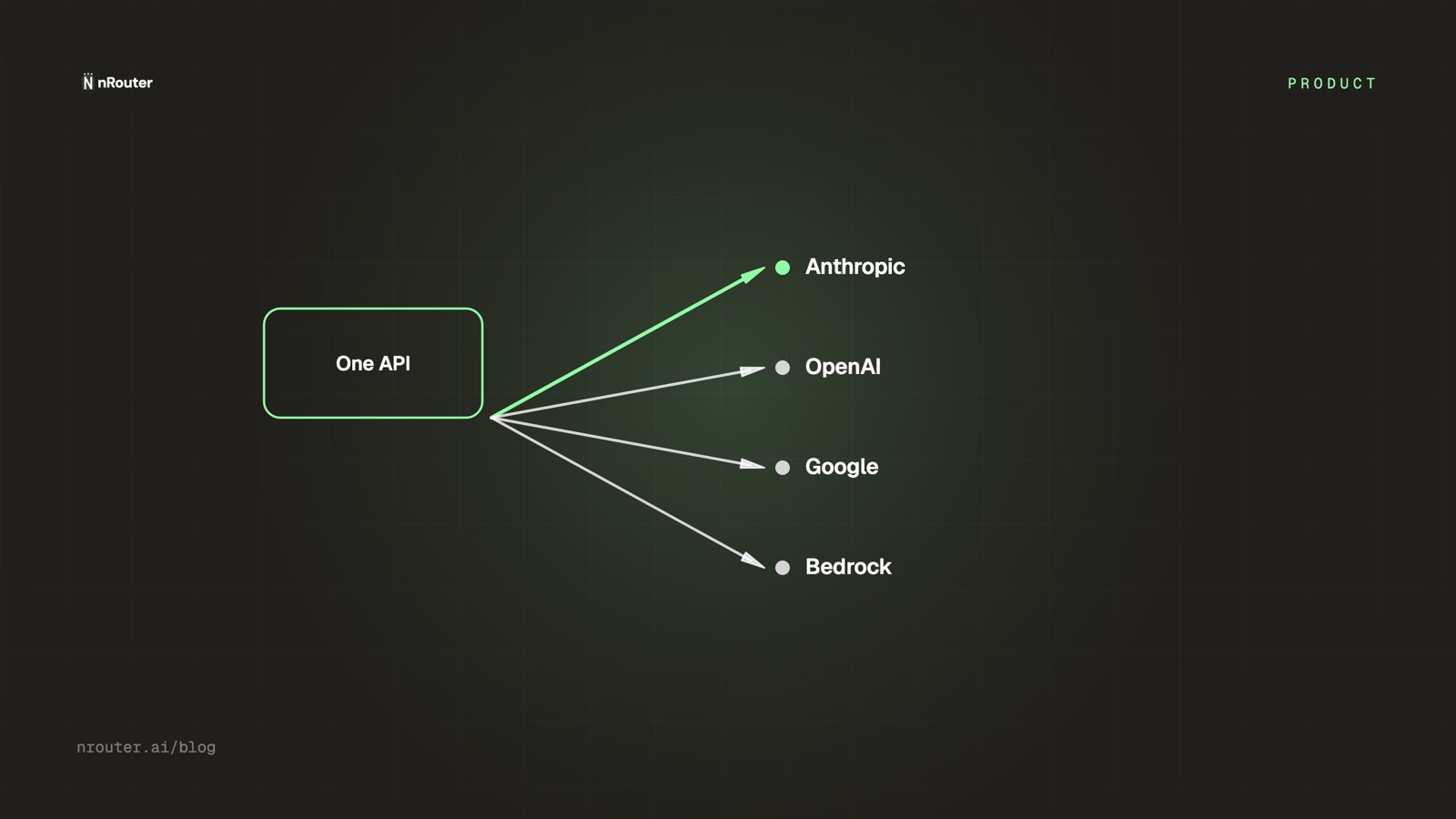
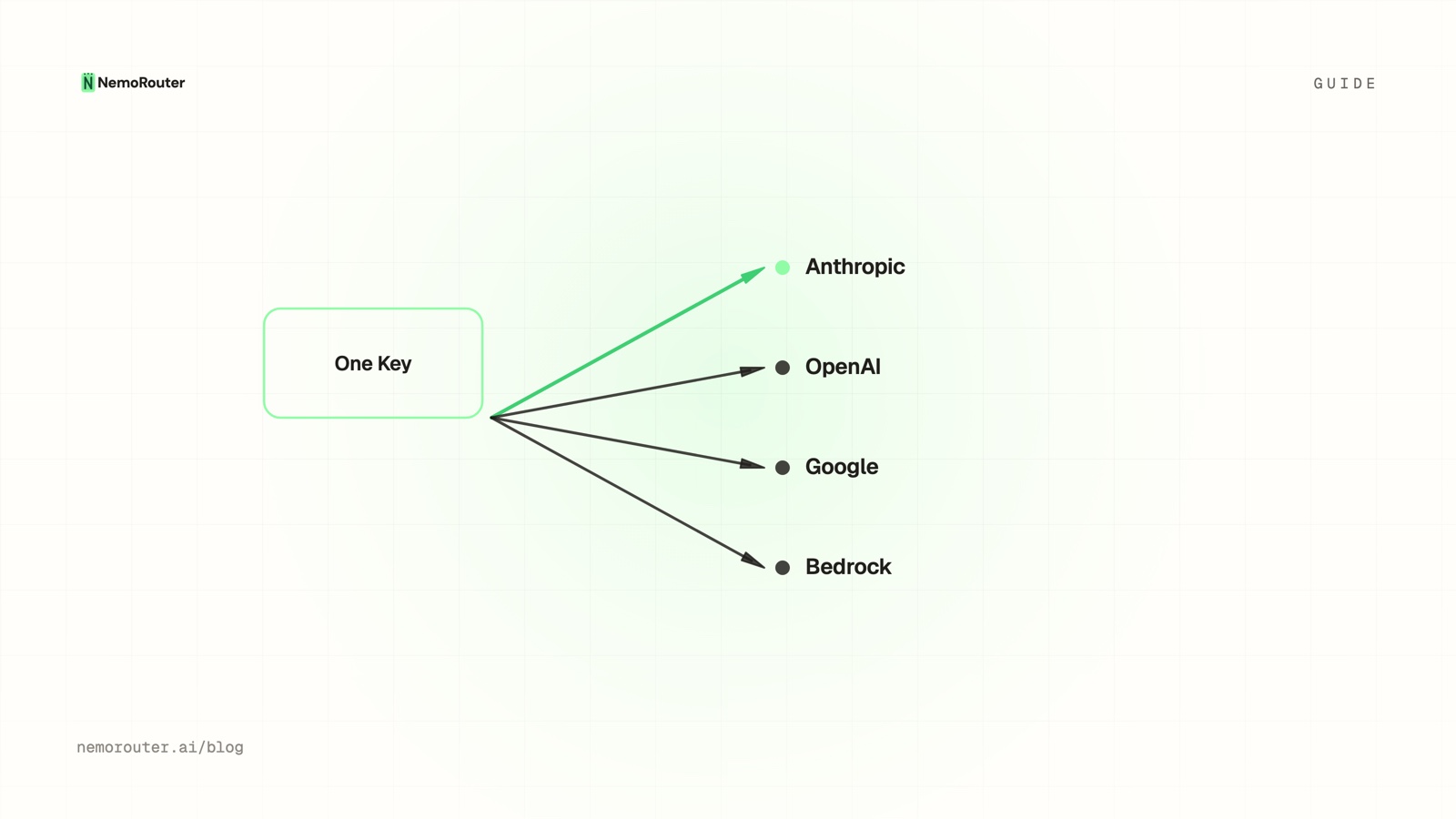
Provider breadth behind a single OpenAI-compatible key. What the swap changes in your codebase, what the model string buys you, which providers are live today, and the integration work that stops being yours to maintain.
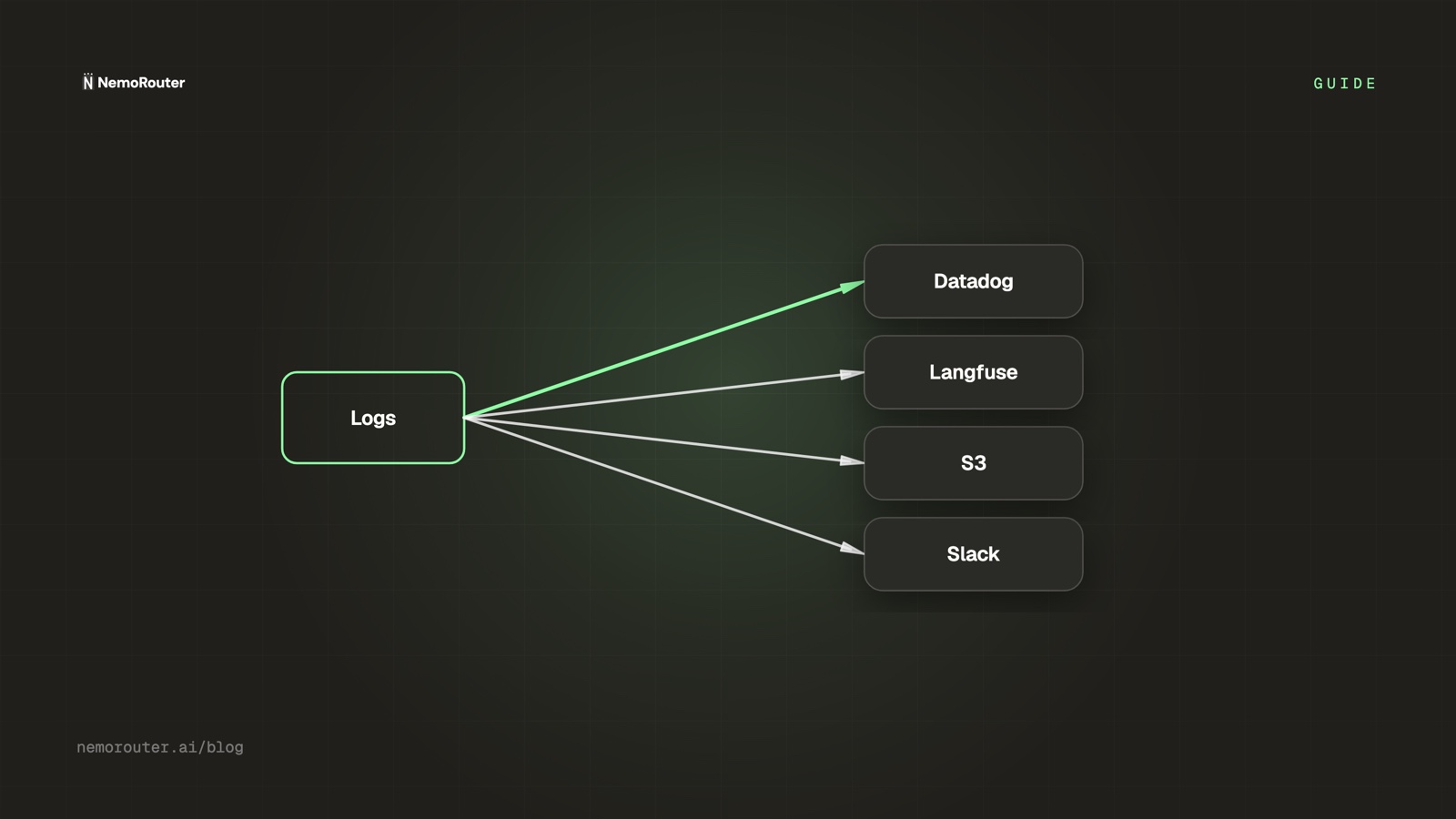
Configure log destinations once at the gateway instead of instrumenting every call site. Here is how to add and verify a callback today, what the Beta does and does not deliver yet, and the live paths that get data out in the meantime.
Learn how write-time redaction, typed placeholders, and metadata scrubbing keep LLM request logs fully debuggable without storing sensitive customer PII.
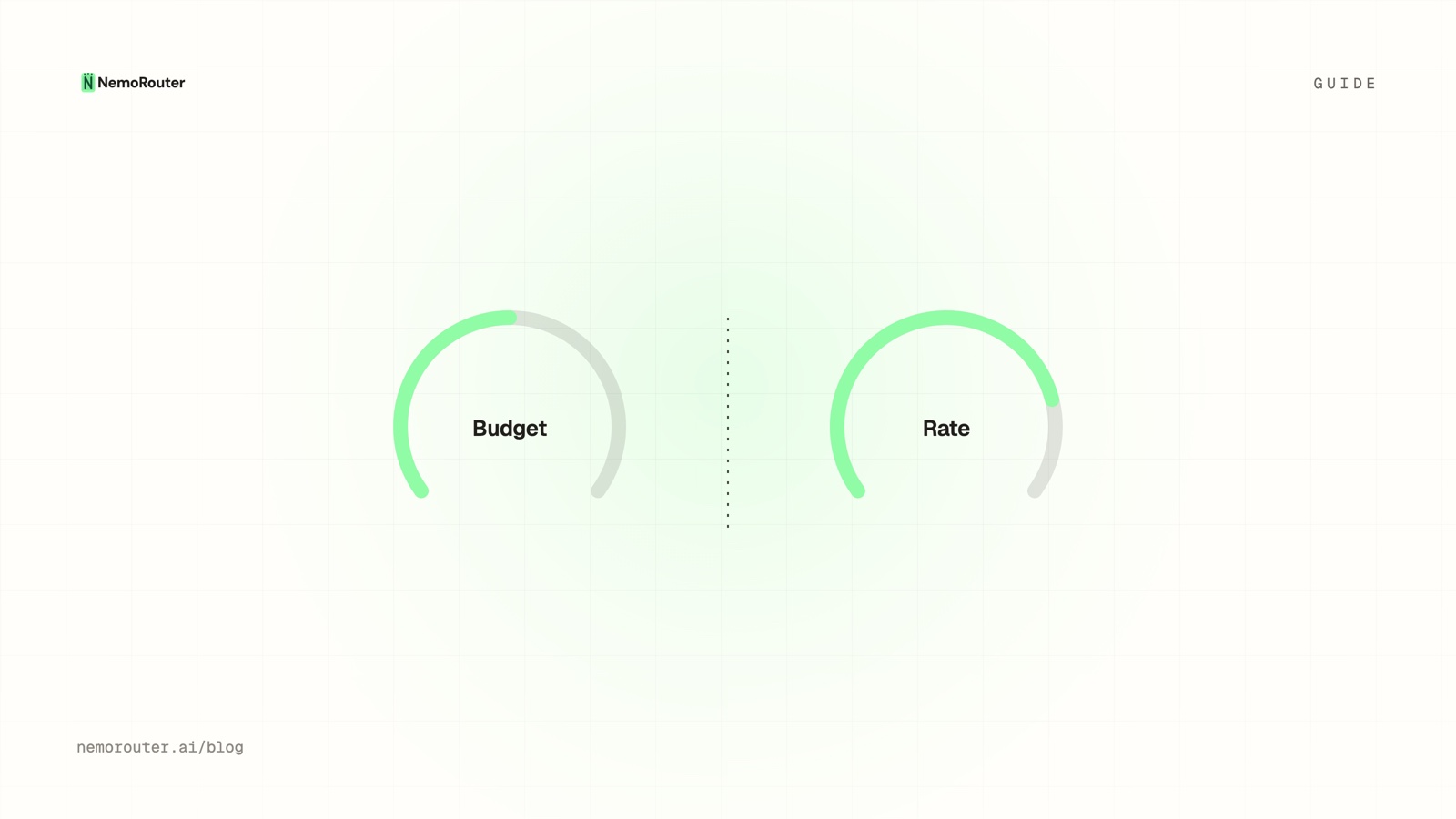
A budget caps dollars over a window and answers 402; a rate limit caps RPM/TPM right now and answers 429. Here is how to classify the risk, set each control in the dashboard, and write client code that tells the three rejections apart.
The fields that make an LLM request log worth keeping, the content that turns it into a liability, and how a gateway's built-in logs compare with running your own self-hosted trace store.
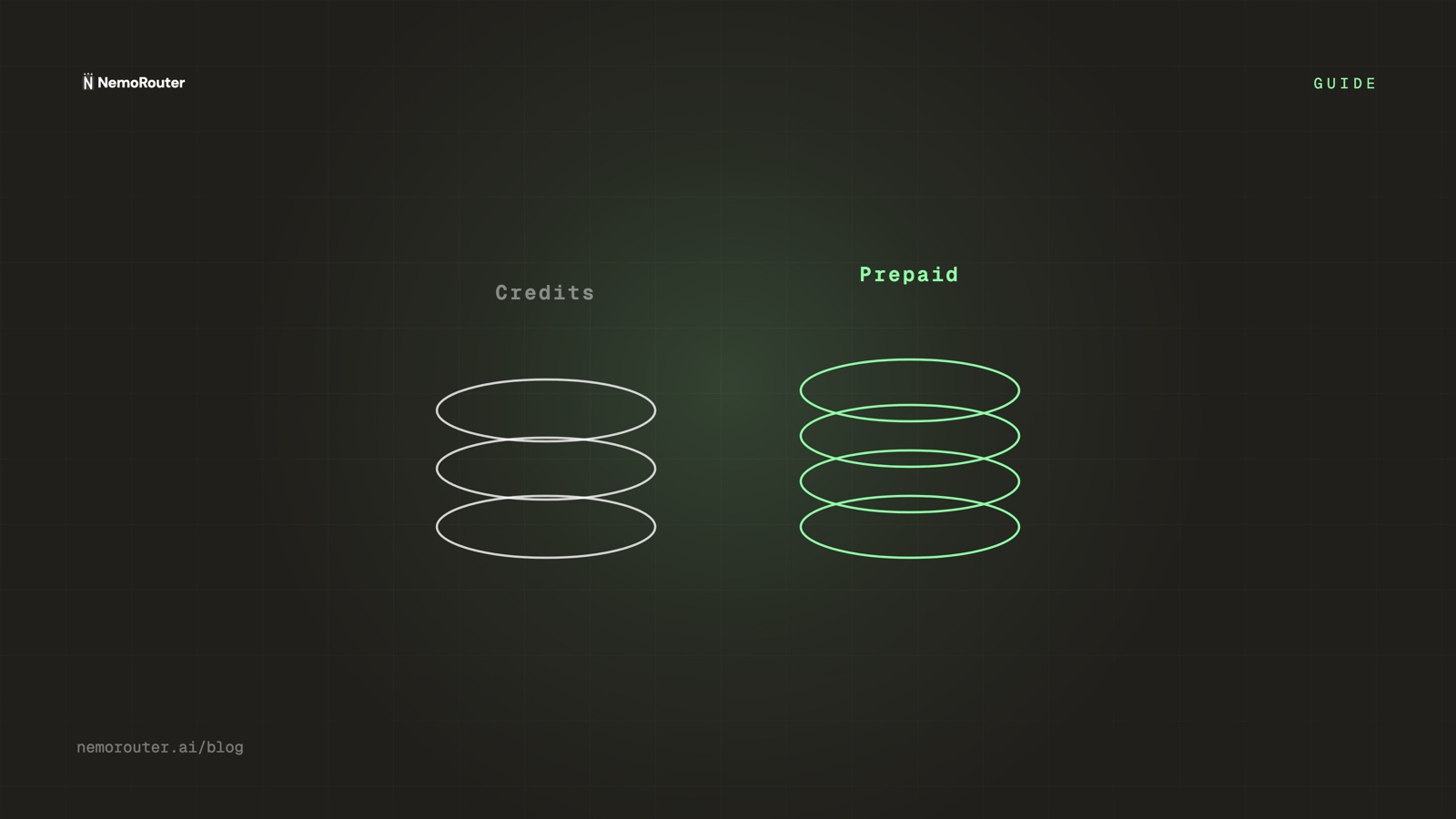
Prepaid tokens are one provider's currency, priced against one rate card. Gateway credits are dollars that fund any model behind one key. Here is how to consolidate, read the balance card, and prove each call settled at real cost.

Why average LLM latency misleads, how to analyze p50/p95/p99 distributions and time-to-first-token, and how to isolate tail delays across model providers.
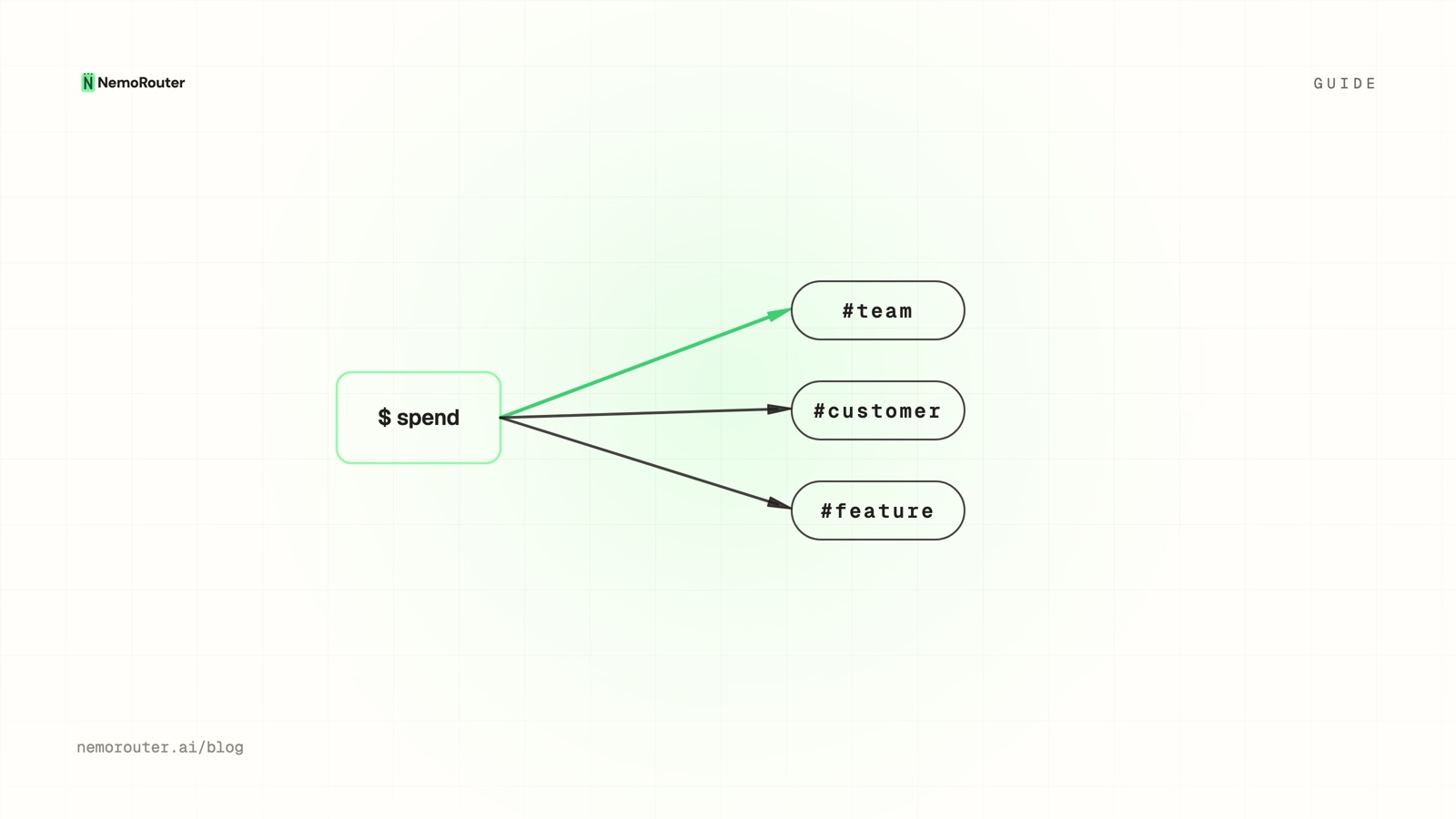
"The AI bill went up" becomes a query once spend carries structure. Three attribution layers — virtual keys, teams, and the OpenAI-spec user field — turn one opaque total into a breakdown you can group, filter, and cap.
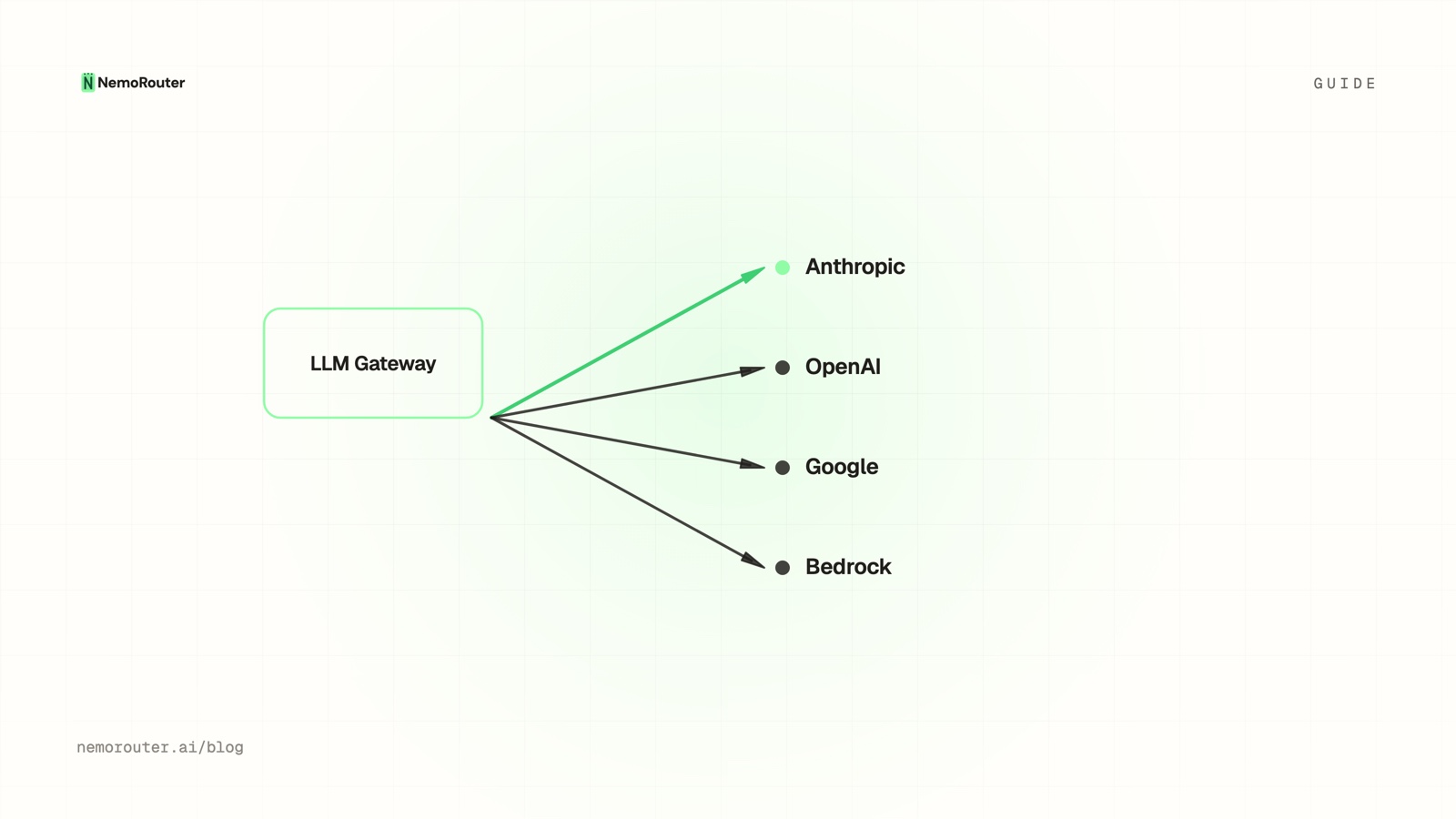
An LLM gateway is one endpoint in front of every model provider that owns six cross-cutting jobs — auth, cost, limits, safety, observability and failover. What it does, what happens to a request inside it, and when you need one.
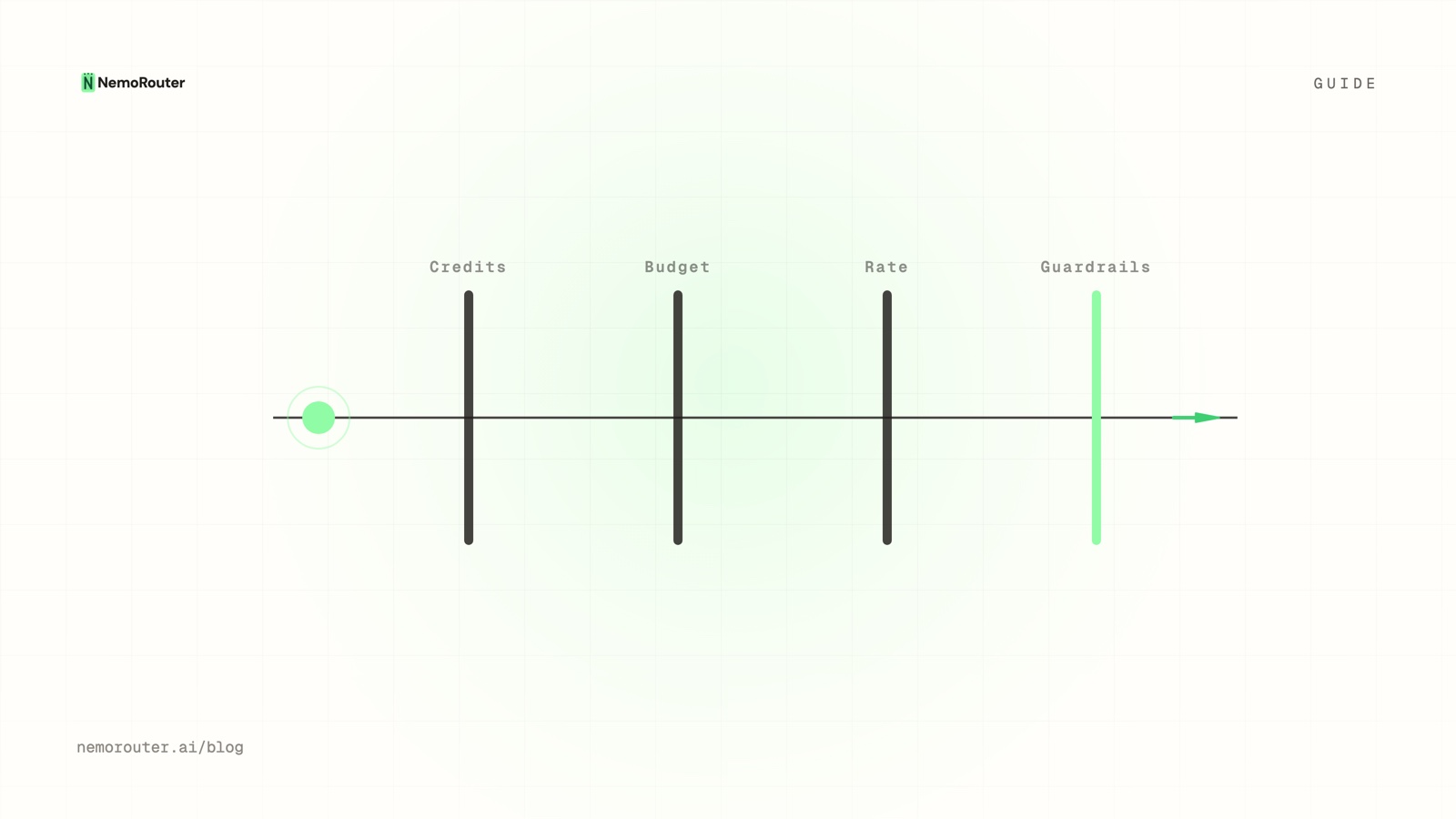
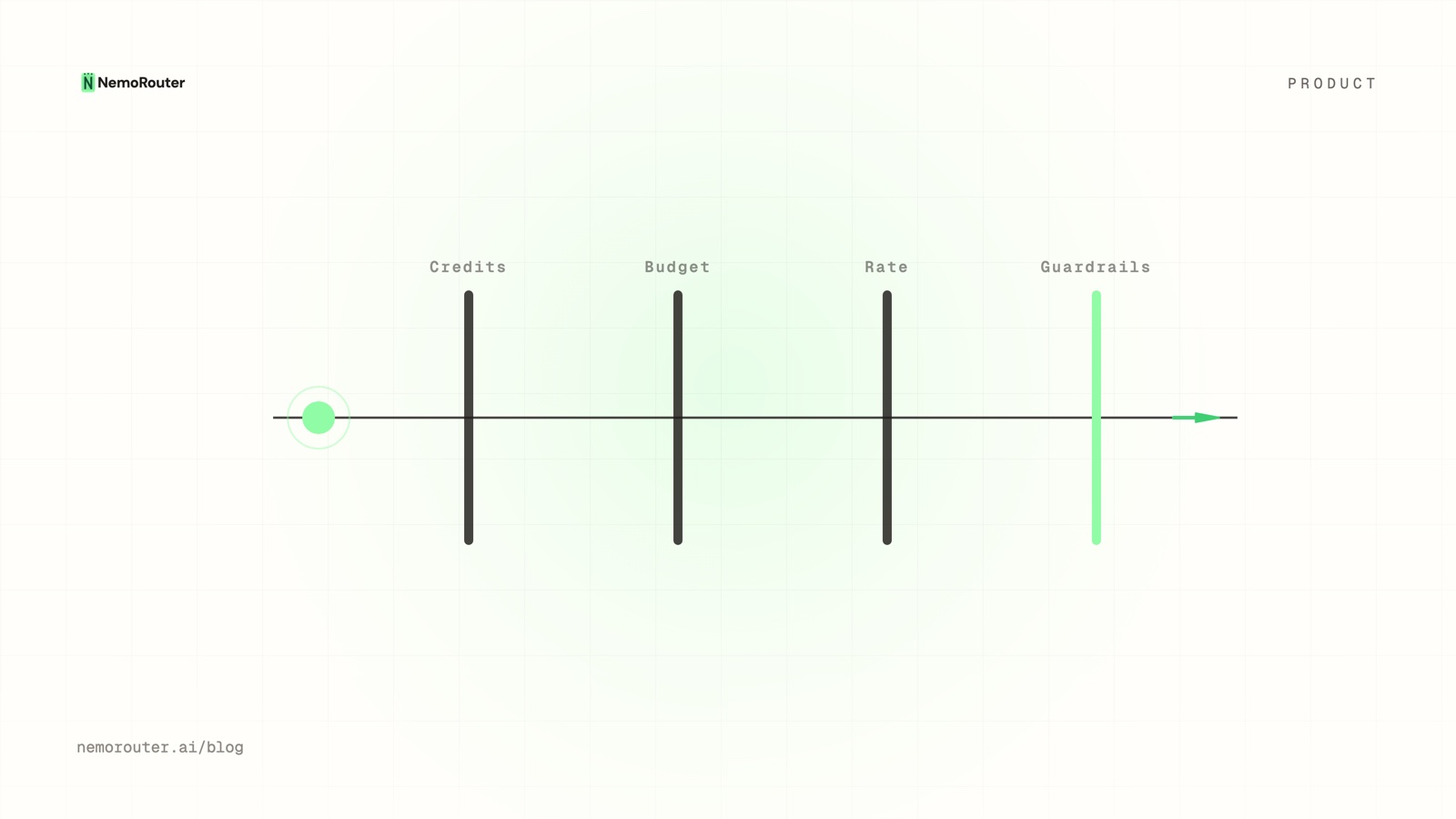
Every request through an LLM gateway clears four independent gates before a provider ever sees it — credit balance, budget cap, RPM/TPM rate limit, and guardrails. Each has its own status code, its own scope, and its own fix.
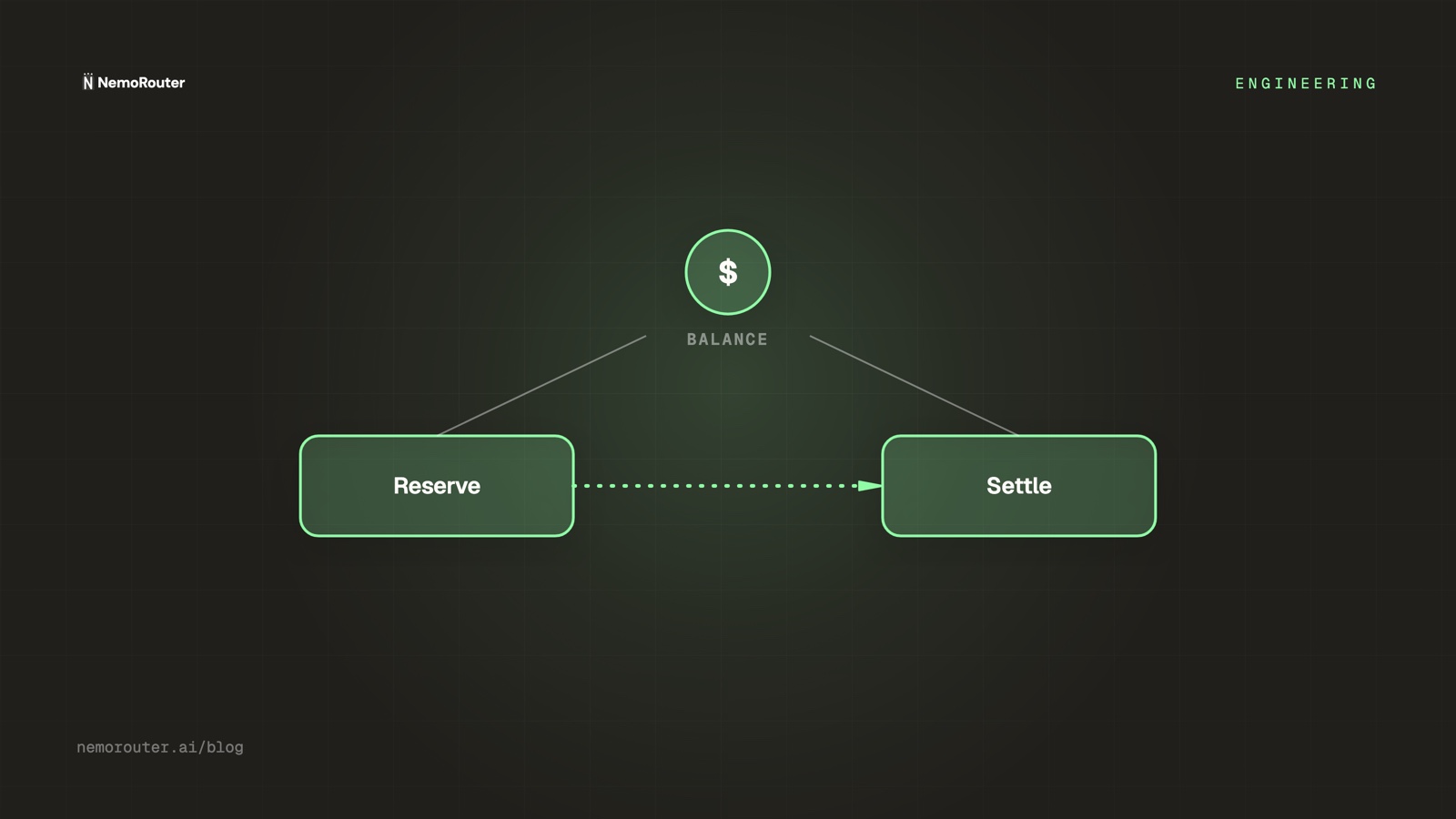
Checking a balance and then calling a provider is a race, and under the fan-out an LLM gateway is built for it loses. Here is the reserve, settle and release contract as you can observe it — what your balance does on success, on an upstream failure, on a timeout, and when the cost is never knowable.
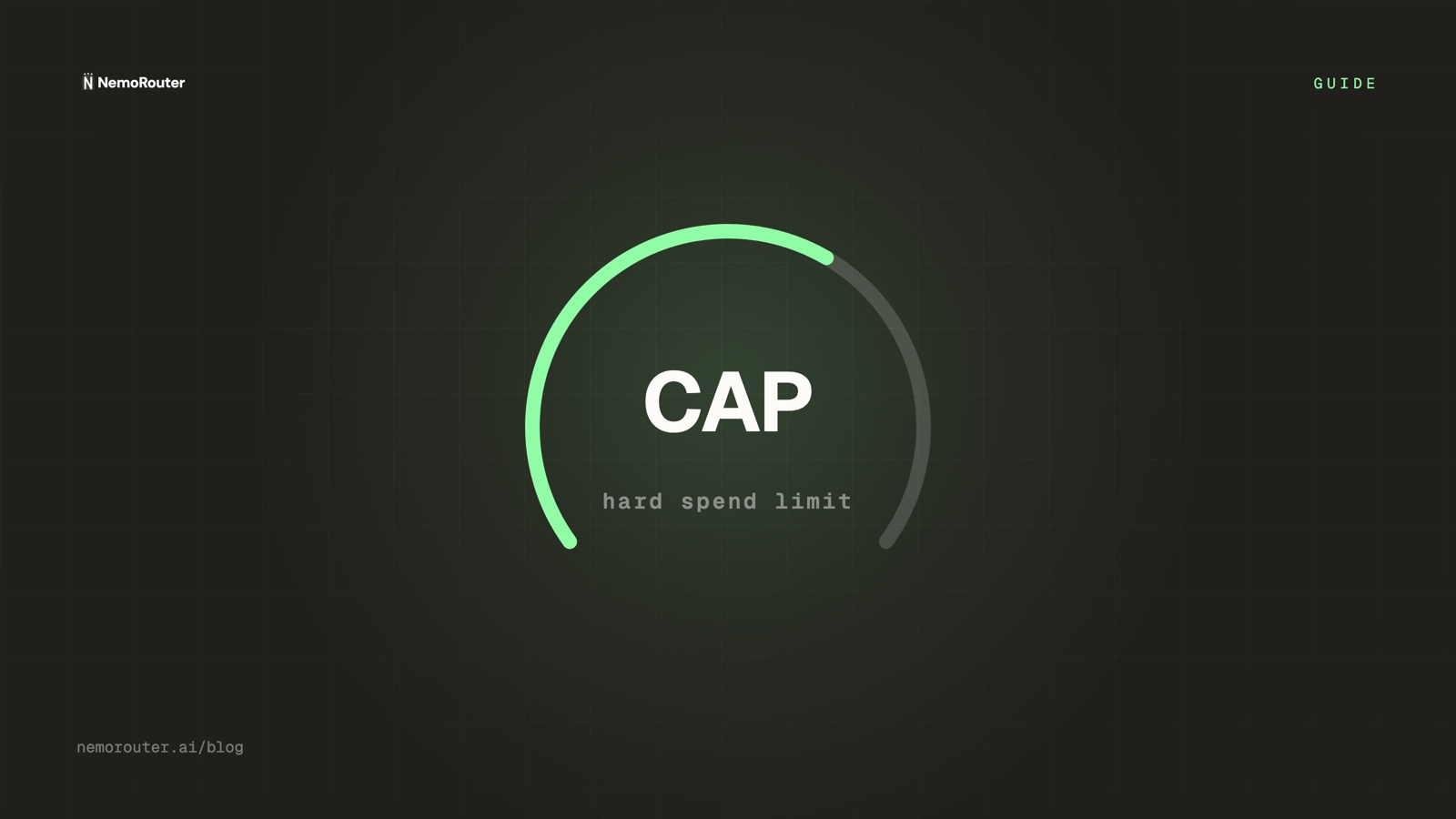
A budget is a dollar allowance attached to a scope and a window. Here is how to create one on each of the four scopes, which status code each returns when it fires, and how to prove the cap bites before you trust it in production.

nRouter has no sandbox, no sample dataset, and no demo mode. The dashboard figure, the playground response, the cost header and the ledger row are all produced by the same live path a paying request takes. The cost of that honesty is that there is nothing to look at until you have paid for a call.

A gateway can take its cut two ways: silently, inside the per-token rate you can never decompose, or visibly, as a platform fee added at purchase. nRouter does the second, so every credit you buy is spendable at the provider's own settled cost.
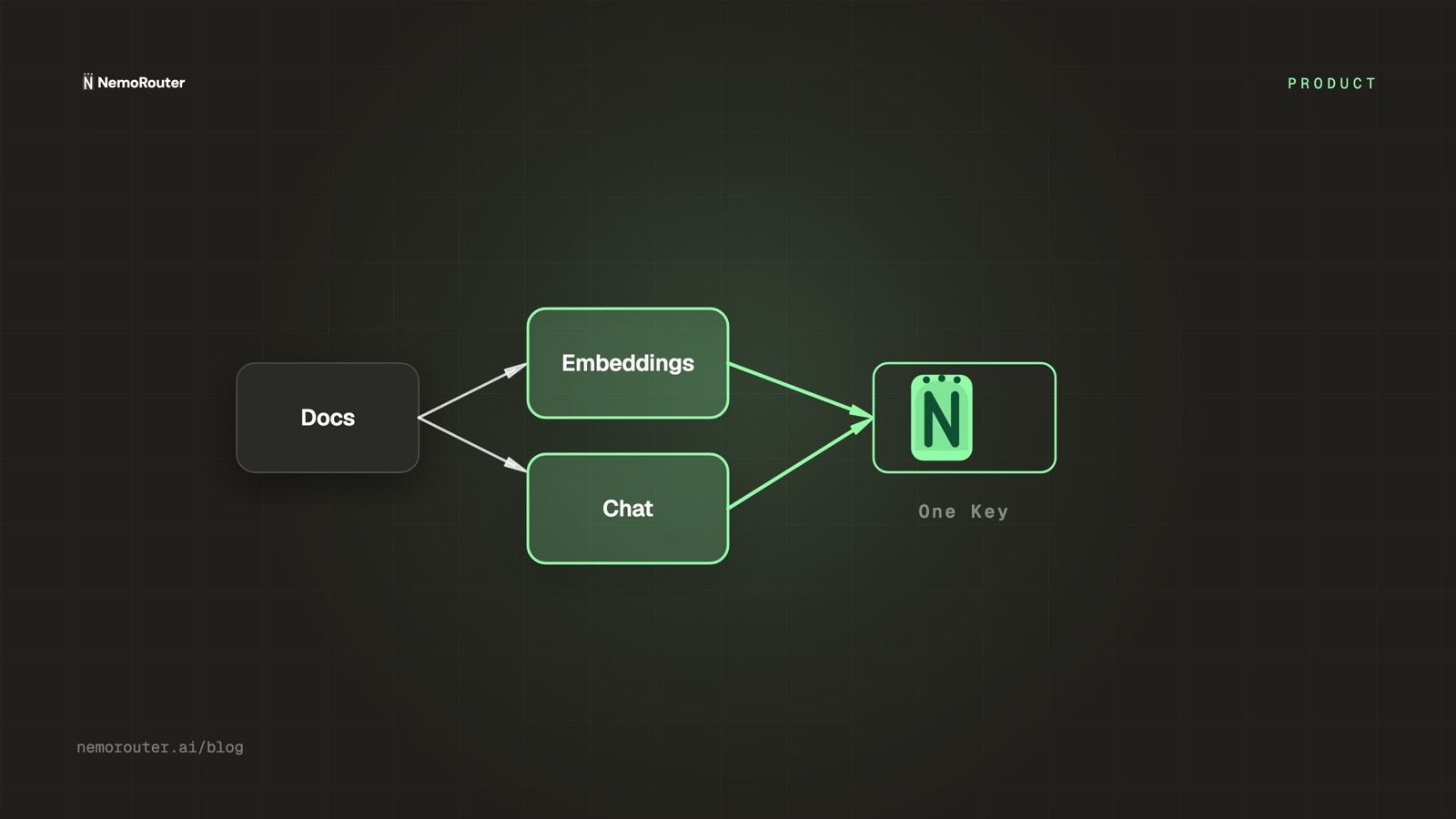
A RAG app makes two kinds of model call and most teams only ever price one of them. Put embeddings and chat behind one gateway key and the cost of answering a question becomes a single number, under a single budget, with one fallback.
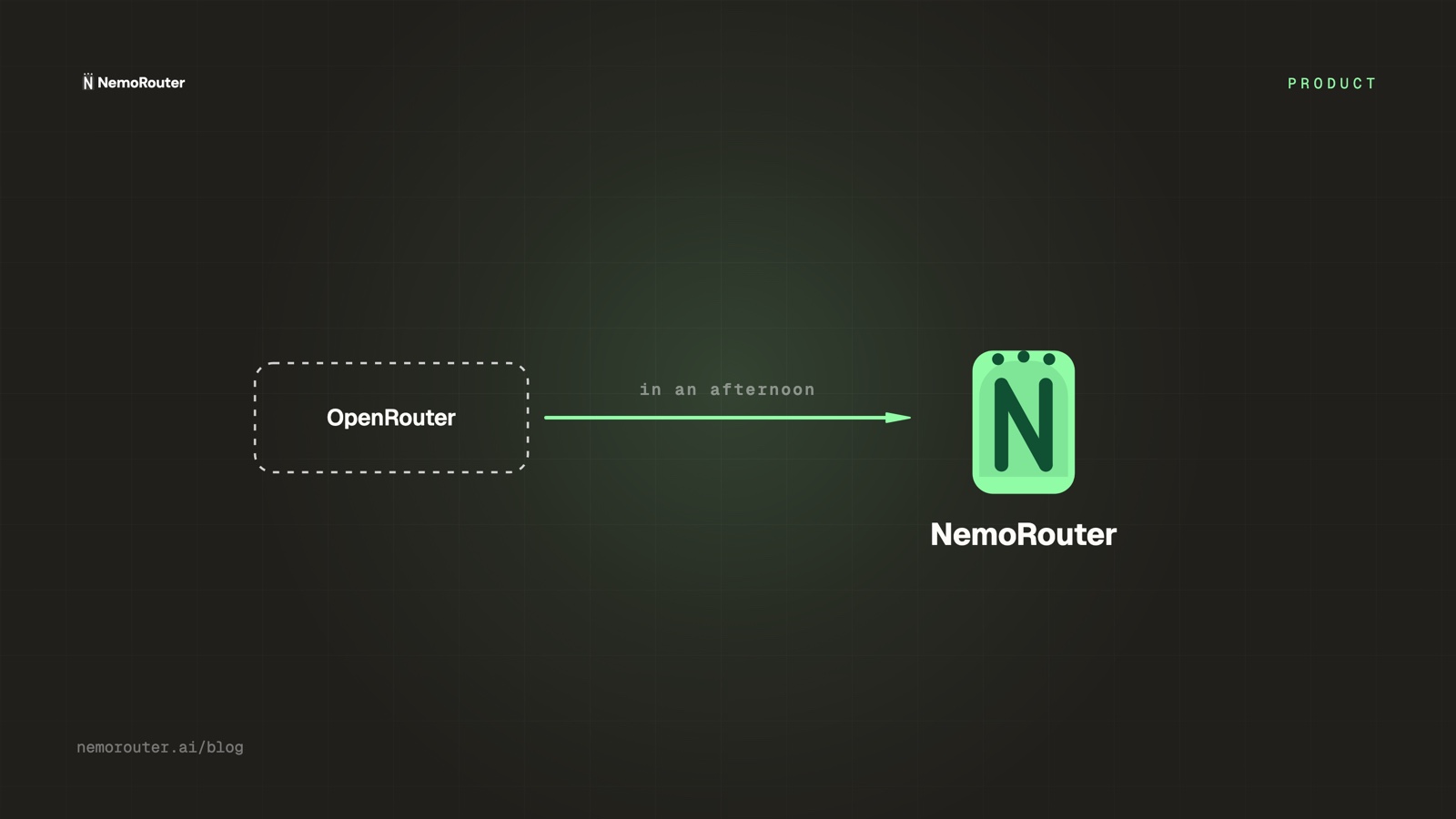
Moving an OpenAI-compatible app from OpenRouter to nRouter is two lines of config. The work that is actually left is model-slug mapping, the vendor extensions you added, and a cost-and-error contract that behaves differently. Here is the whole checklist.
A criterion-by-criterion checklist for putting an LLM gateway through SOC 2 — access control, audit attribution, retention, encryption, tenant isolation and availability — with the honest current state of each control on nRouter.
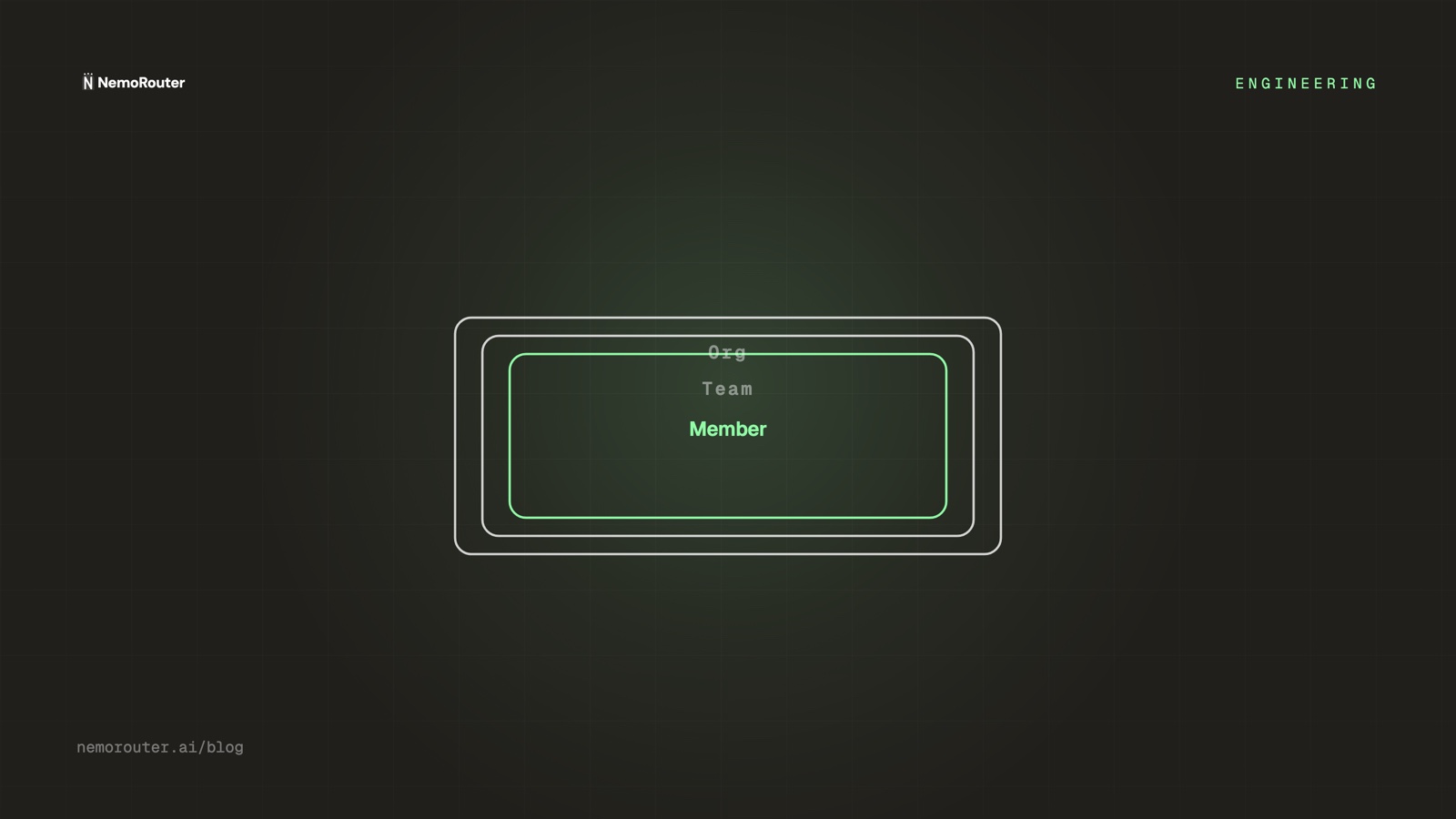
How keys, budgets, and guardrails scope across org, team, and key tiers on an LLM gateway, and why attribution is read from key hashes, never user headers.
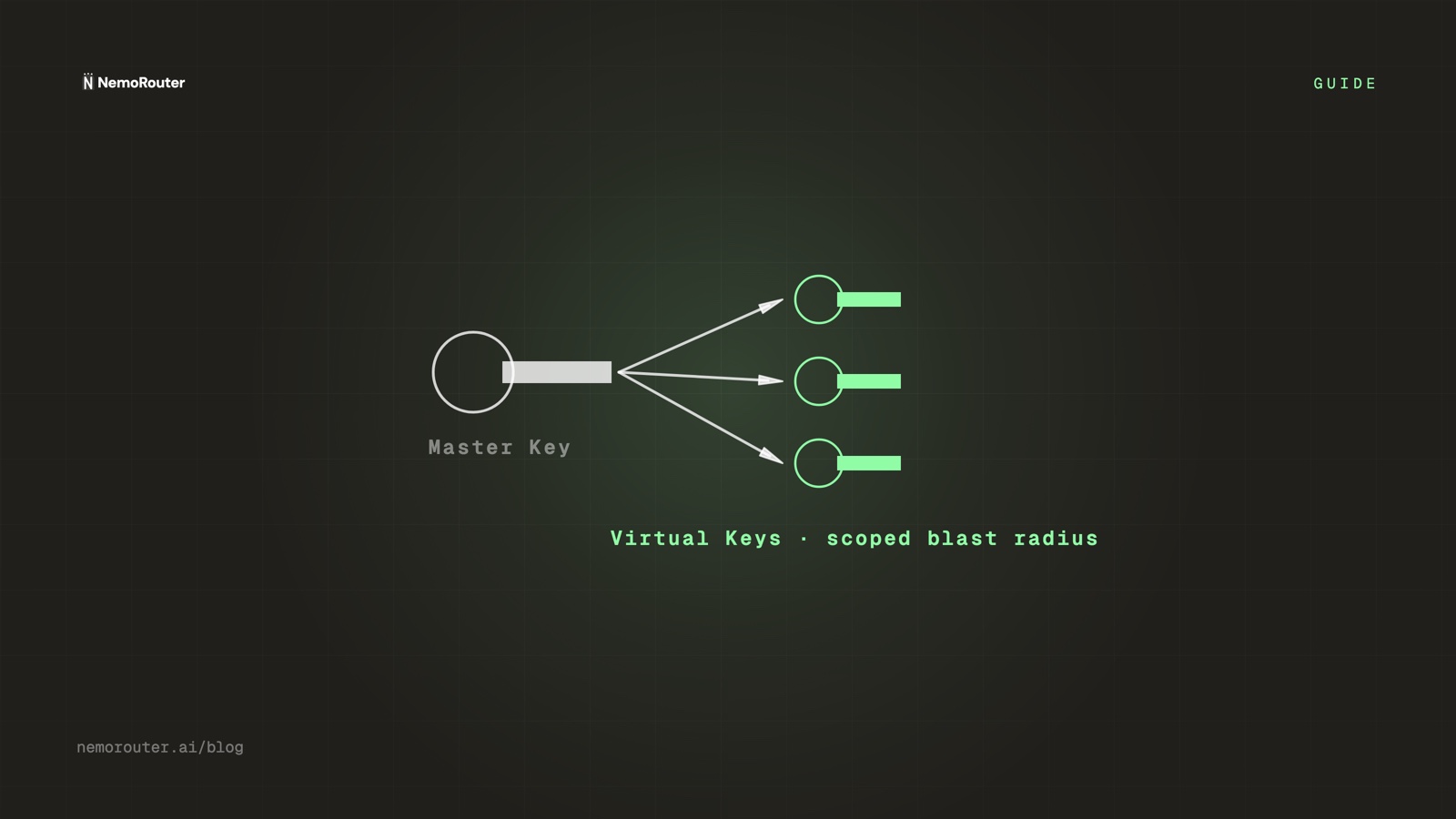
A management credential and an inference credential are different tools with different blast radii. Here is how to issue one virtual key per environment-and-service pair, narrow it with the four scope fields, cap it, and rotate it without downtime.
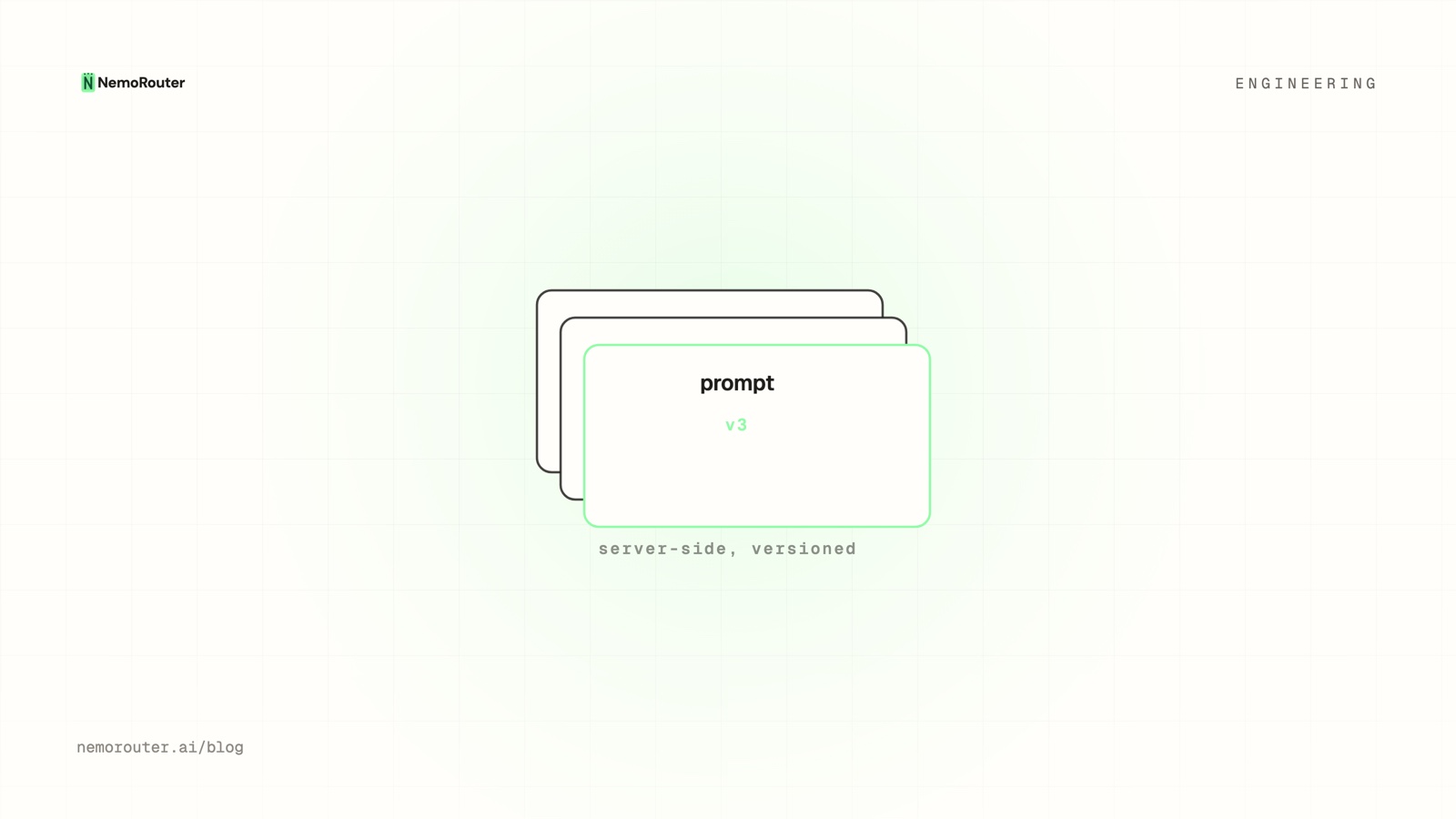
Reference server-side prompt templates by ID instead of inlining them: update prompts without deploys, roll back instantly, and A/B test on live traffic.
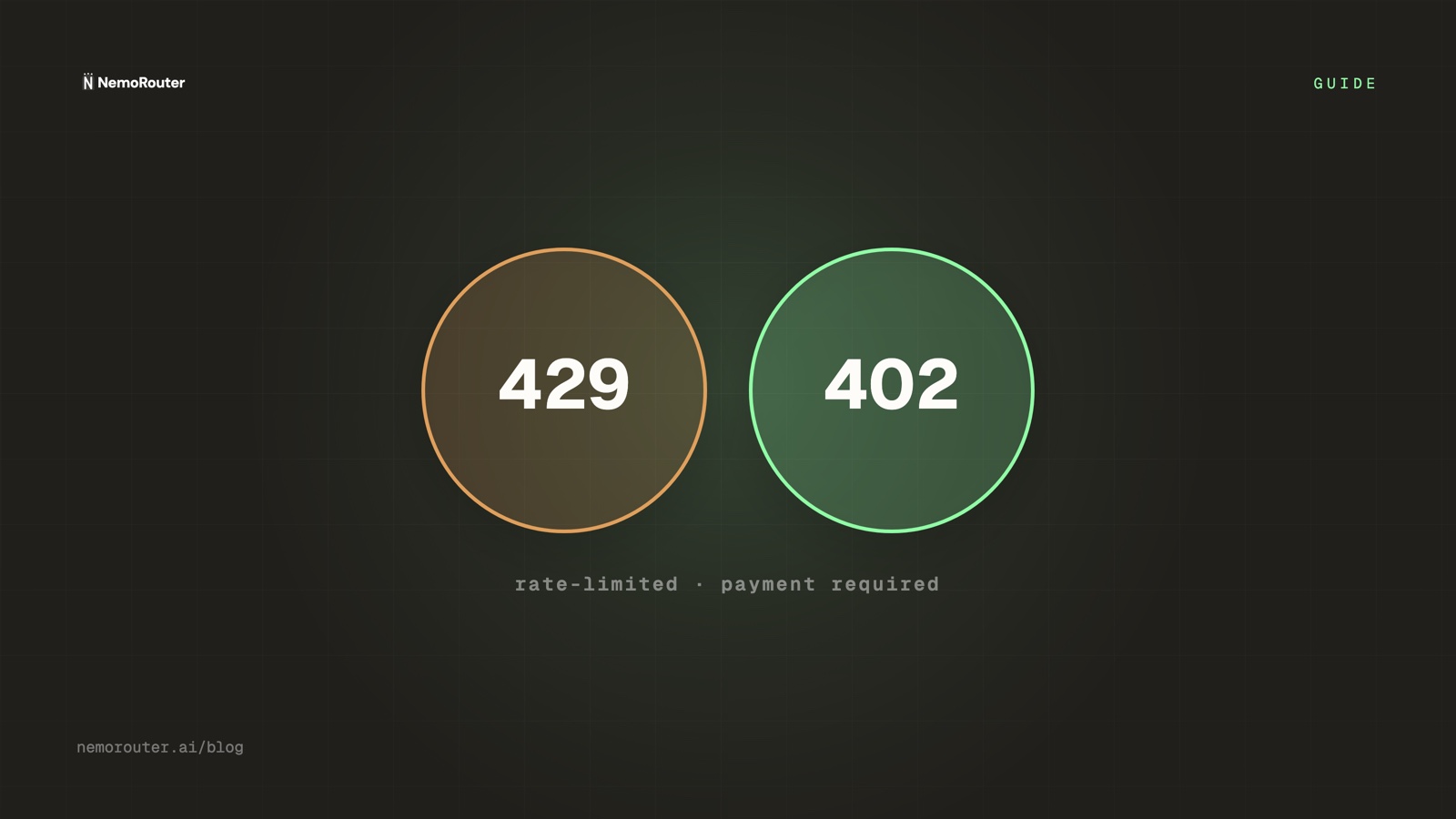
Both a throttle and a budget block can arrive as 429, and both an empty balance and a team budget arrive as 402. Branch on the error code, not the status — with backoff, jitter, and idempotent retries.
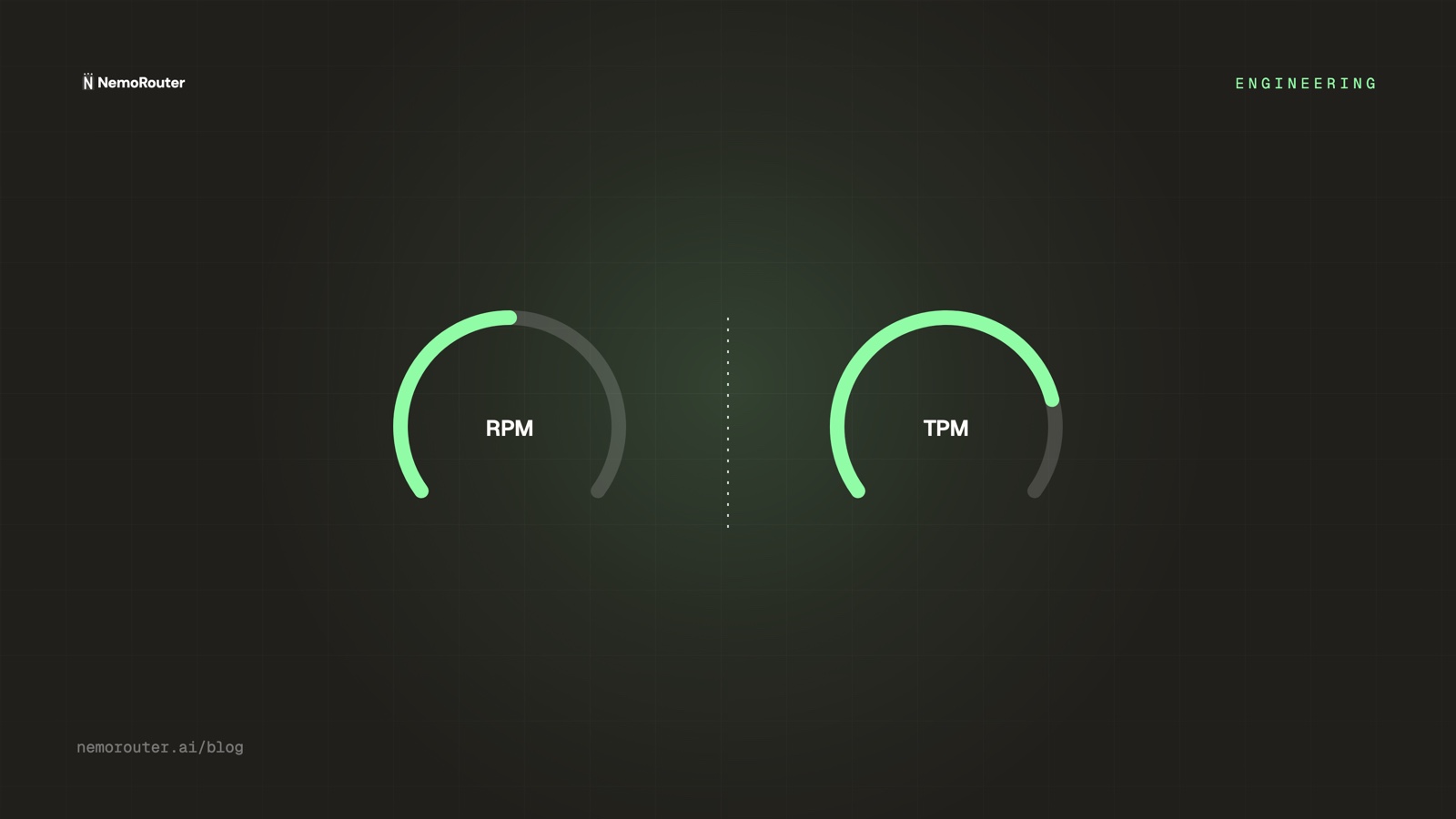
Understand how RPM and TPM limits resolve per key, team, and org on an LLM gateway, why every 429 response names its source, and how budgets prevent loops.

Quality is a property of a task, not of a model. Here is how to inventory your traffic by task, point a router alias at a candidate set, prove each downgrade with an A/B test, and read the saving off the Cost vs Usage report.
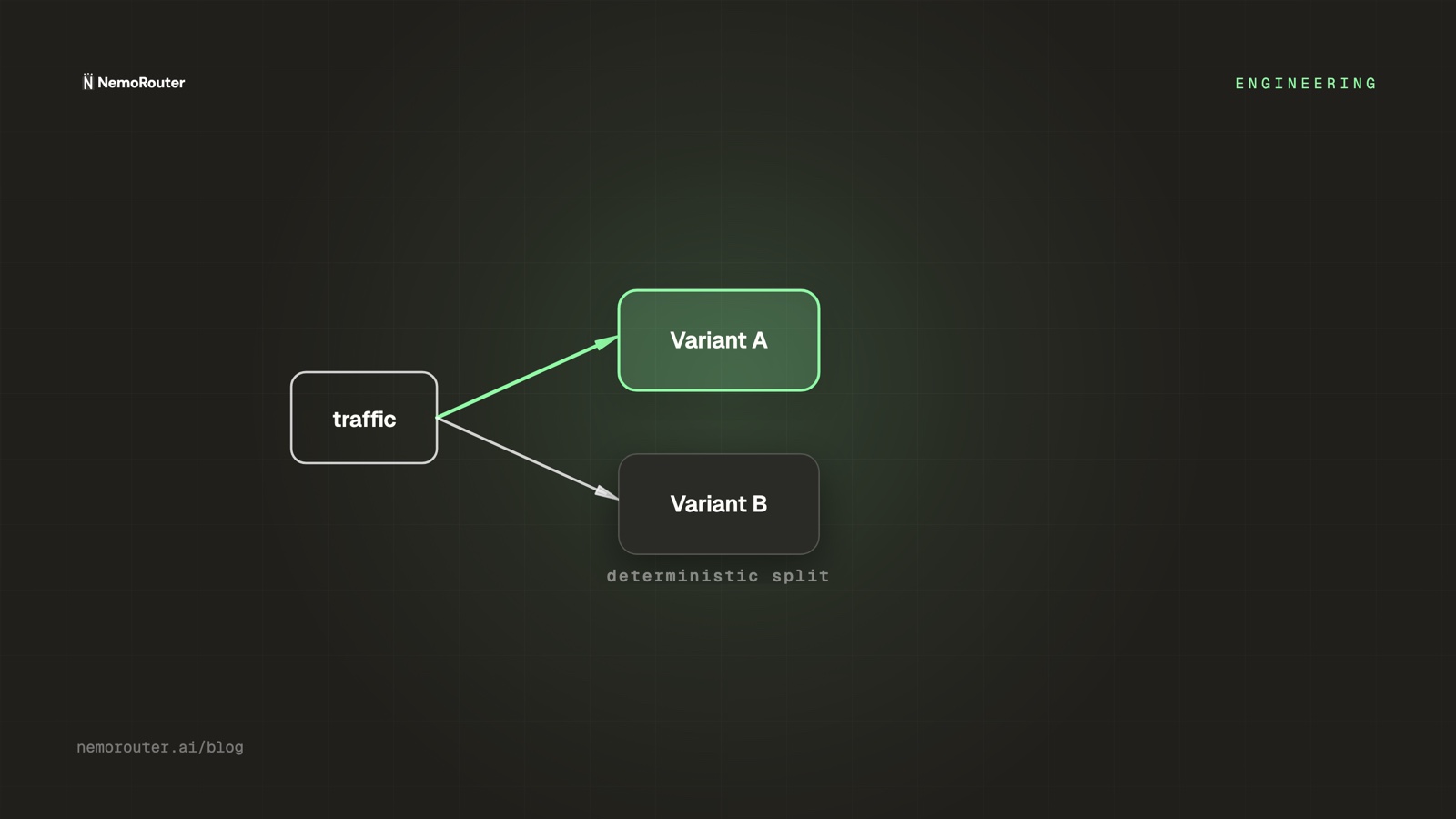
A coin flip on every request is not an experiment — it is noise with a dashboard. Here is how deterministic hash-based assignment gives each user a stable variant for the life of a test, why the experiment id belongs in the hash, and what the gateway refuses to let a caller override.
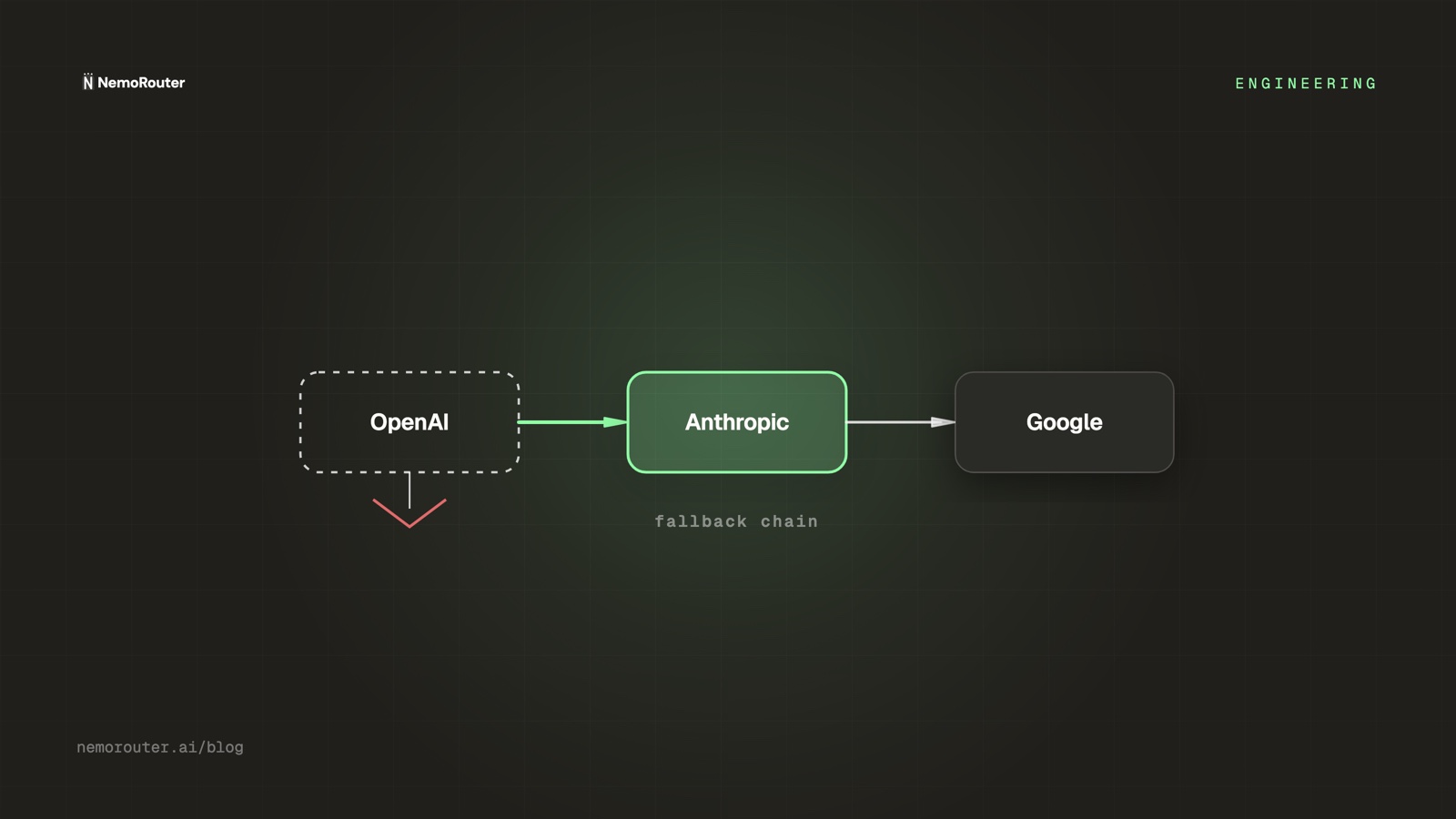
How an ordered LLM fallback chain reroutes failing requests to healthy providers, advances only on retryable errors, and bills spend for exactly one hop.
Head-to-head: nRouter vs Langfuse. A self-hostable observability + prompt + evals specialist vs a hosted LLM gateway that bundles observability, routing, and governance — every feature included on every plan. Platform fee of 4% of your credits on every plan. Models available in your live catalog behind one API key.

Vendor-neutral buyer's-guide decision tree across the three durable LLM routing-intelligence shapes — benchmark-anchored (Unify-style), ML-classifier (NotDiamond-style), and operator-controlled (nRouter-style). Three questions, one shape, one product. Pick the failure mode your team is best equipped to own.
TrueFoundry's gateway is one module of a platform that also sells model deployment, GPU serving, and agent, MCP and skills registries — metered by requests and by seat. nRouter sells the gateway alone, priced as a share of model spend. A procedure for deciding which purchase you are making.
Kong's AI plugins put LLM governance in the data plane you already run — and leave you running it: provider credentials in plugin config, Redis behind the rate limiter, SSO and audit logging on the Enterprise tier. nRouter is the other trade: a managed endpoint that holds the provider keys.
nRouter vs Eden AI for teams running OCR, vision and translation alongside their LLM traffic. What a focused gateway serves, what it deliberately does not, and how to split a multi-service invoice before you move anything.
Head-to-head: nRouter vs Cloudflare AI Gateway, on the axes that actually differ — an account-scoped endpoint, the cf-aig-* cache, Unified Billing's 5% credit fee and its 200-requests-per-60-seconds cap, and a per-account log pool. One base-URL switch, governance on every plan.
Head-to-head: nRouter vs Vercel AI Gateway on the axes that decide it — BYOK spend that budgets cannot cap, governance gated to Pro and Enterprise, OIDC auth that assumes a Vercel deployment, and what a zero-markup gateway costs you elsewhere. One base-URL switch.
Head-to-head: nRouter vs Helicone on the axes an observability-first product makes you choose — guardrails and evals starting at $79/mo, a one-month retention window on Pro, ingestion and API ceilings, and one seat on Hobby. Sourced against Helicone's own pricing page.
nRouter vs Portkey, the closest true competitor on governance breadth. What "plan-dependent" costs you beyond the price, where Portkey is genuinely ahead, and the two error codes a budget ceiling returns.
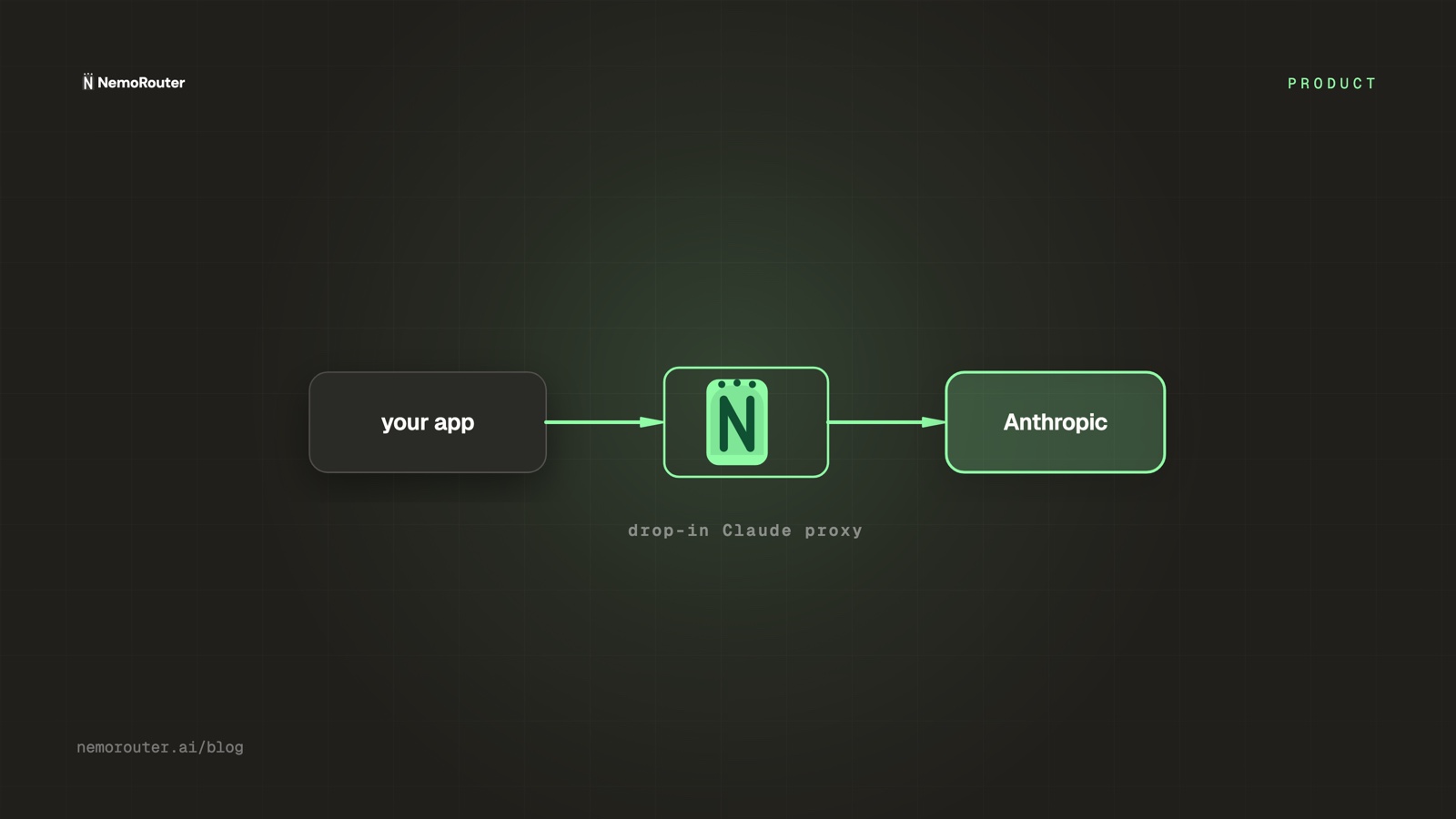
Point your Anthropic client at one gateway base URL and every Claude call arrives with a hard budget, a fallback path, a per-request cost header, and a team it can be billed to. No SDK rewrite, no provider key to paste.
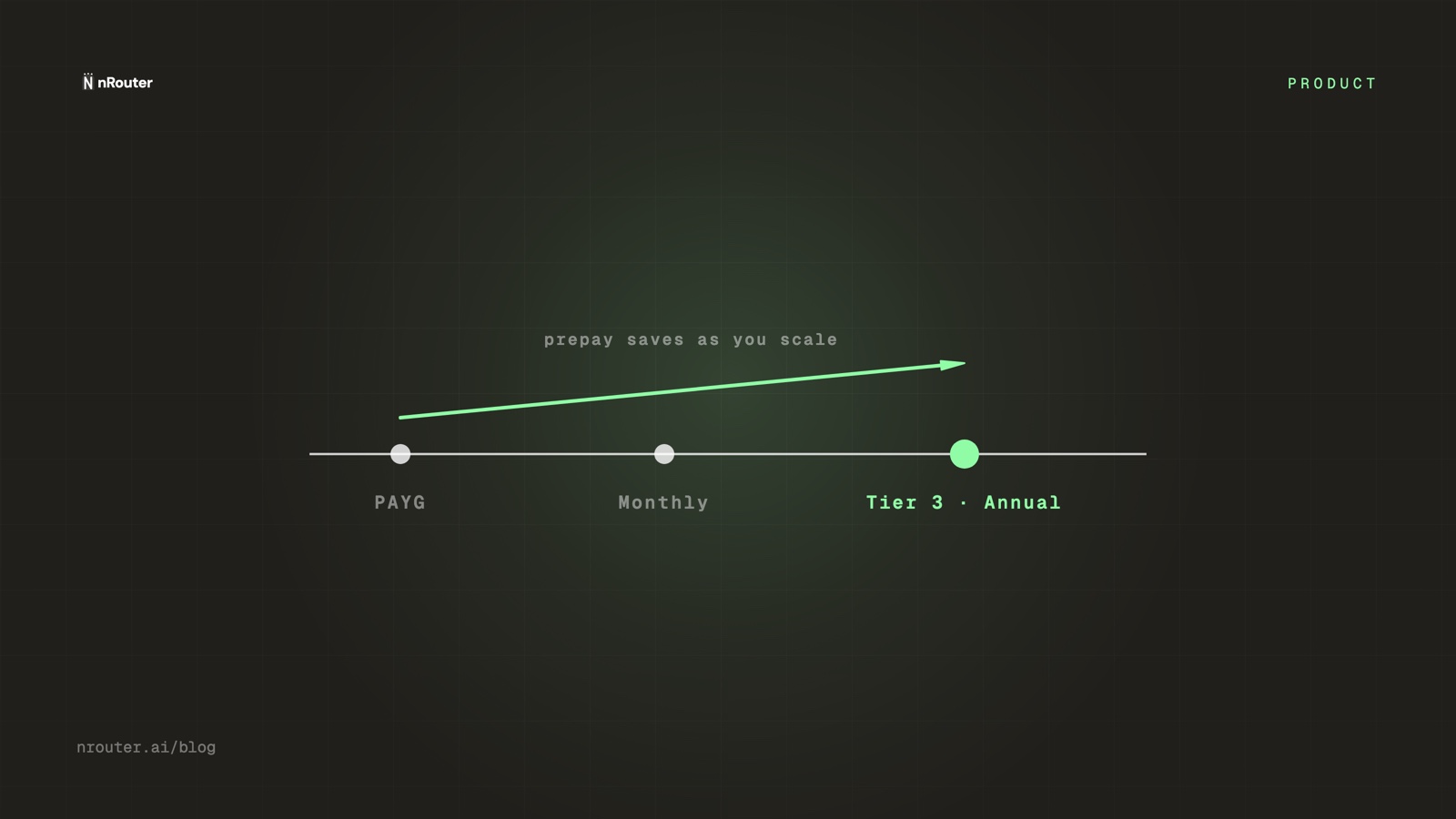
Every nRouter plan pays the same 4% platform fee on credits, so a subscription never lowers the fee. What Starter, Pro and Max buy is a monthly nrouter/auto usage allowance and higher rate limits — worth it only for traffic you are happy to let nRouter route.
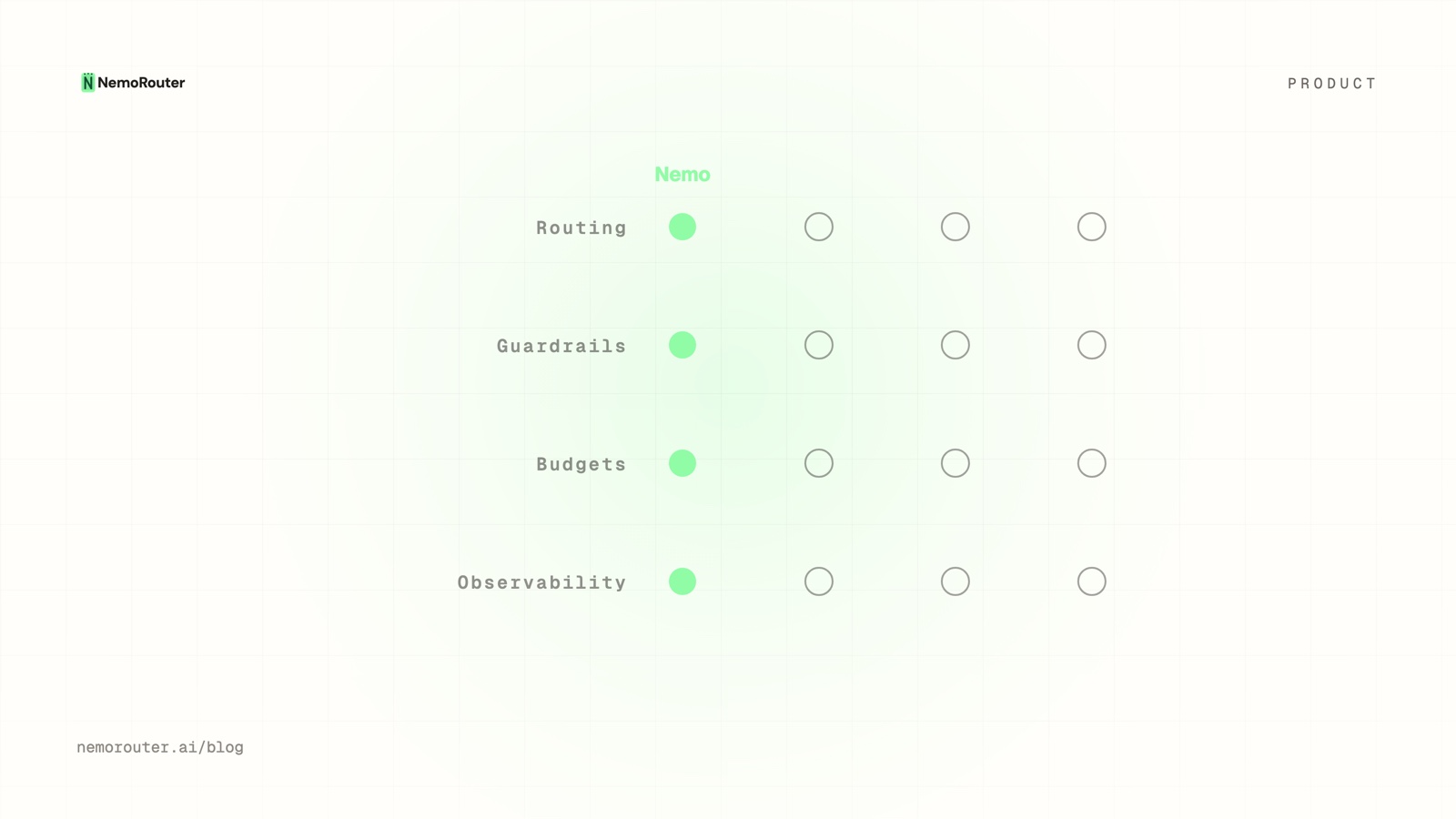
Eight axes that actually matter when picking an LLM gateway in 2026. Shortlist matrix across OpenRouter, Portkey, Helicone, nRouter. Decision tree by buyer profile, 90-minute evaluation.

A rebuilt savings model for a $40k/month LLM bill. Batch and prompt caching carry published rates; provider capacity reservations do not, so that lever is a labelled assumption with a stated range. Every line is separated into sourced and assumed.
Head-to-head comparison: nRouter vs OpenRouter, Portkey, Helicone. Guardrails, A/B tests, prompt management, evals, budgets — included on every plan. 4% of your credits on every plan, no minimum fee. One base-URL switch.
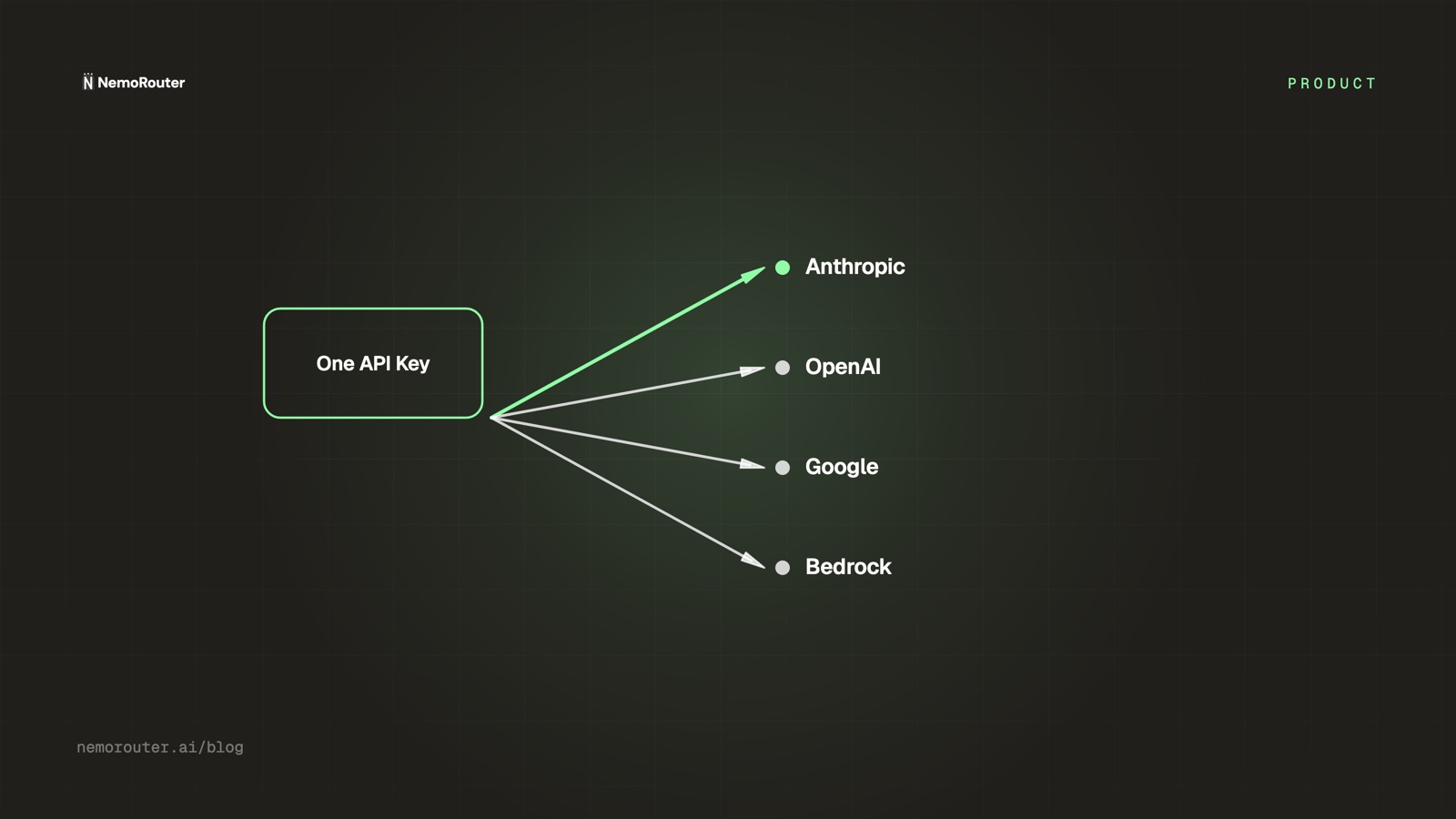
nRouter is a managed LLM gateway. One OpenAI-compatible key reaches every model in your catalog, every response carries its exact cost, and guardrails, budgets, A/B tests and prompt management are on every plan, not gated.
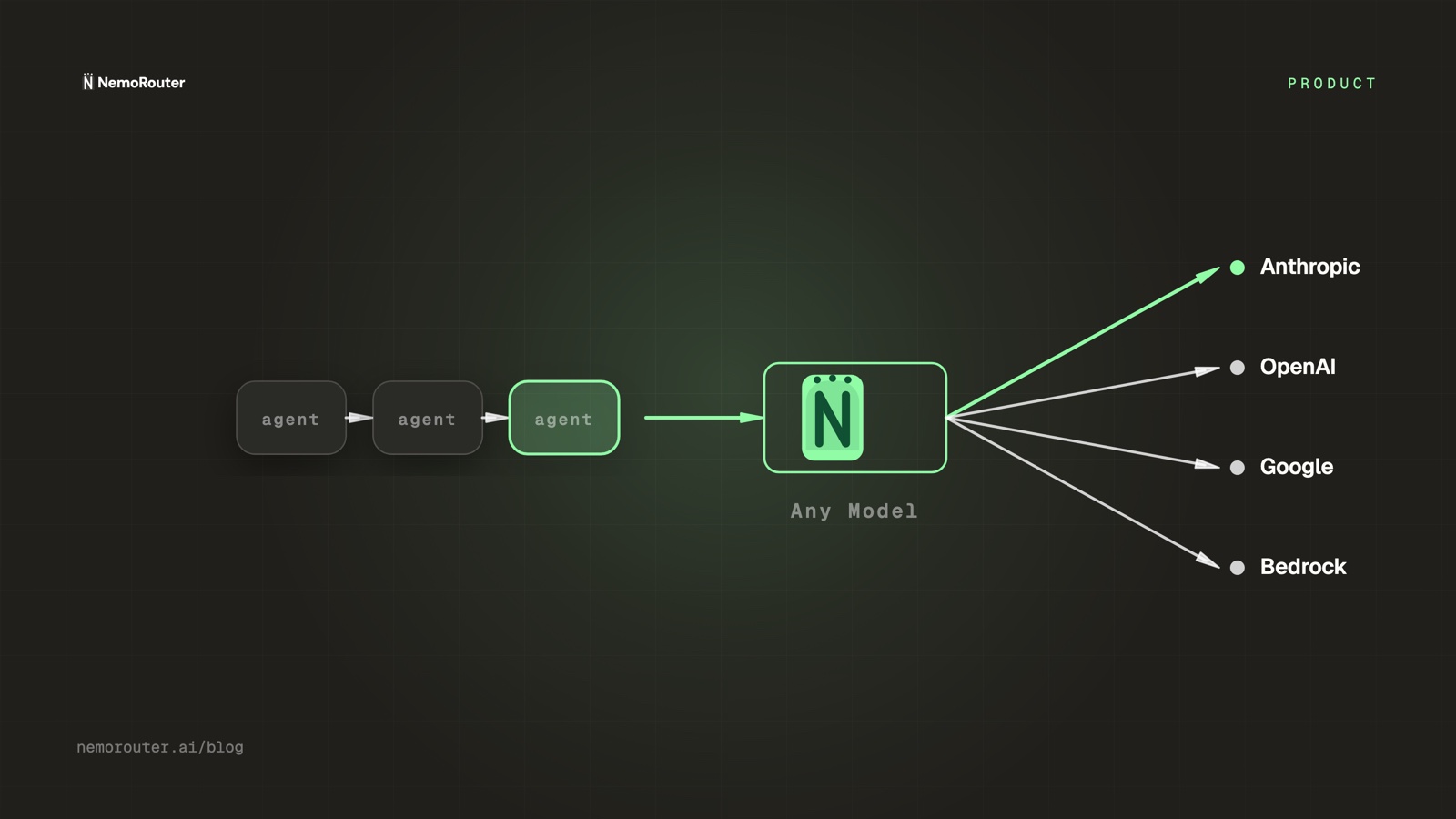
An agent sends hundreds of calls without a human in the loop, so the loop bug you have not written yet is a billing event. Give each agent role its own key with its own rate ceiling and spend cap, enforced at the gateway rather than in the agent code that has the bug.
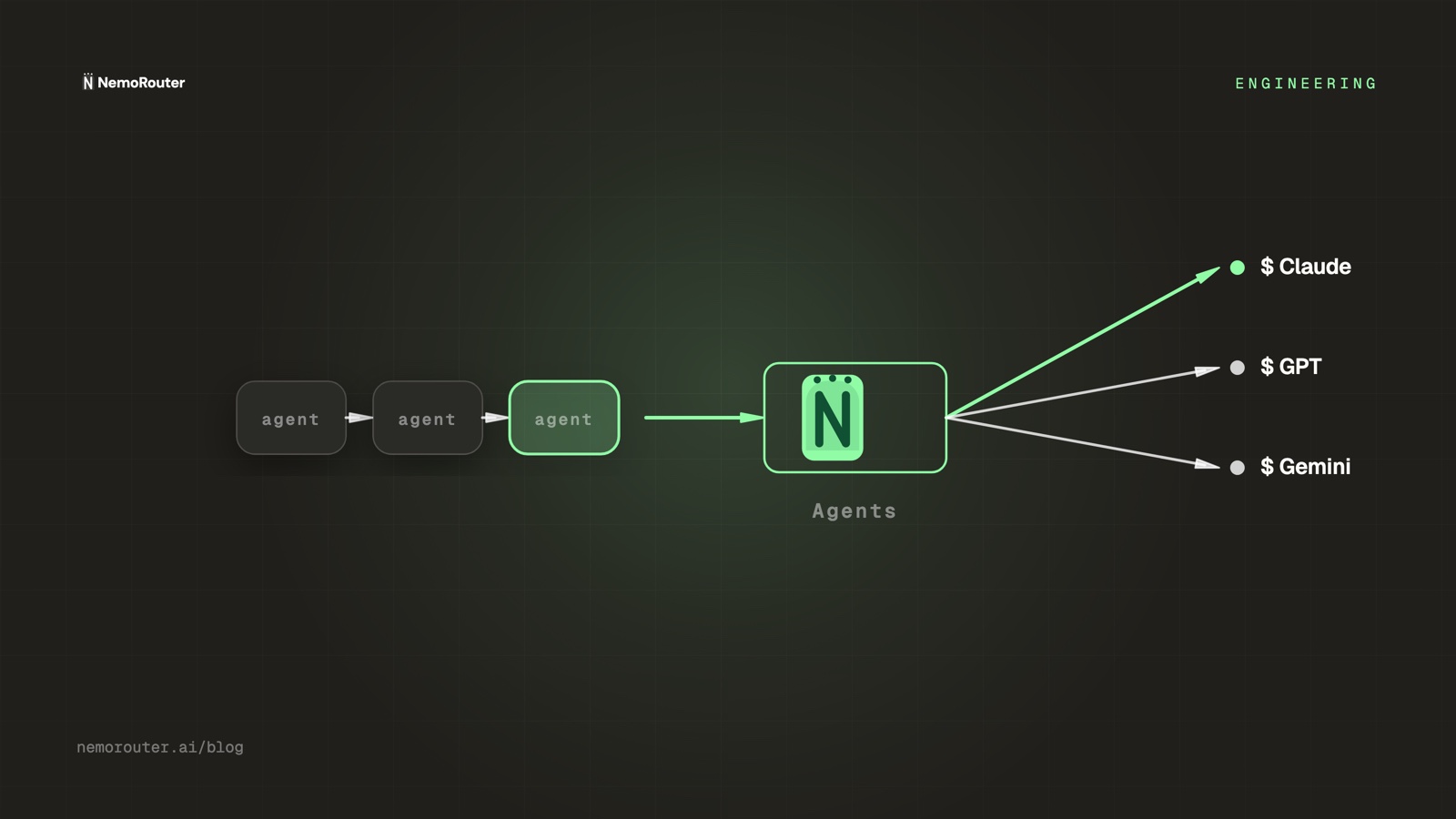
Attribute LLM spend across multi-agent workflows by role, run, and step, reconcile usage against the credit ledger, and enforce hard gateway budget caps.
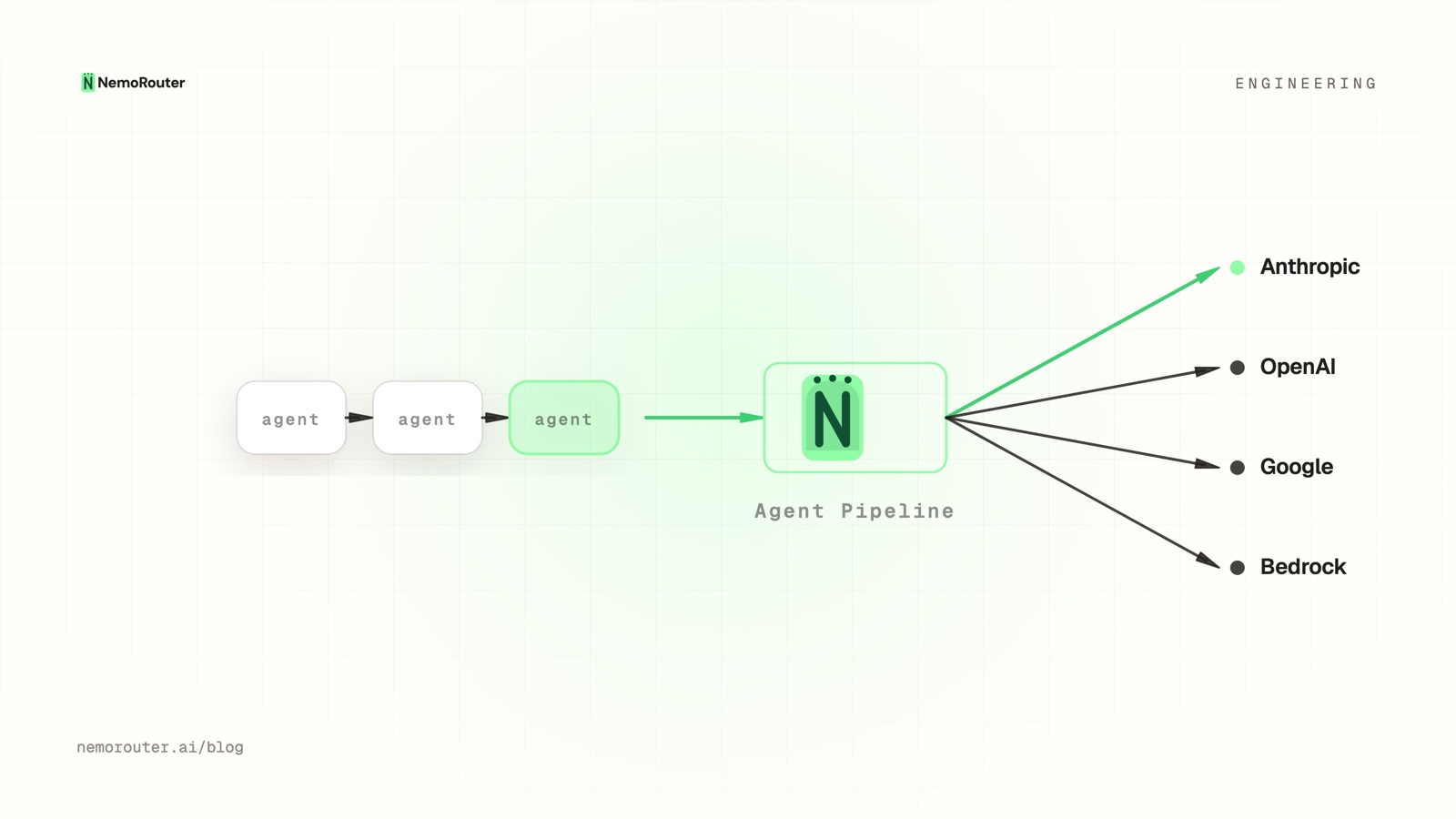
Route each agent step to the model that fits its complexity, survive mid-chain provider outages, and capture one settled cost per run with an LLM gateway.