Tag

cost-control

12 posts tagged "cost-control".

Editorial Guide

Active Cost Control: Prompt Compression, Caching & Smart Routing Systems

Controlling large language model expenses requires proactive, multi-layered optimization strategies throughout the inference pipeline. Active cost control combines semantic response caching, prompt token compression, and intelligent model routing to systematically eliminate unnecessary token consumption without sacrificing generation accuracy or application quality across workflows.

Key Engineering Challenges

Redundant Prompt Ingestion Across Repetitive Queries

Repeatedly sending identical system instructions, few-shot examples, and documentation chunks wastes millions of tokens on repetitive processing across conversations, driving up costs unnecessarily.

Over-Provisioned Model Selection for Basic Tasks

Using premier reasoning models for routine queries that could be handled flawlessly by cheaper, optimized models inflates inferencing costs without improving output quality or business outcomes.

Cache Invalidation Complexity in Semantic Search

Traditional exact-match caching fails when prompts contain minor typographical variations or timestamp differences, resulting in low cache hit rates and wasted compute on duplicate queries.

Context Bloat in Agentic Workflows and RAG Pipelines

Chat histories and tool execution logs expand rapidly over multi-turn conversations, multiplying the token cost of each subsequent query exponentially across recursive execution cycles.

Architecture Taxonomy & Core Components

LLMLingua-2 Compression Engine

Stateless neural prompt compression reducing token volume by 30-50% with zero information loss.

Semantic Response Cache

Sub-millisecond vector similarity caching delivering instant responses at exactly $0 token cost.

Strategy::Intent Tier Dispatcher

Automatically routes light queries to low-cost models, reserving frontier LLMs for complex tasks.

nRouter Integrated Cost Optimization Suite

nRouter provides an active cost control pipeline built directly into the data plane. Before forwarding requests to model providers, the gateway checks its semantic response cache to serve frequent answers with sub-millisecond latency and $0 in token fees. If execution is required, LLMLingua-2 compression trims verbose system contexts and conversation history by up to 50%. Finally, Strategy::Intent dispatches queries to the most cost-effective capable model tier, helping teams reduce overall LLM spend by up to 70%.

Explore our comprehensive guides on semantic response caching, neural prompt compression, and smart model tiering.

Posts

Latest first

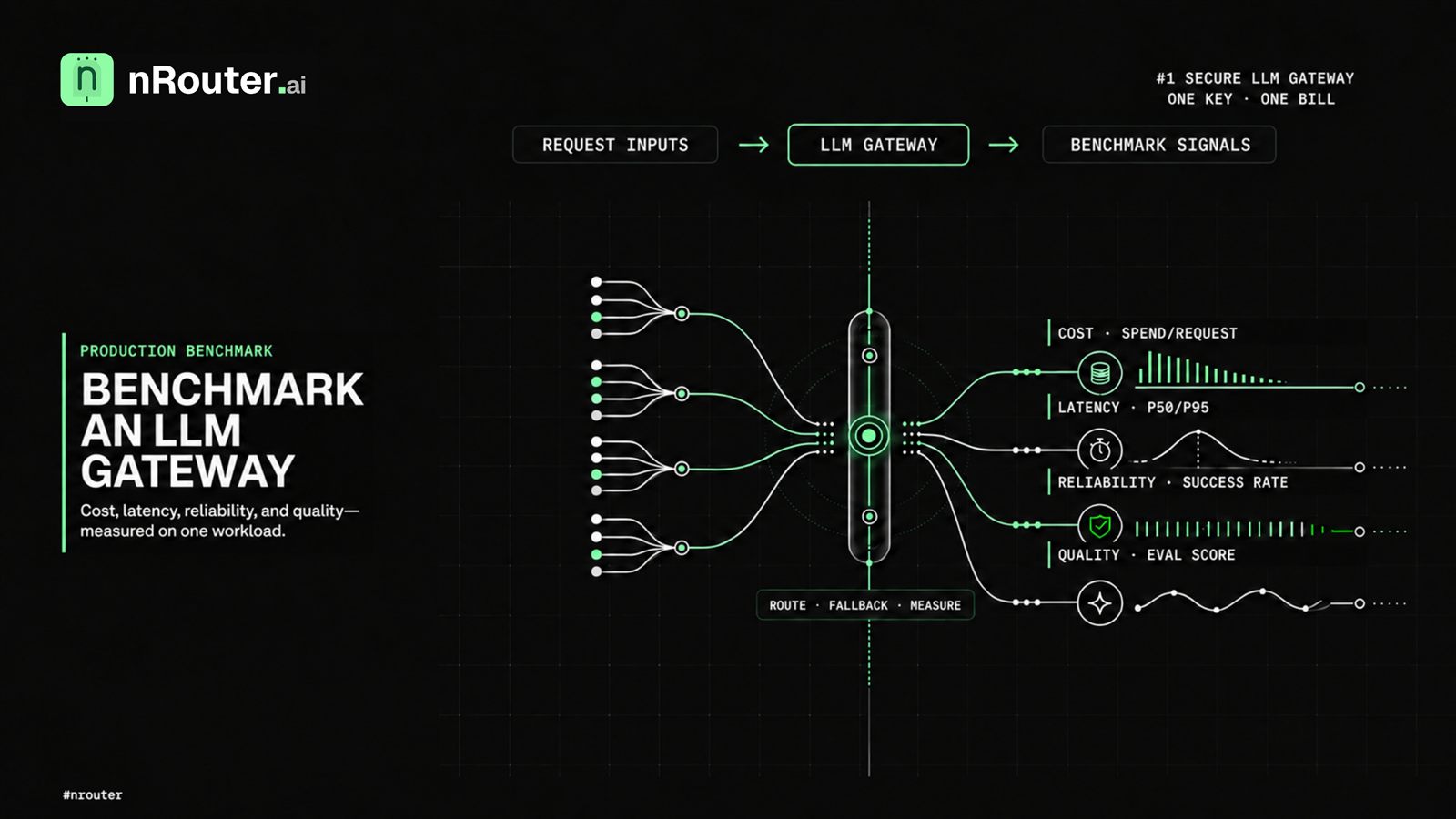
How to Benchmark an LLM Gateway in Production: Cost, Latency, Reliability, and Quality
Engineering

How to Benchmark an LLM Gateway in Production: Cost, Latency, Reliability, and Quality

Benchmark an LLM gateway under production load with repeatable measurements for provider cost, tail latency, fallback recovery, and answer output quality.

Suresh
Read →
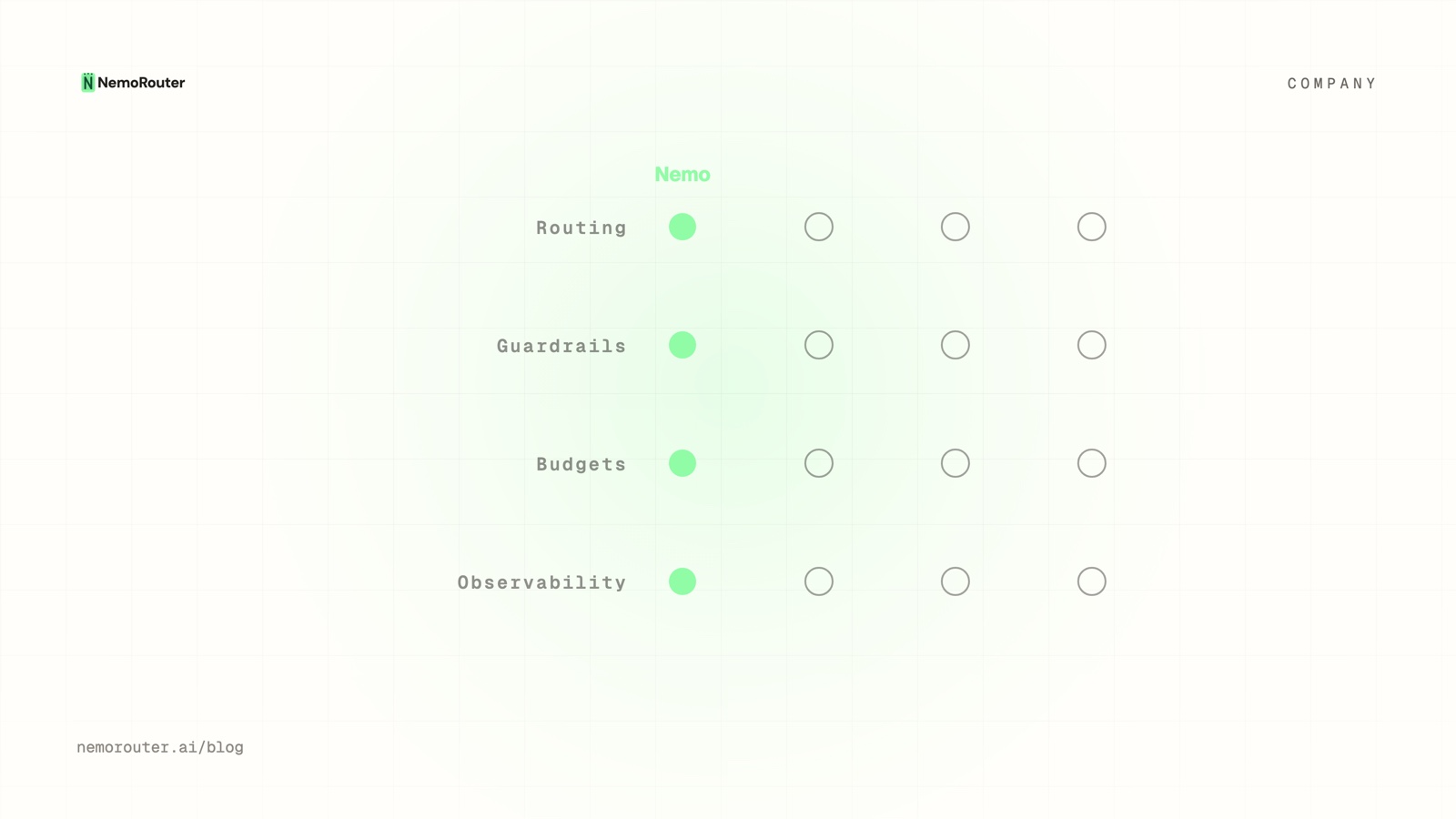
Four Outcomes That Get an LLM Gateway Funded
Company

Four Outcomes That Get an LLM Gateway Funded

Build the internal business case for an LLM gateway on four quantifiable outcomes: total spend reduction, cost per call, tail latency, and developer speed.

nRouter team
10 minRead →
Budget Ceilings That Turn AI Spend Into a Forecast
Product

Budget Ceilings That Turn AI Spend Into a Forecast

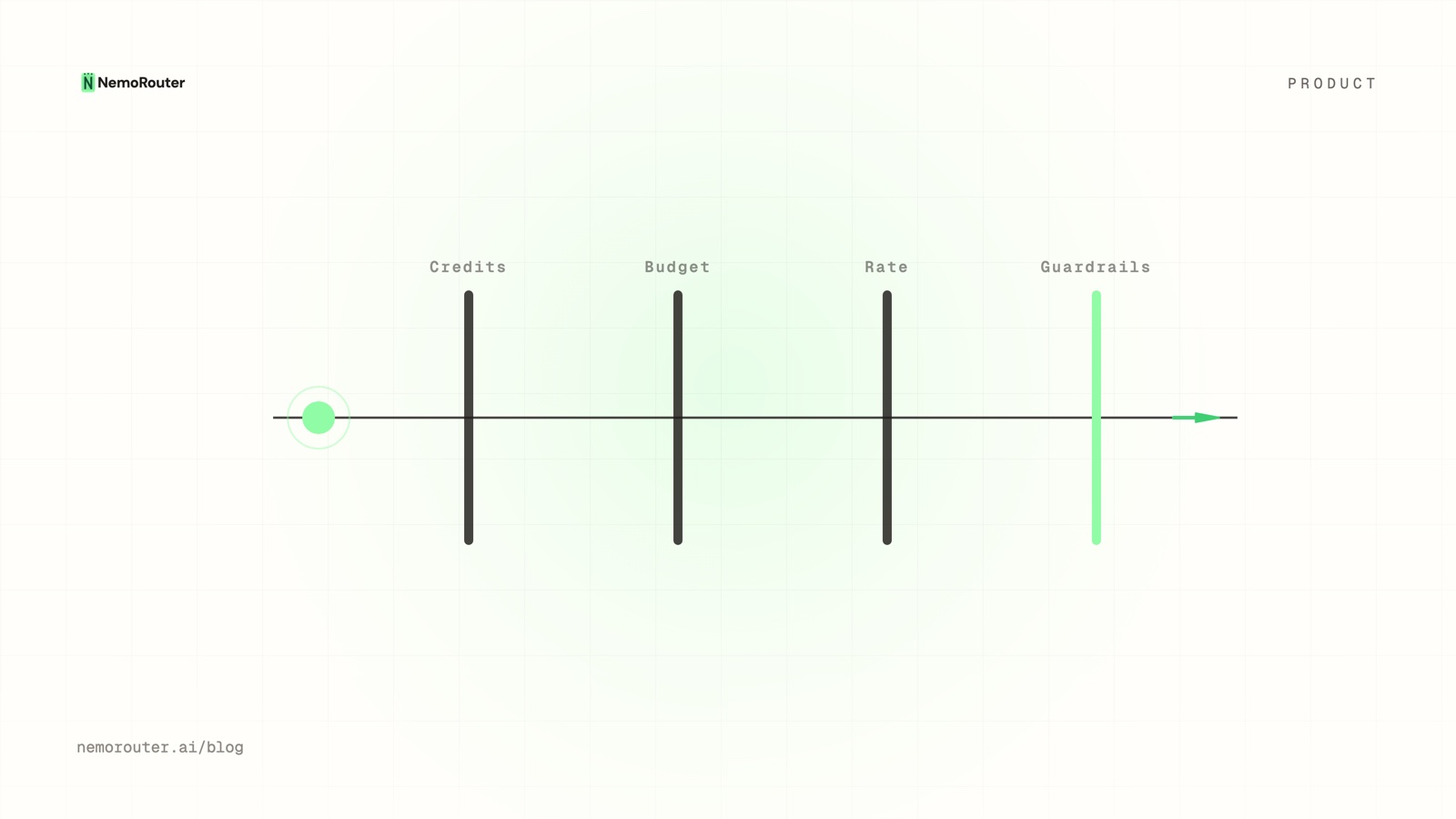
A forecast is only a forecast if the worst case is bounded. Set hard dollar ceilings at the org, team, user and key scope, decompose next month's number into them, and know exactly which code your client gets when one bites.

nRouter team
11 minRead →
Cut LLM Costs by Routing, Not by Rewriting Your App
Product

Cut LLM Costs by Routing, Not by Rewriting Your App

Routing is the one cost lever you can pull from a dashboard. Point an alias at a set of models, choose cost or latency or weighted, and change what a request costs without touching a line of application code.

nRouter team
11 minRead →
5% of Requests, 60% of the Bill: Reading Cost Against Usage
Engineering

5% of Requests, 60% of the Bill: Reading Cost Against Usage

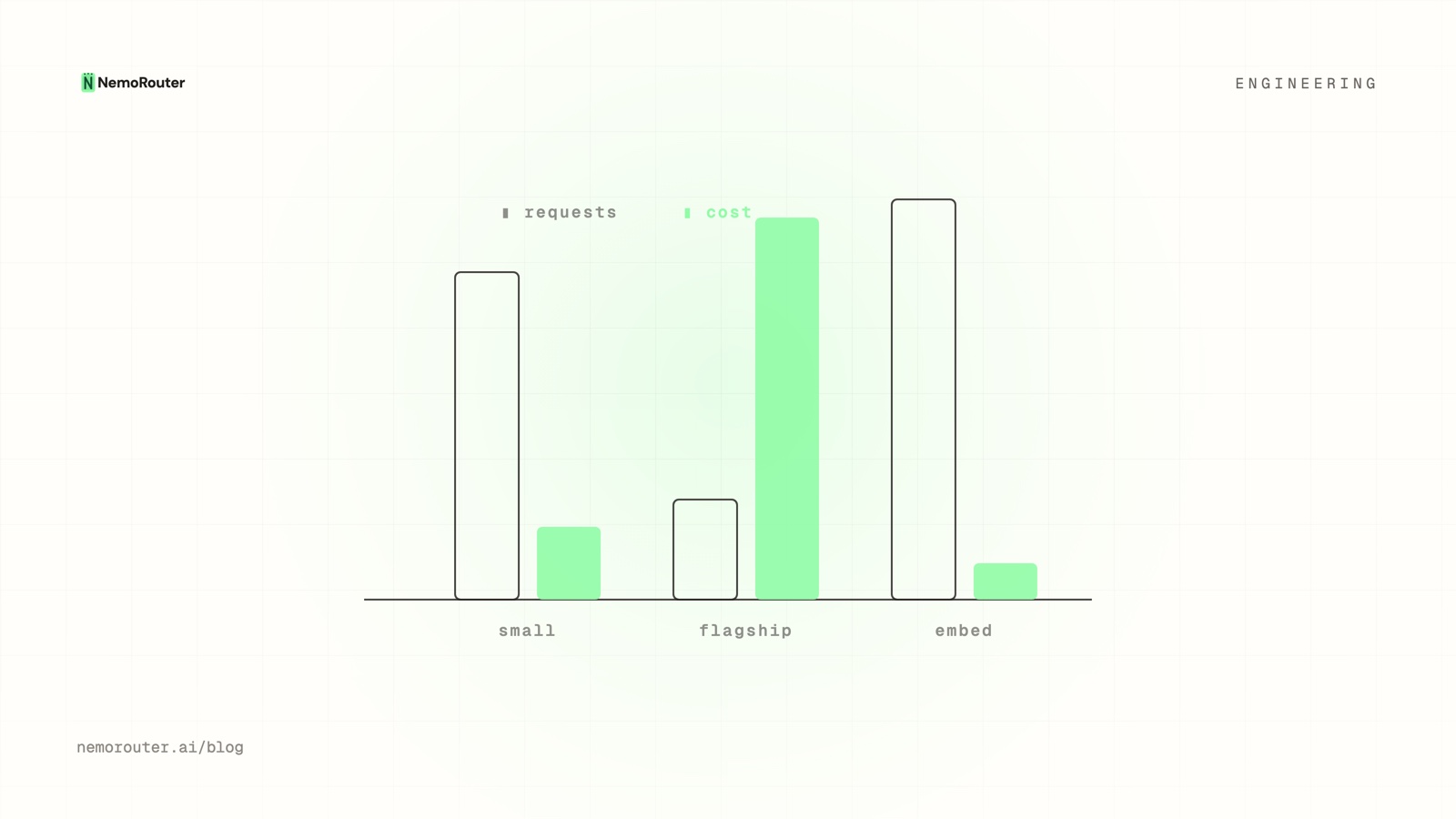
Request count and dollar cost tell different stories, and the gap between them is where the savings are. Here are the four shapes an overlay of cost and usage produces, which one to chase first, and what makes the numbers trustworthy enough to act on.

nRouter team
11 minRead →
Set Up LLM Log Callbacks: Datadog, Langfuse, S3, Slack
Guides

Set Up LLM Log Callbacks: Datadog, Langfuse, S3, Slack

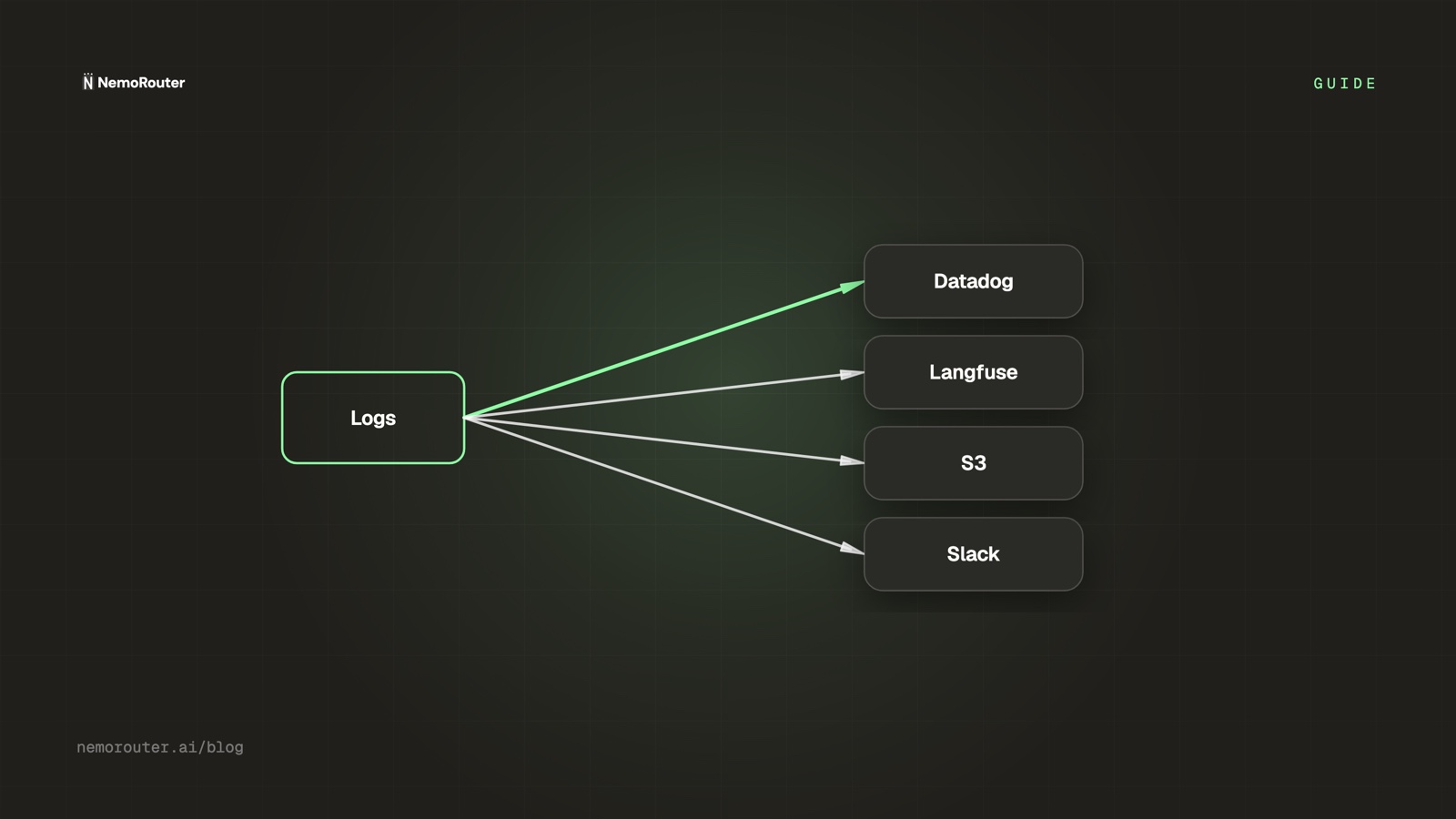
Configure log destinations once at the gateway instead of instrumenting every call site. Here is how to add and verify a callback today, what the Beta does and does not deliver yet, and the live paths that get data out in the meantime.

nRouter team
10 minRead →
Budgets vs Rate Limits: Pick the Control, Then Set Both
Guides

Budgets vs Rate Limits: Pick the Control, Then Set Both

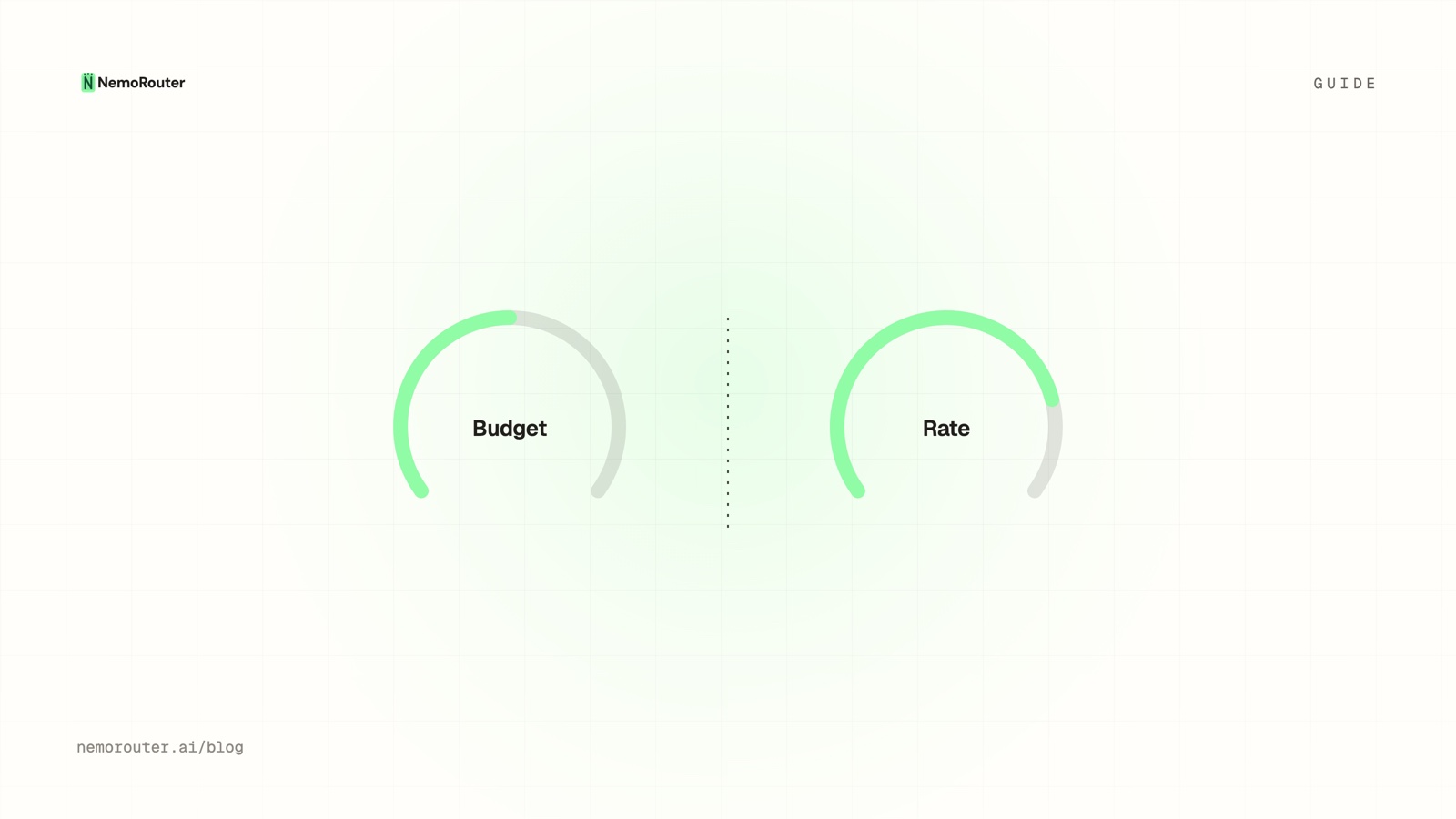
A budget caps dollars over a window and answers 402; a rate limit caps RPM/TPM right now and answers 429. Here is how to classify the risk, set each control in the dashboard, and write client code that tells the three rejections apart.

nRouter team
10 minRead →
Auto Top-Up Without Surprise Bills: Threshold, Amount, Cap
Guides

Auto Top-Up Without Surprise Bills: Threshold, Amount, Cap

Auto top-up keeps your balance from hitting zero mid-traffic, but on its own it removes the only thing that stops a runaway. Here is the three-number configuration — threshold, top-up amount, and a Block-mode budget — that makes it safe.

nRouter team
10 minRead →
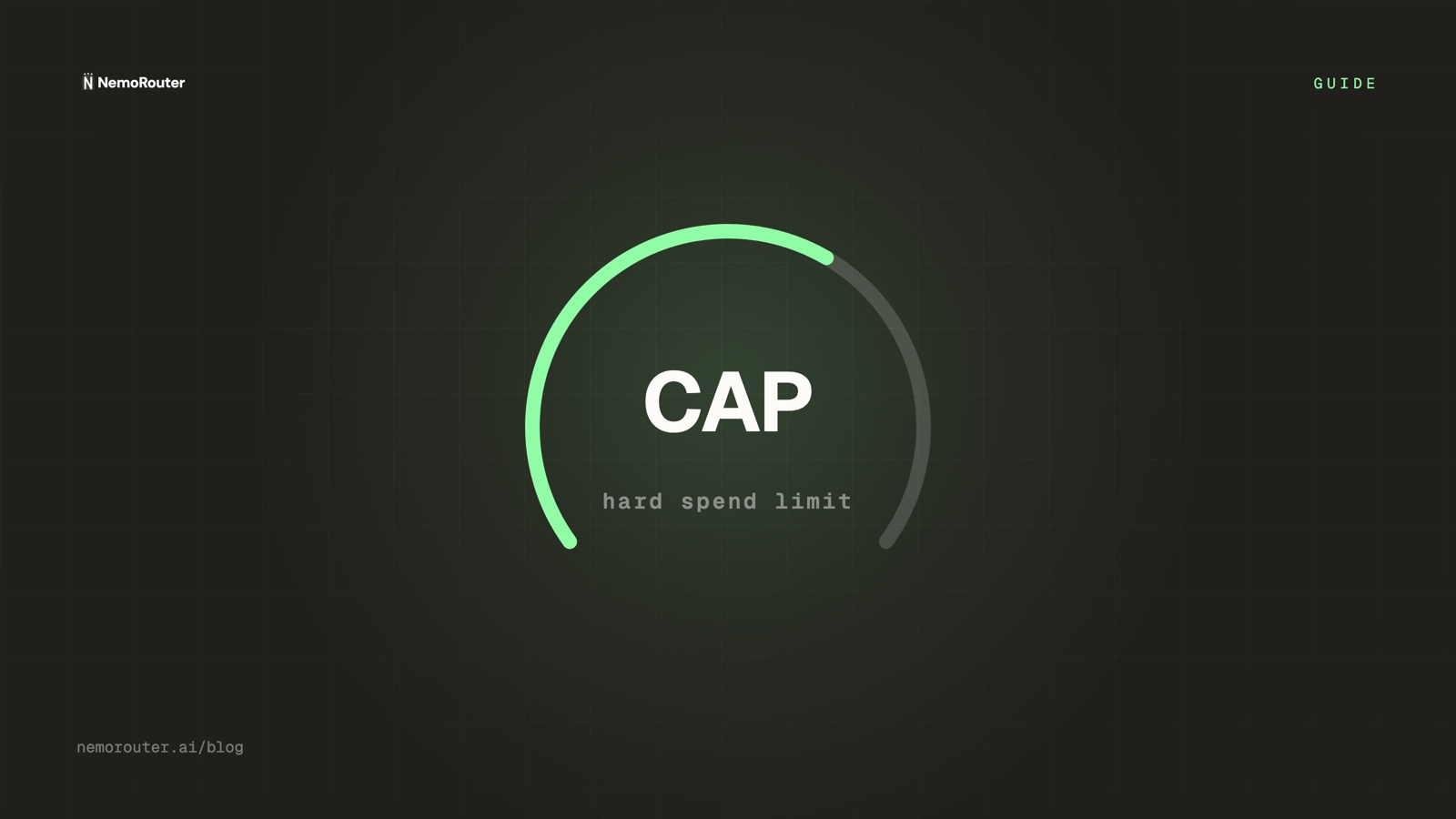
Hard LLM Spend Caps at Org, Team, User, and Key Scope
Guides

Hard LLM Spend Caps at Org, Team, User, and Key Scope

A budget is a dollar allowance attached to a scope and a window. Here is how to create one on each of the four scopes, which status code each returns when it fires, and how to prove the cap bites before you trust it in production.

nRouter team
11 minRead →
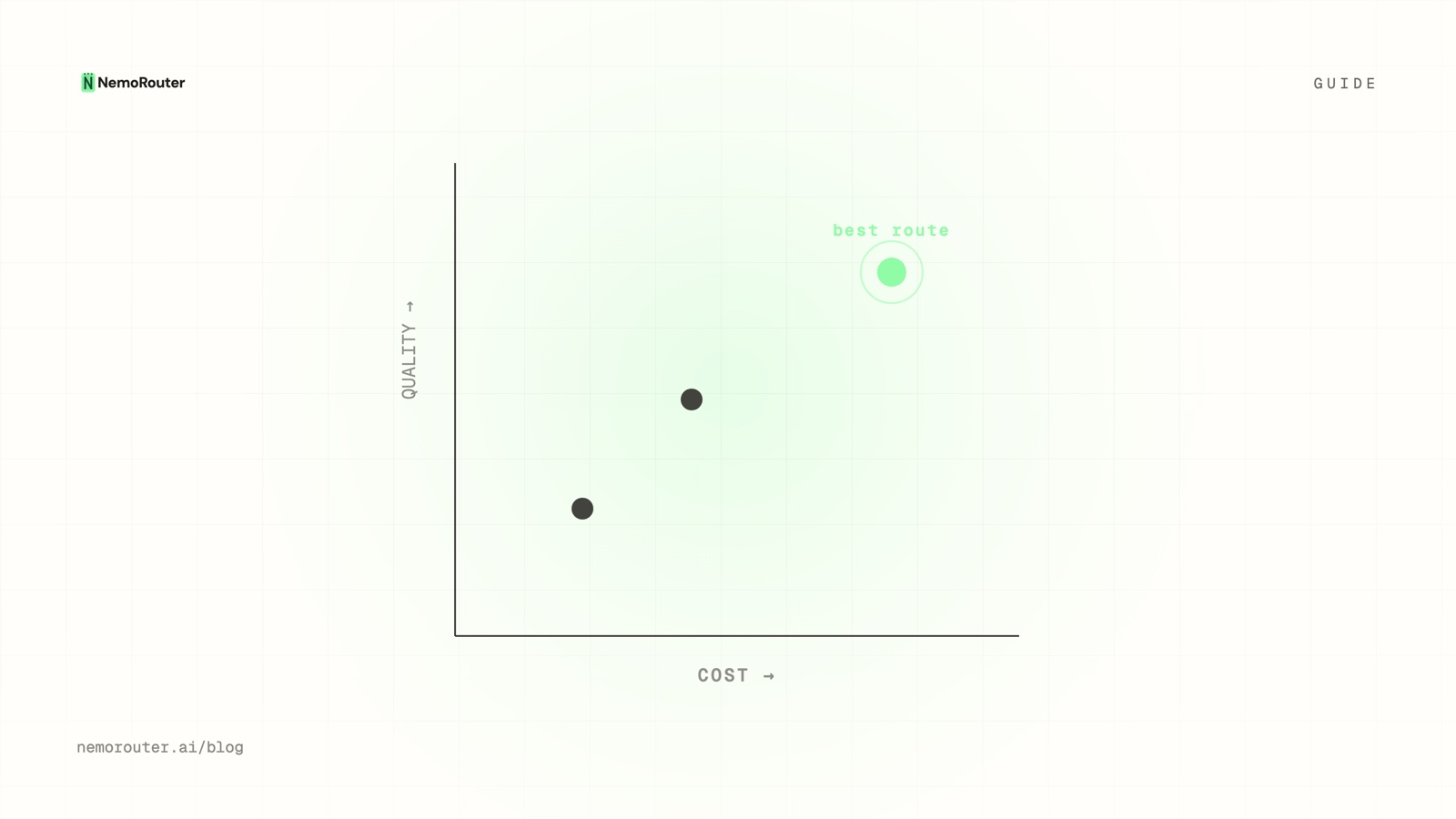
Cost-vs-Quality LLM Routing: Which Tasks Can Go Cheap
Guides

Cost-vs-Quality LLM Routing: Which Tasks Can Go Cheap

Quality is a property of a task, not of a model. Here is how to inventory your traffic by task, point a router alias at a candidate set, prove each downgrade with an A/B test, and read the saving off the Cost vs Usage report.

nRouter team
11 minRead →
Cutting LLM costs: what published discounts actually save, and where the model is an assumption
Comparison

Cutting LLM costs: what published discounts actually save, and where the model is an assumption

A rebuilt savings model for a $40k/month LLM bill. Batch and prompt caching carry published rates; provider capacity reservations do not, so that lever is a labelled assumption with a stated range. Every line is separated into sourced and assumed.

nRouter team
14 minRead →
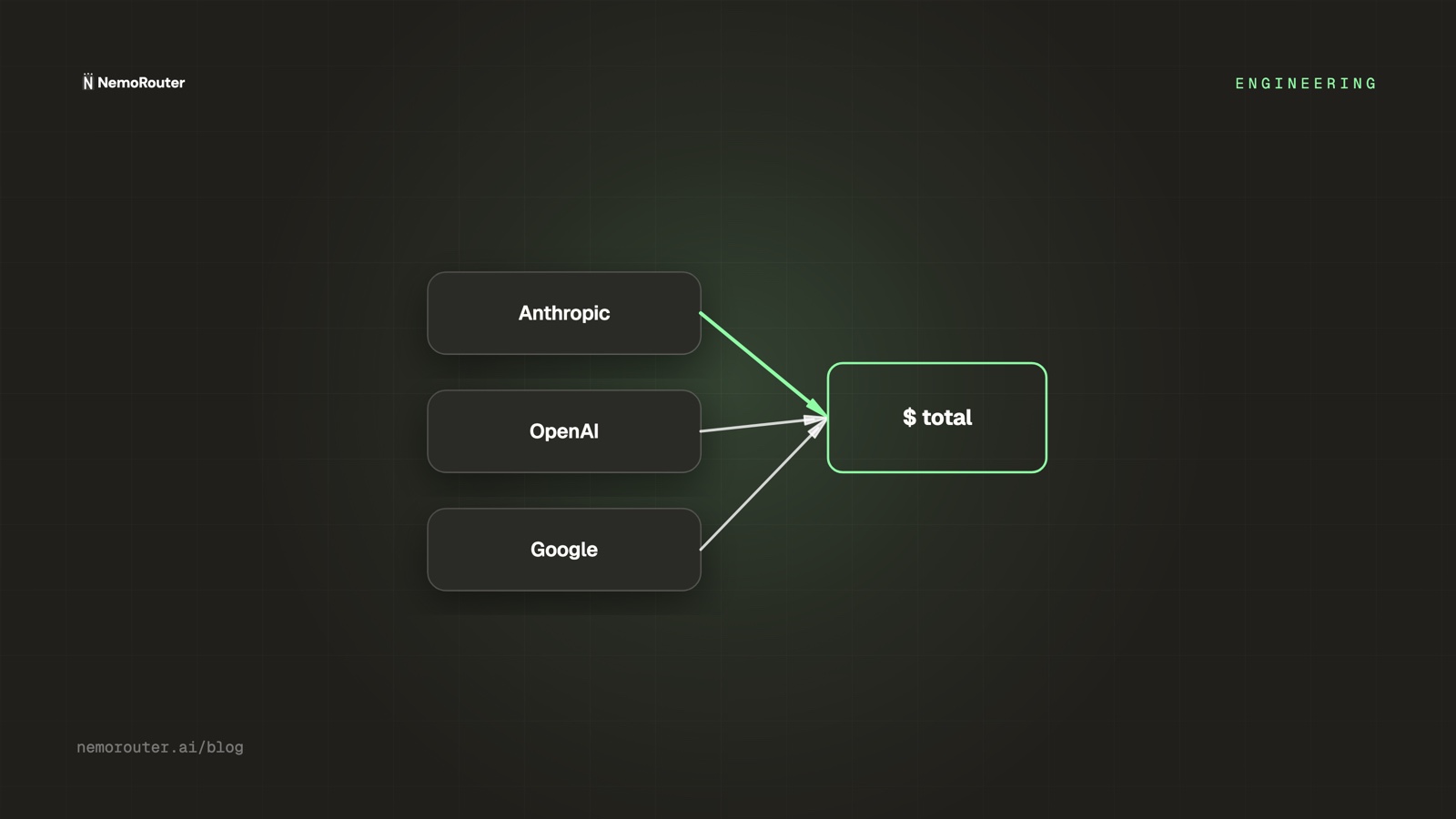
One Authoritative Cost Per LLM Request, Across Providers
Engineering

One Authoritative Cost Per LLM Request, Across Providers

Provider pricing does not normalize on its own — per-token, per-image, per-second, provisioned. Here is how nRouter turns that into one settled cost per request that your app, your ledger and your dashboard all read, and why an unknown cost is reported as absent rather than as zero.

nRouter team
11 minRead →