

Engineering
Sub-15ms LLM Gateway Routing with Warm HTTP/2 Pools
How connection pooling, in-memory preflight gating, and multiplexed HTTP/2 streams eliminate cold TCP/TLS handshakes and keep routing overhead under 15ms.
nRouter team
12 minRead →Building enterprise AI products requires assuming that individual model providers will experience outages, rate limiting, and performance degradation. Production high availability requires an intelligent gateway layer equipped with automated circuit breakers, exponential retry backoff, multi-region failover, and dynamic fallback chains to guarantee 99.99% uptime for mission-critical applications.
When an upstream provider suffers a service outage or regional disruption, unhandled client requests fail abruptly, resulting in severe user-facing downtime and broken user workflows.
Naive retry loops hammering recovering providers exacerbate outages and trigger prolonged rate-limiting cooldown periods, delaying full operational recovery.
If an error occurs mid-stream, standard HTTP clients disconnect. Gateways must catch failures early and transparently retry backup providers before client timeouts occur.
Providers experiencing extreme load often stall for tens of seconds before failing, causing client request queues to back up and exhaust system memory resources.
Continuously monitors upstream error rates, automatically opening circuits to avoid failing providers.
Prevents thundering herd problems with randomized exponential retry intervals.
Routes seamless fallbacks from OpenAI Direct to Azure OpenAI, or Google Vertex AI to AWS Bedrock.
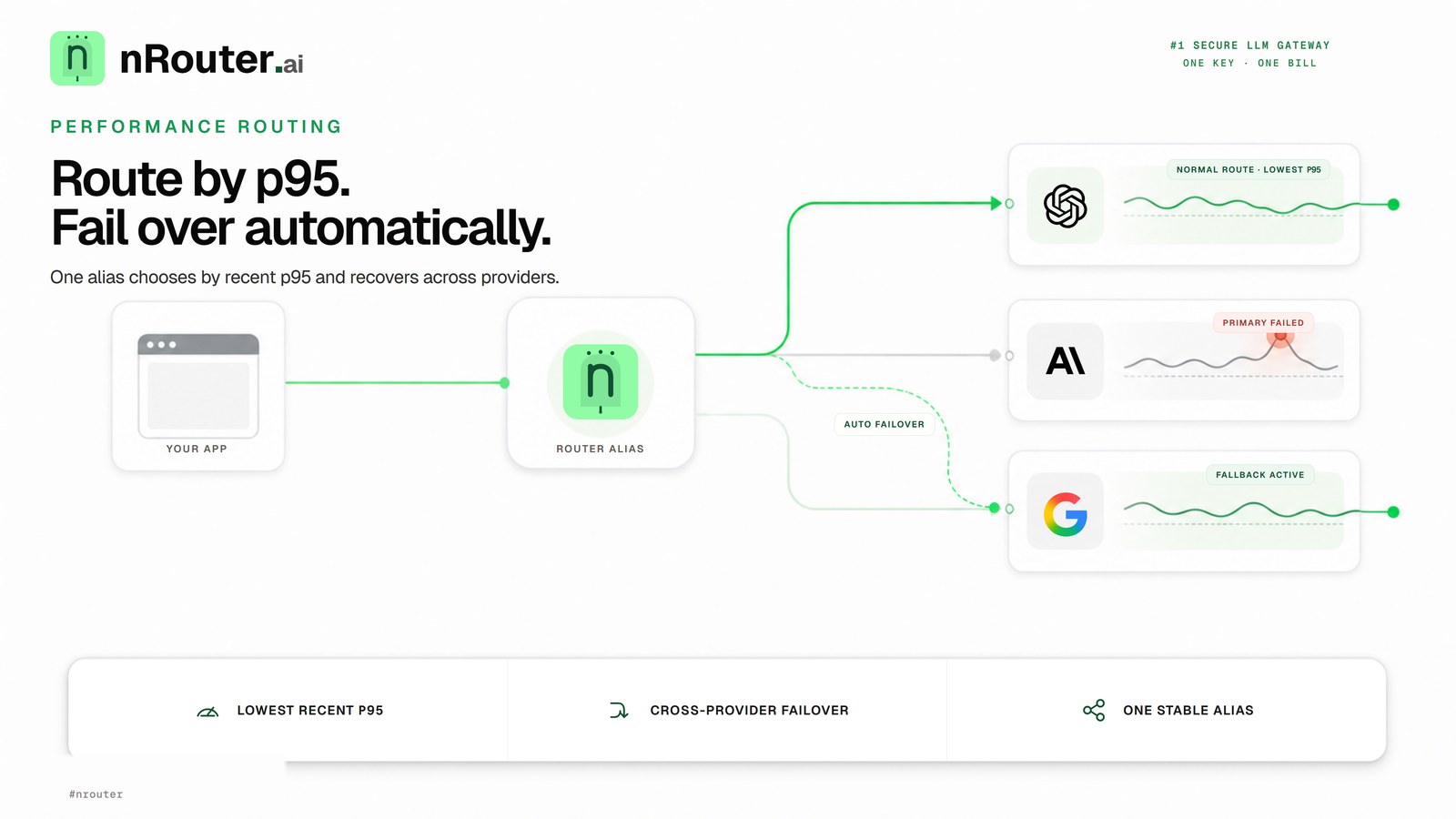
nRouter ensures 99.99% operational availability through its automated fallback chains and intelligent circuit breakers. If a primary foundation model provider experiences degraded health, elevated latency, or HTTP 429/500 status codes, nRouter instantly and transparently switches to secondary configured deployments across alternative clouds or model families. Circuit breakers automatically isolate failing provider endpoints, re-testing them with canary probes before restoring traffic. All retries occur within configured time budgets, preserving active client connections without manual intervention.
Learn how to architect resilient multi-cloud LLM failover systems, configure circuit breakers, and achieve five-nines availability.
How connection pooling, in-memory preflight gating, and multiplexed HTTP/2 streams eliminate cold TCP/TLS handshakes and keep routing overhead under 15ms.
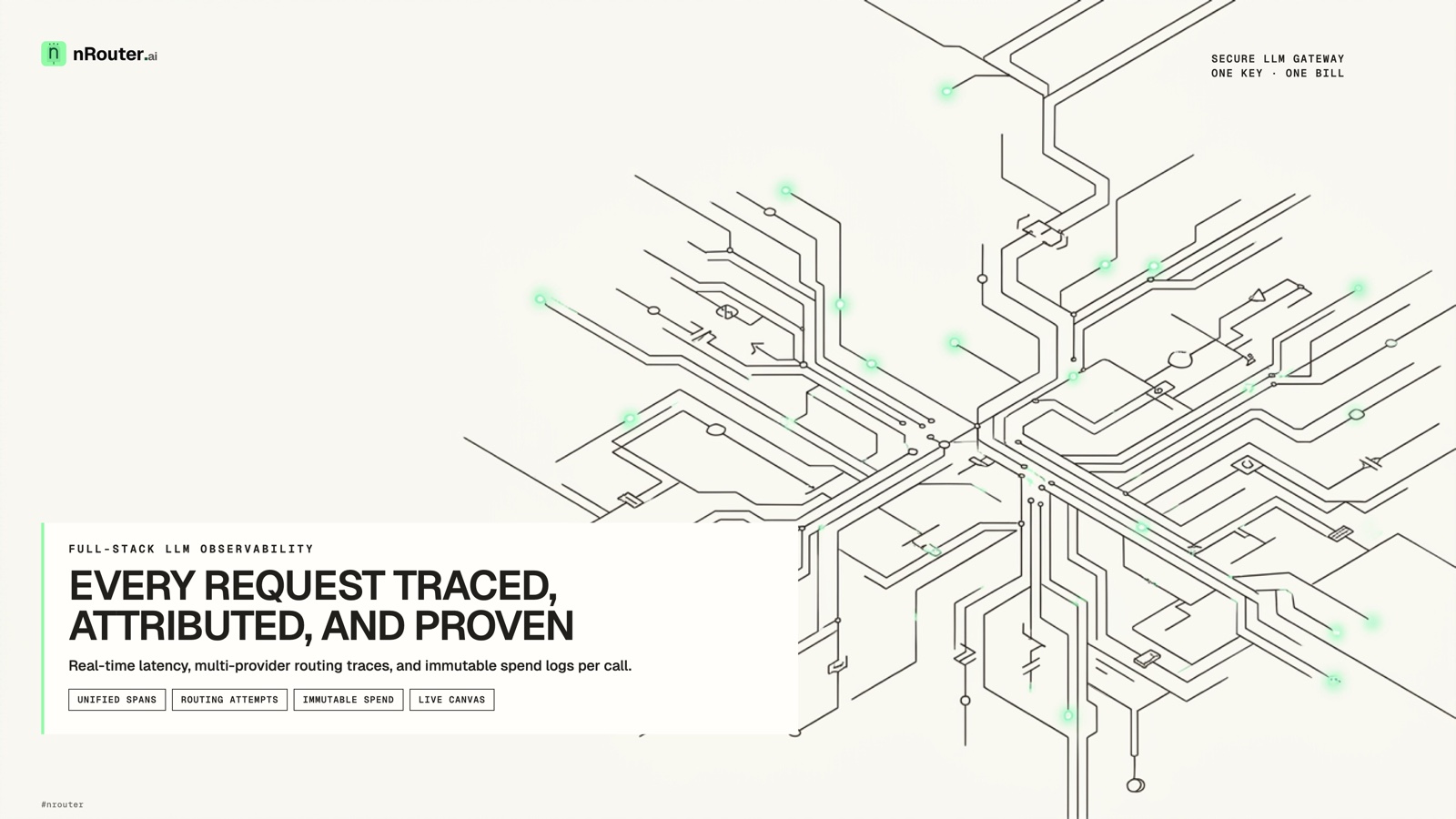
Inspect end-to-end inference traces, exact-cent spend rows, and multi-provider routing decisions in real time with unified OpenTelemetry spans and edge headers.
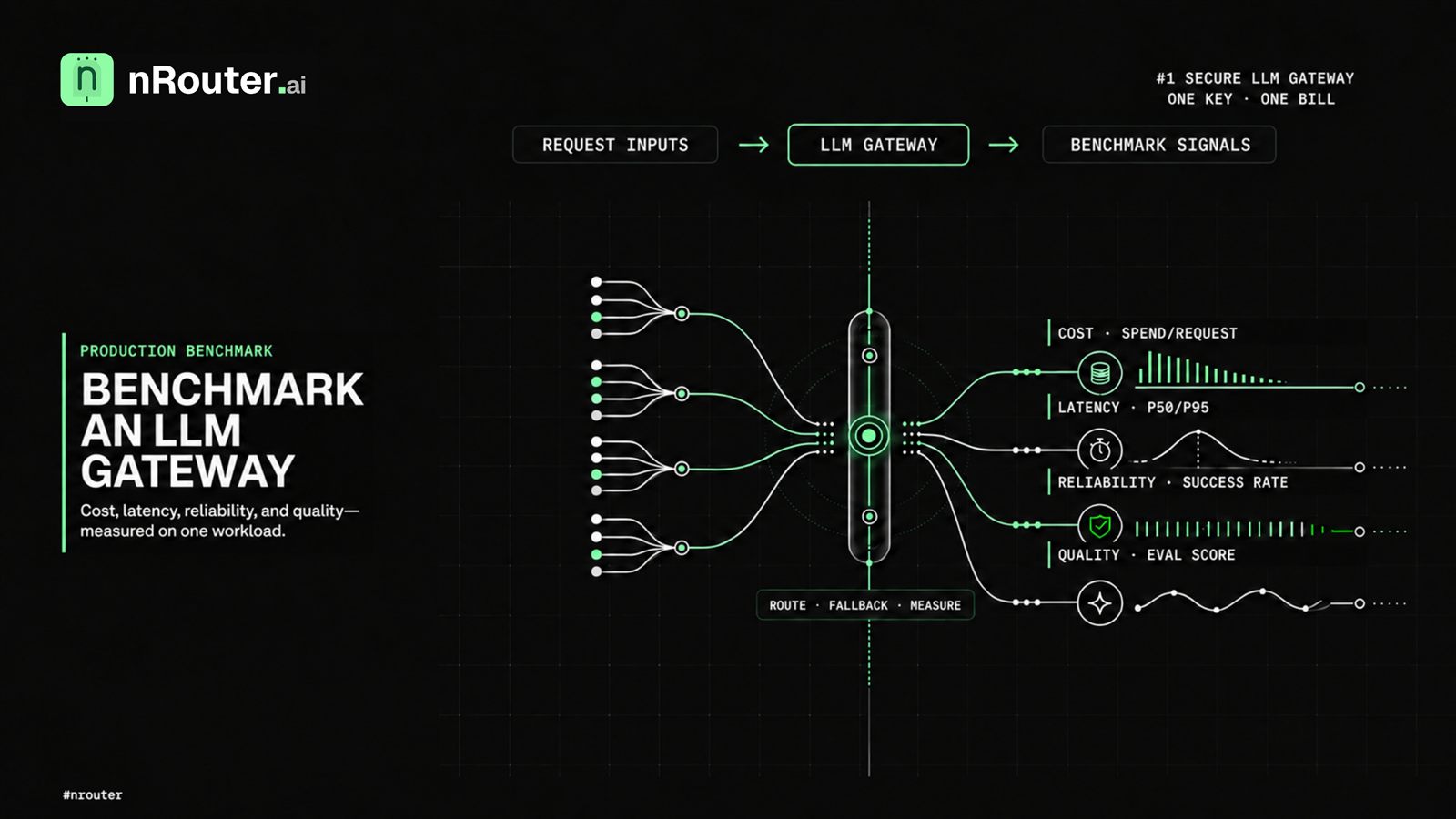
Benchmark an LLM gateway under production load with repeatable measurements for provider cost, tail latency, fallback recovery, and answer output quality.
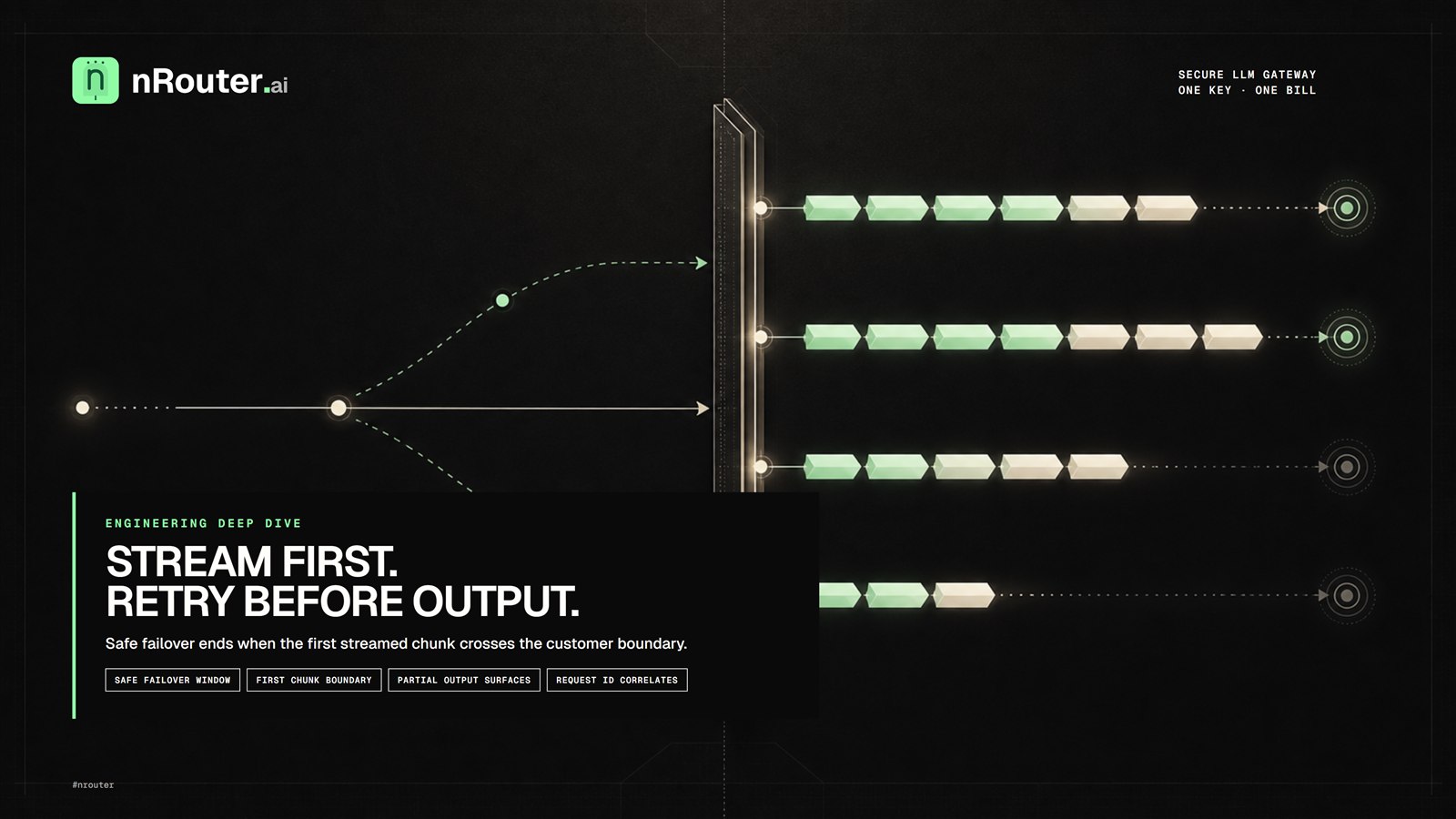
Understand where LLM streaming failover stops being safe, why partial output cannot be replayed silently, and how clients recover without duplicated text.

Point a router alias at a candidate set with the Latency strategy, keep the automatic cross-provider failover, tune the two settings that decide how fast a bad provider is abandoned, and prove the effect on your own p95.

Why average LLM latency misleads, how to analyze p50/p95/p99 distributions and time-to-first-token, and how to isolate tail delays across model providers.
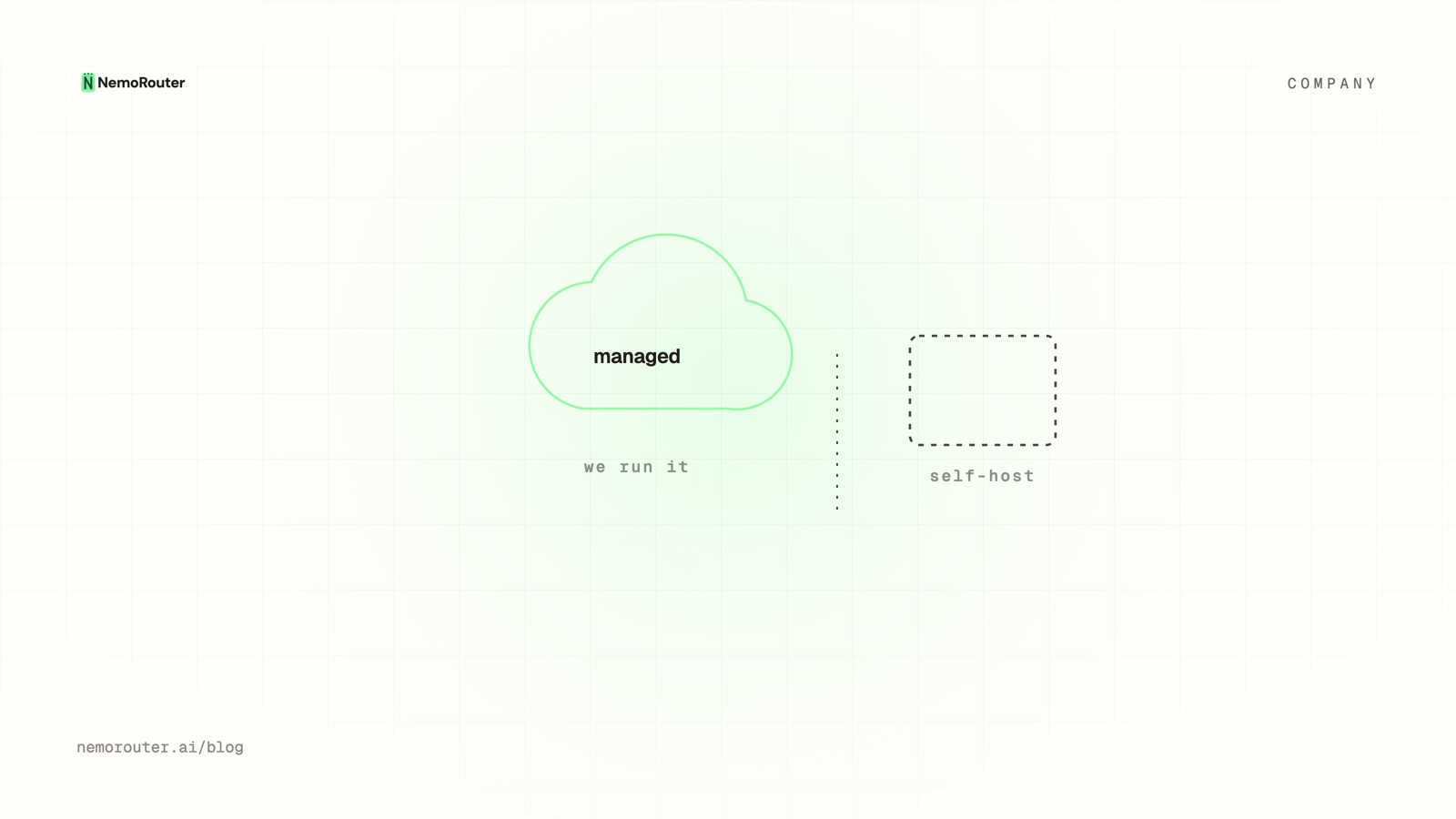
Why nRouter is a managed LLM gateway rather than self-hosted software: the operational burden of proxy hosting, and when running your own infra still wins.
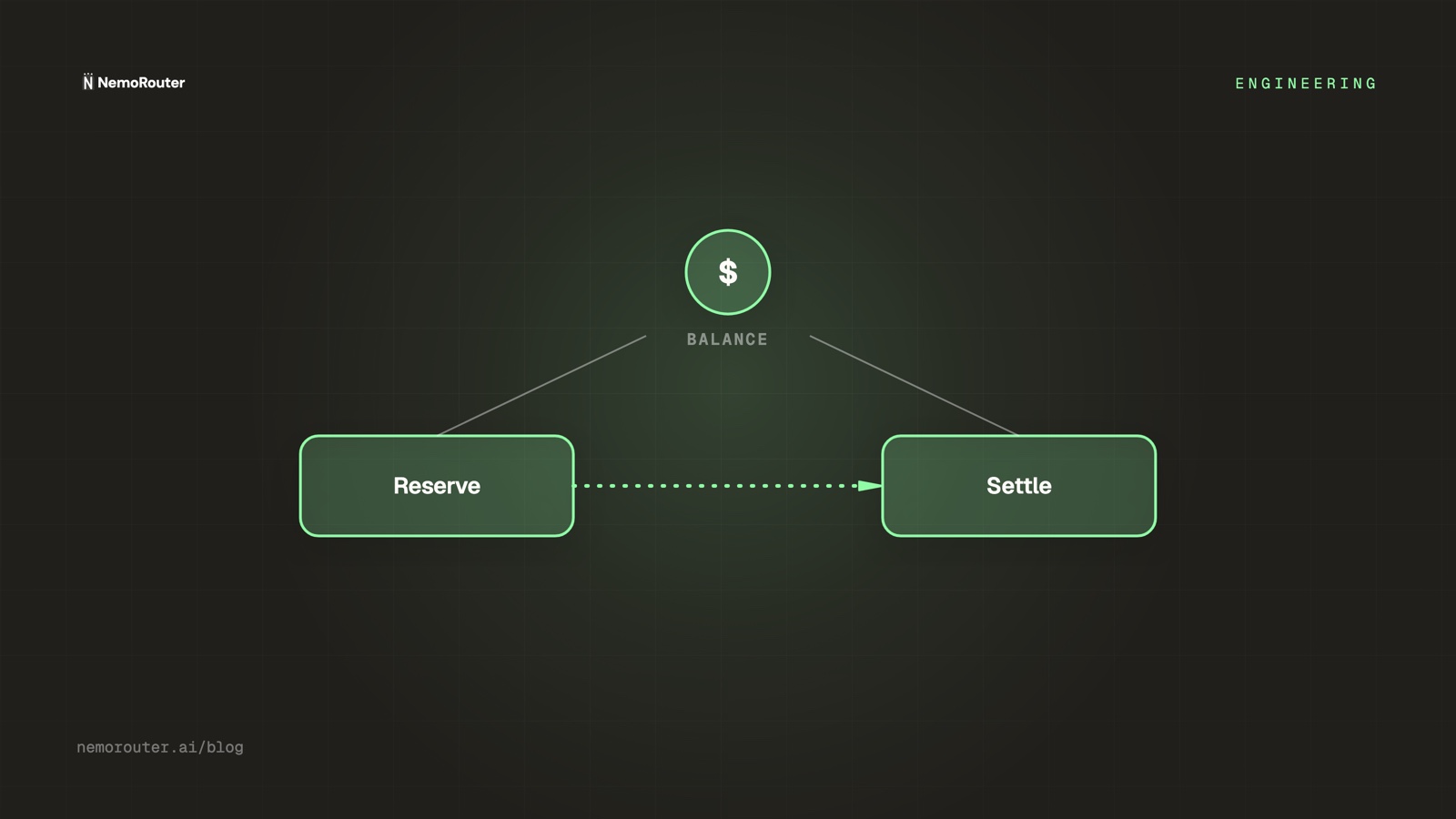
Checking a balance and then calling a provider is a race, and under the fan-out an LLM gateway is built for it loses. Here is the reserve, settle and release contract as you can observe it — what your balance does on success, on an upstream failure, on a timeout, and when the cost is never knowable.
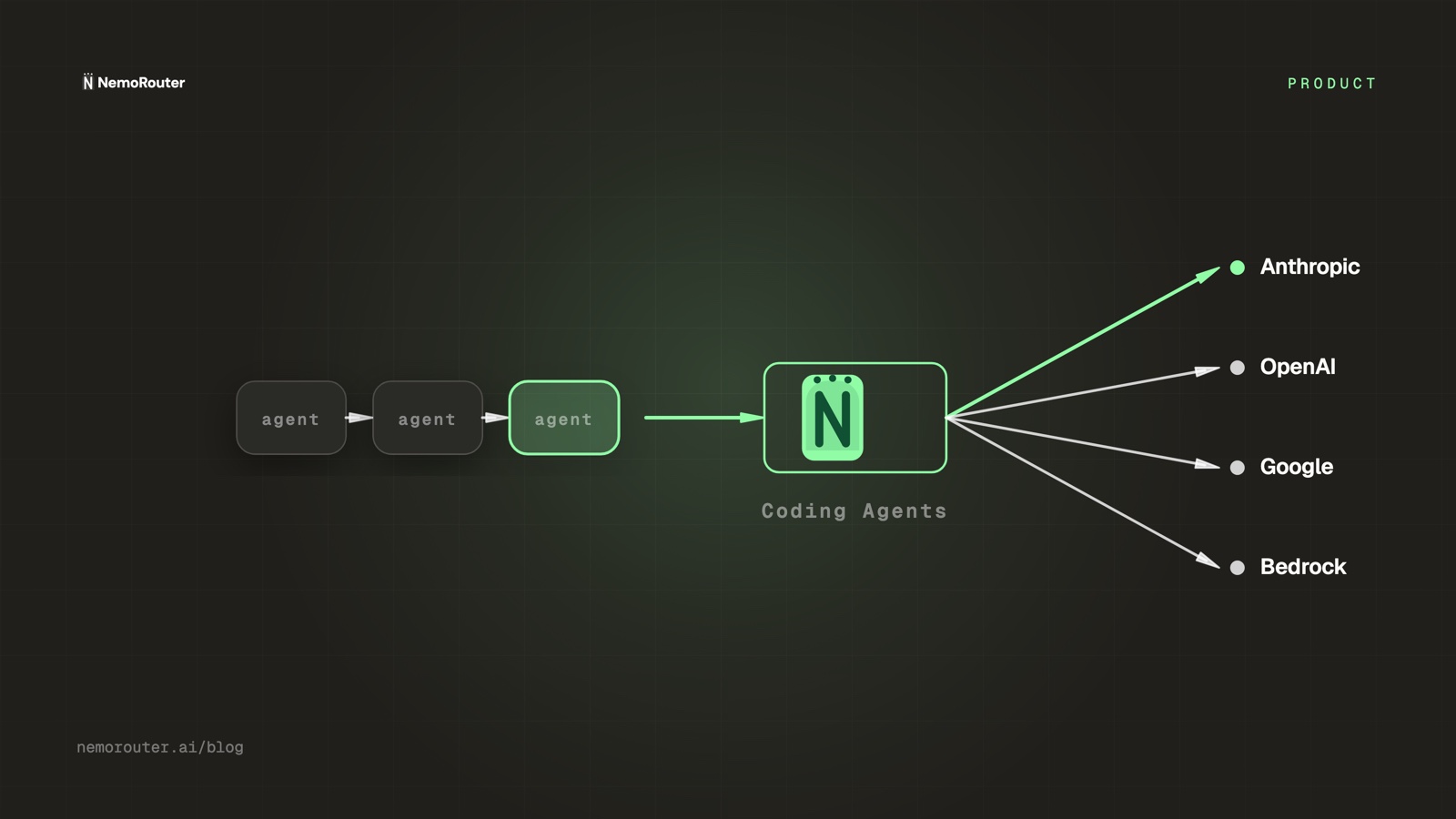
A coding agent turns one task into hundreds of model calls. Here is how a gateway gives each run a hard ceiling that holds under burst, a fallback path that does not strand a half-finished edit, and a cost you can read per task.
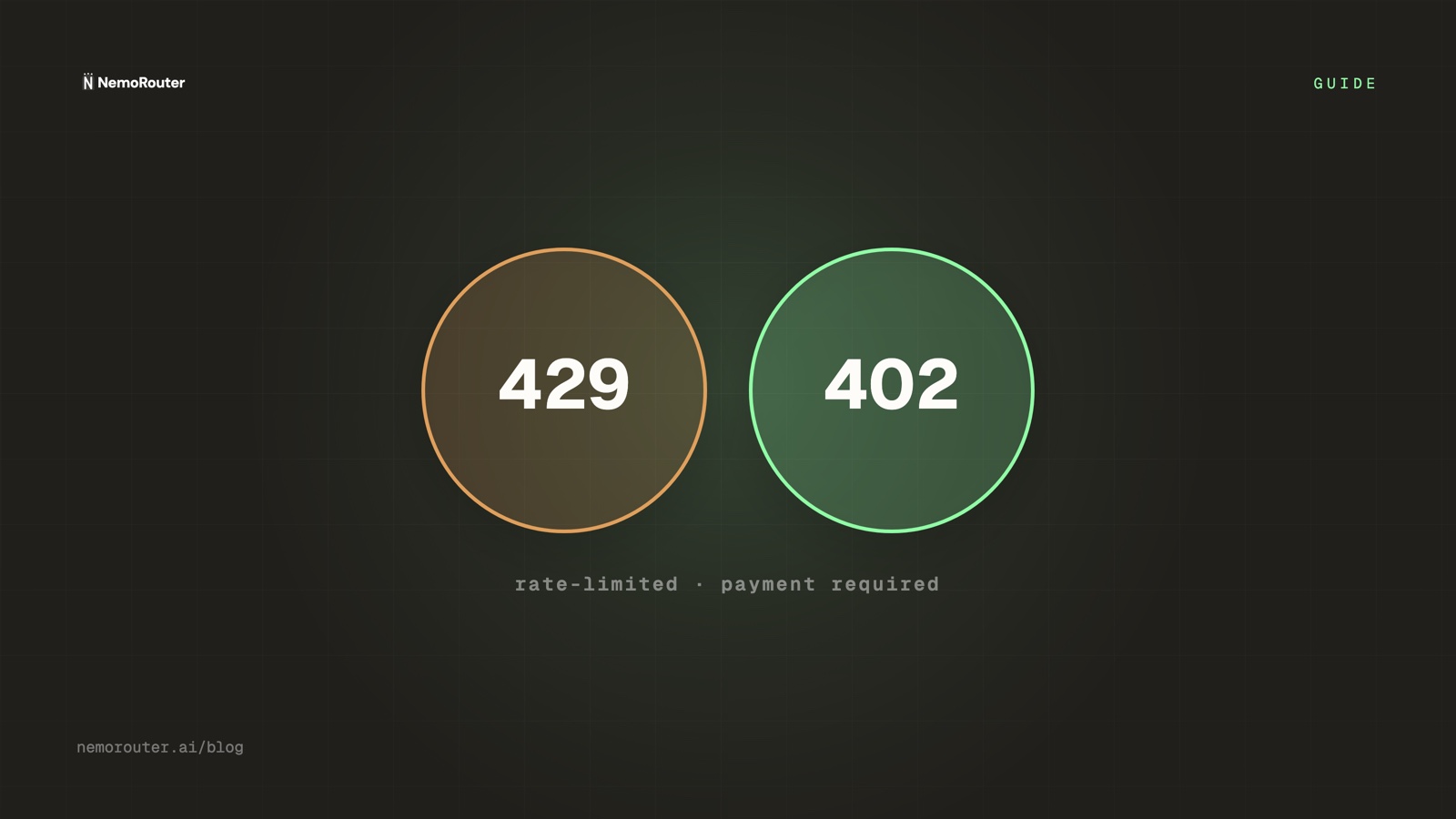
Both a throttle and a budget block can arrive as 429, and both an empty balance and a team budget arrive as 402. Branch on the error code, not the status — with backoff, jitter, and idempotent retries.
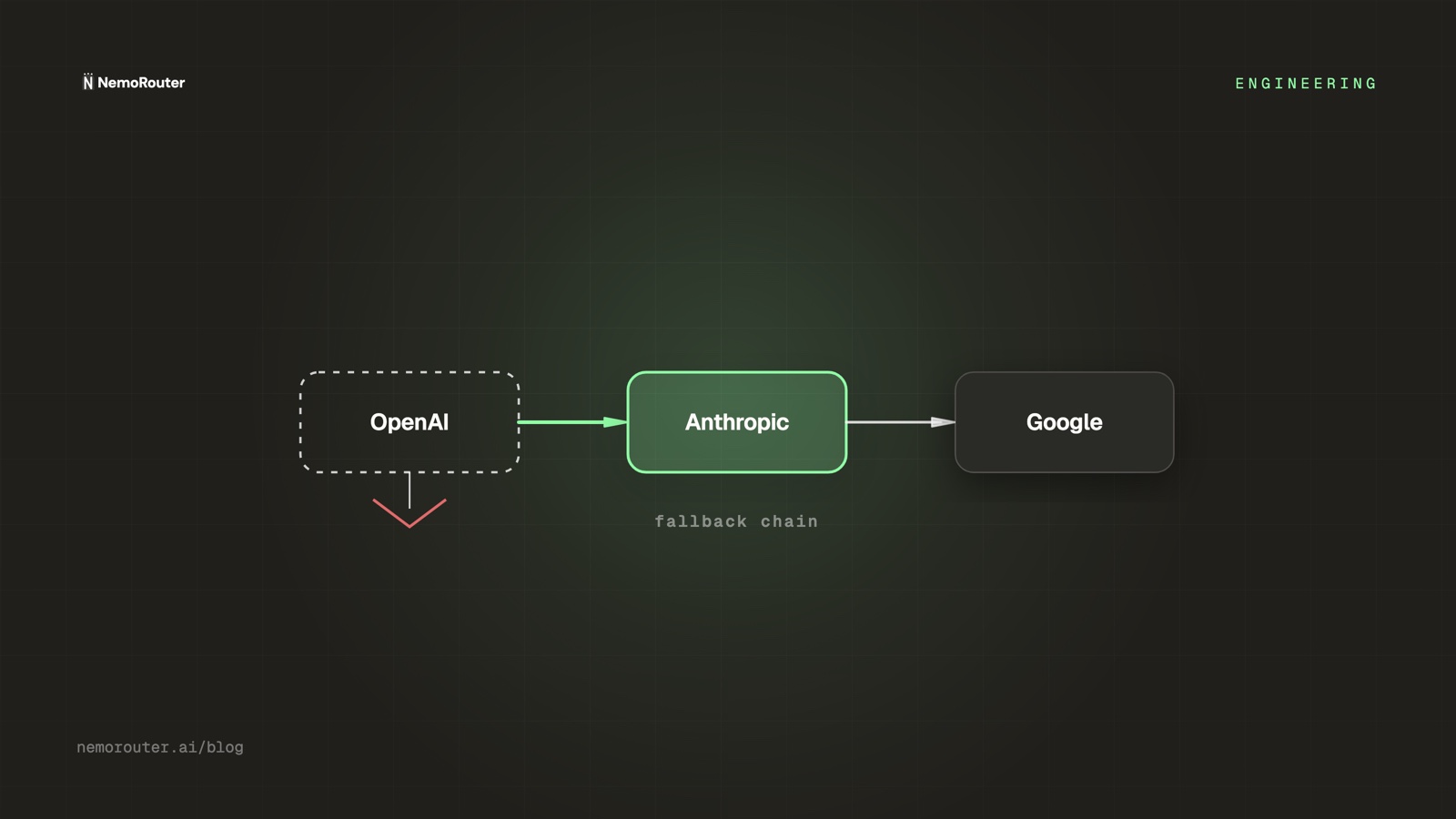
How an ordered LLM fallback chain reroutes failing requests to healthy providers, advances only on retryable errors, and bills spend for exactly one hop.