Tag

virtual-keys

7 posts tagged "virtual-keys".

Editorial Guide

Virtual Key Architecture: Dual-Axis RBAC & Credential Isolation

Directly distributing upstream provider API keys (from OpenAI, Anthropic, or Google) across application codebases and developer environments is an acute security vulnerability. Virtual key architecture decouples client applications from physical provider credentials, issuing scoped, revocable virtual tokens that enforce dual-axis role-based access control, model allowlists, and spend ceilings at the network edge.

Key Engineering Challenges

Credential Sprawl and Secret Leakage in Repositories

Hardcoded provider master keys scattered across Git repositories, developer laptops, and CI/CD pipelines cannot be revoked without breaking all downstream services across the enterprise.

Lack of Granular Authorization and Model Scoping

Upstream provider keys grant unrestricted access to all models and capabilities, preventing organizations from restricting access to costly frontier checkpoints for junior developers or test suites.

No Per-Key Financial Boundaries and Hard Ceilings

A compromised master key can drain organizational credit lines or incur massive provider bills without per-key budget limits or automated kill switches in place.

Audit Invisibility and Non-Repudiation Failures

Shared provider credentials obscure which developer, team, or automated workflow executed specific model calls, violating SOC 2 audit trail requirements and compliance mandates.

Architecture Taxonomy & Core Components

Hashed Token Storage

Virtual keys (sk-nrouter-*) are salted and hashed using cryptographic standards; plaintext is displayed only once.

Dual-Axis RBAC Matrix

Scoped permissions binding keys to specific Organizations, Teams, Personas, and Model Access Allowlists.

Azure Key Vault Integration

Physical provider secrets remain securely sealed in Key Vault, accessed strictly by gateway runtime workers.

nRouter Virtual Key Management System

nRouter replaces dangerous provider master keys with cryptographically hashed virtual keys (prefixed sk-nrouter-). Each virtual key is bounded by dual-axis RBAC: organization-level tenancy and team-scoped permissions (Owner, Admin, Member, Viewer). Administrators assign per-key budget caps, allowed model subsets, and rate limits. The gateway securely retrieves upstream provider credentials from Azure Key Vault only after all preflight gates pass, ensuring client applications never touch underlying provider secrets.

Explore our implementation playbooks for rotating virtual keys with zero downtime, structuring team permissions, and enforcing least-privilege AI access.

Posts

Latest first

Ship Your First AI Feature: Signup to Production in an Afternoon
Guides

Ship Your First AI Feature: Signup to Production in an Afternoon

A step-by-step path from a funded nRouter account to a production LLM call with a spend ceiling on it — create a scoped key, point your existing OpenAI client at one base URL, cap the key, and verify the cost header came back.

nRouter team
11 minRead →

One API Key Across Providers: The Integration You Stop Writing
Product

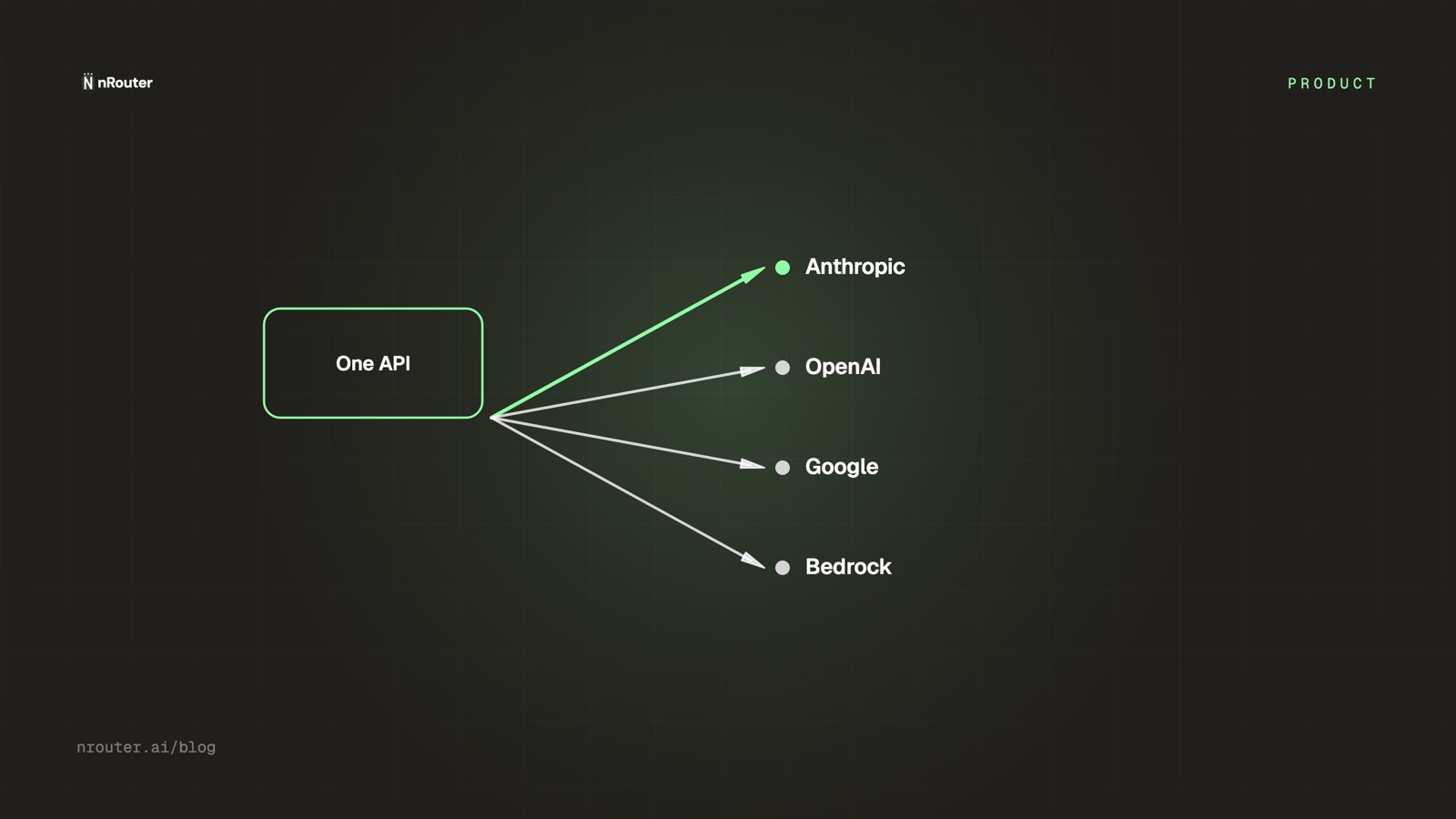
One API Key Across Providers: The Integration You Stop Writing

Provider breadth behind a single OpenAI-compatible key. What the swap changes in your codebase, what the model string buys you, which providers are live today, and the integration work that stops being yours to maintain.

nRouter team
11 minRead →
No BYOK: One nRouter Key Instead of Ten Provider Keys
Company

No BYOK: One nRouter Key Instead of Ten Provider Keys

Bring-your-own-key sounds customer-friendly and mostly relocates work to you. nRouter issues one key and credits and manages every provider account — here is the reasoning, the blast-radius math, what the choice costs you, and who should pick a BYOK gateway instead.

nRouter team
10 minRead →
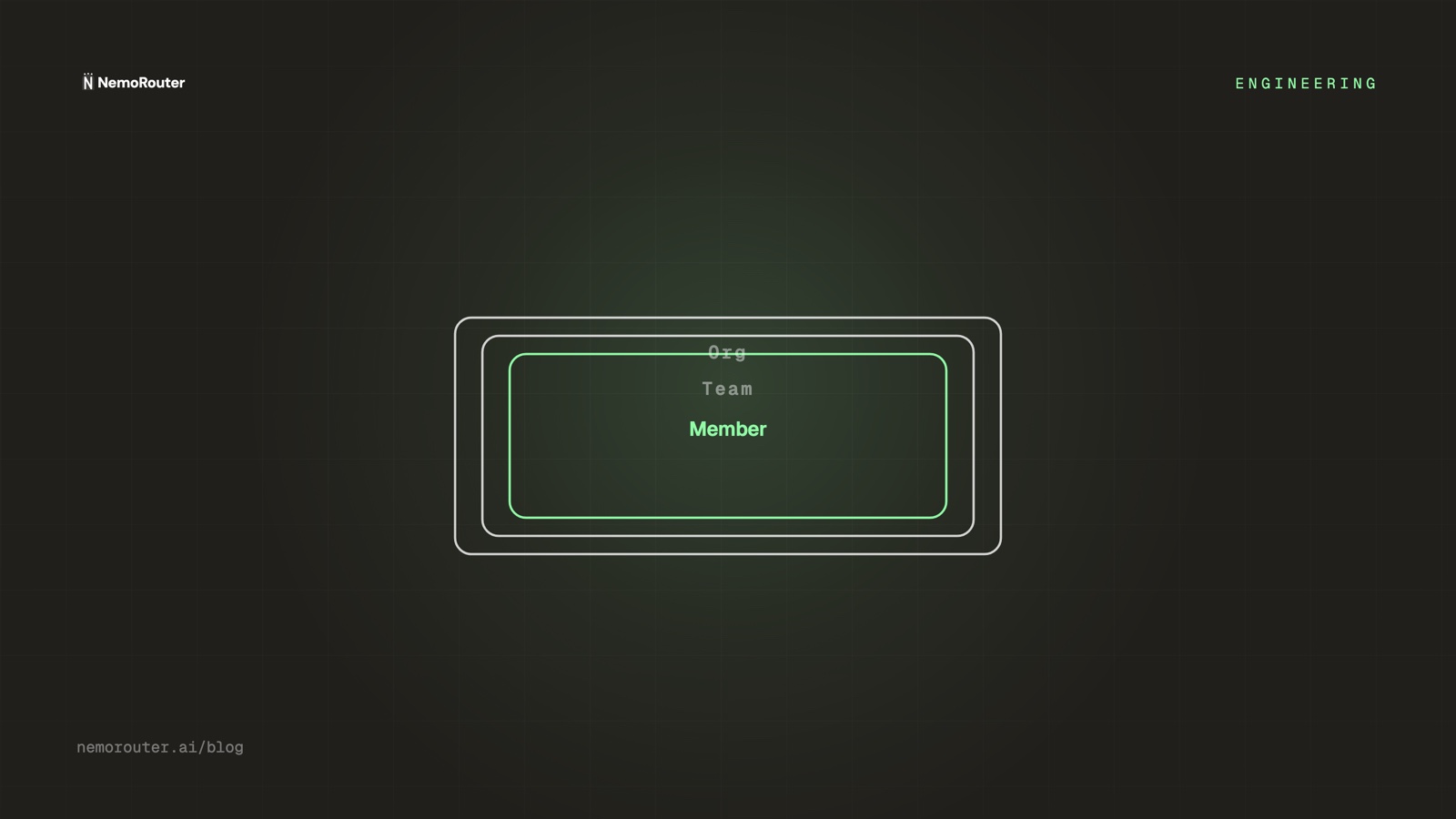
Org, Team, Member: Scoping Keys, Budgets, Guardrails
Engineering

Org, Team, Member: Scoping Keys, Budgets, Guardrails

How keys, budgets, and guardrails scope across org, team, and key tiers on an LLM gateway, and why attribution is read from key hashes, never user headers.

nRouter team
12 minRead →
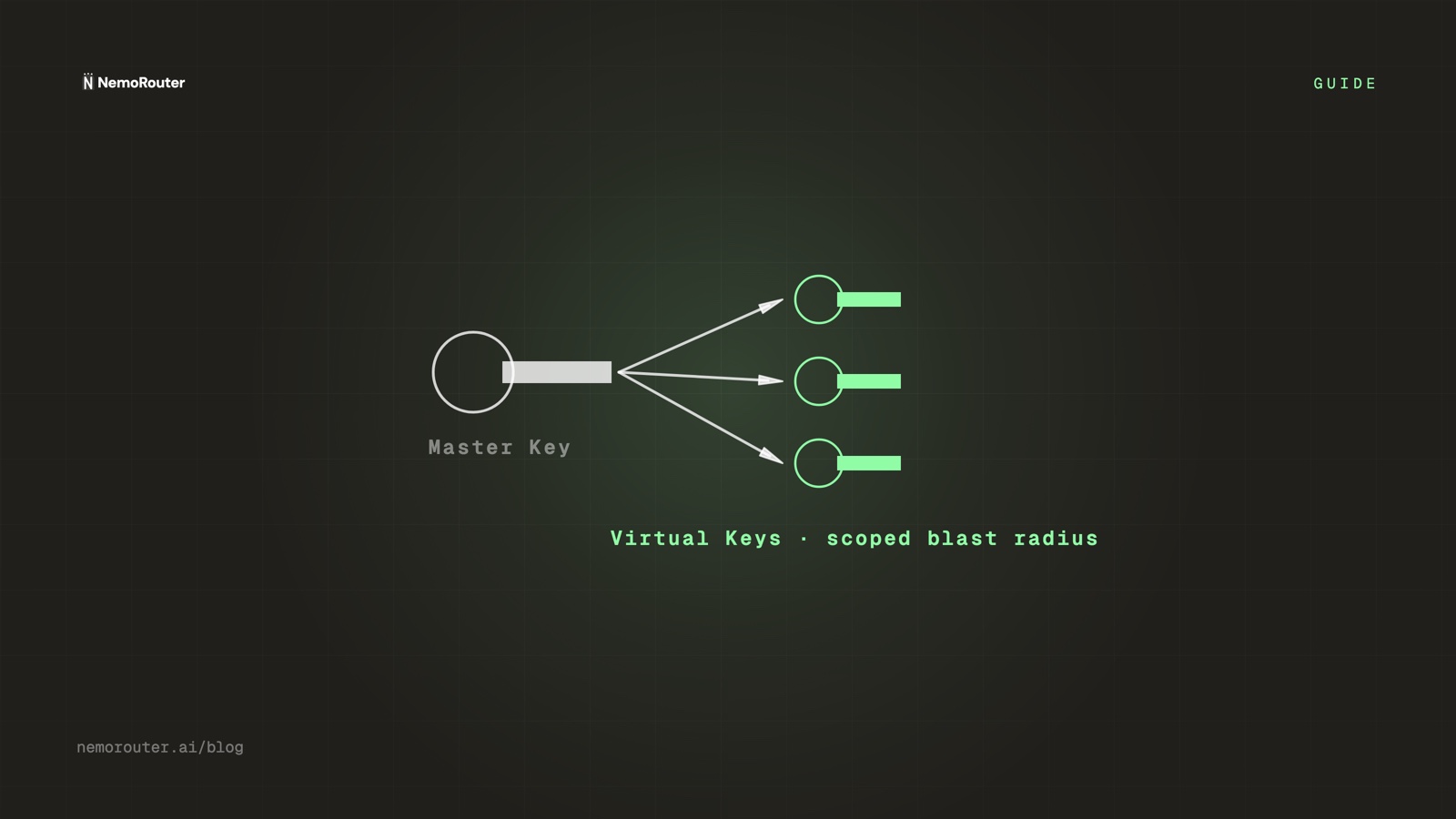
Virtual Keys vs Master Key: Scoping a Key Per Job
Guides

Virtual Keys vs Master Key: Scoping a Key Per Job

A management credential and an inference credential are different tools with different blast radii. Here is how to issue one virtual key per environment-and-service pair, narrow it with the four scope fields, cap it, and rotate it without downtime.

nRouter team
11 minRead →
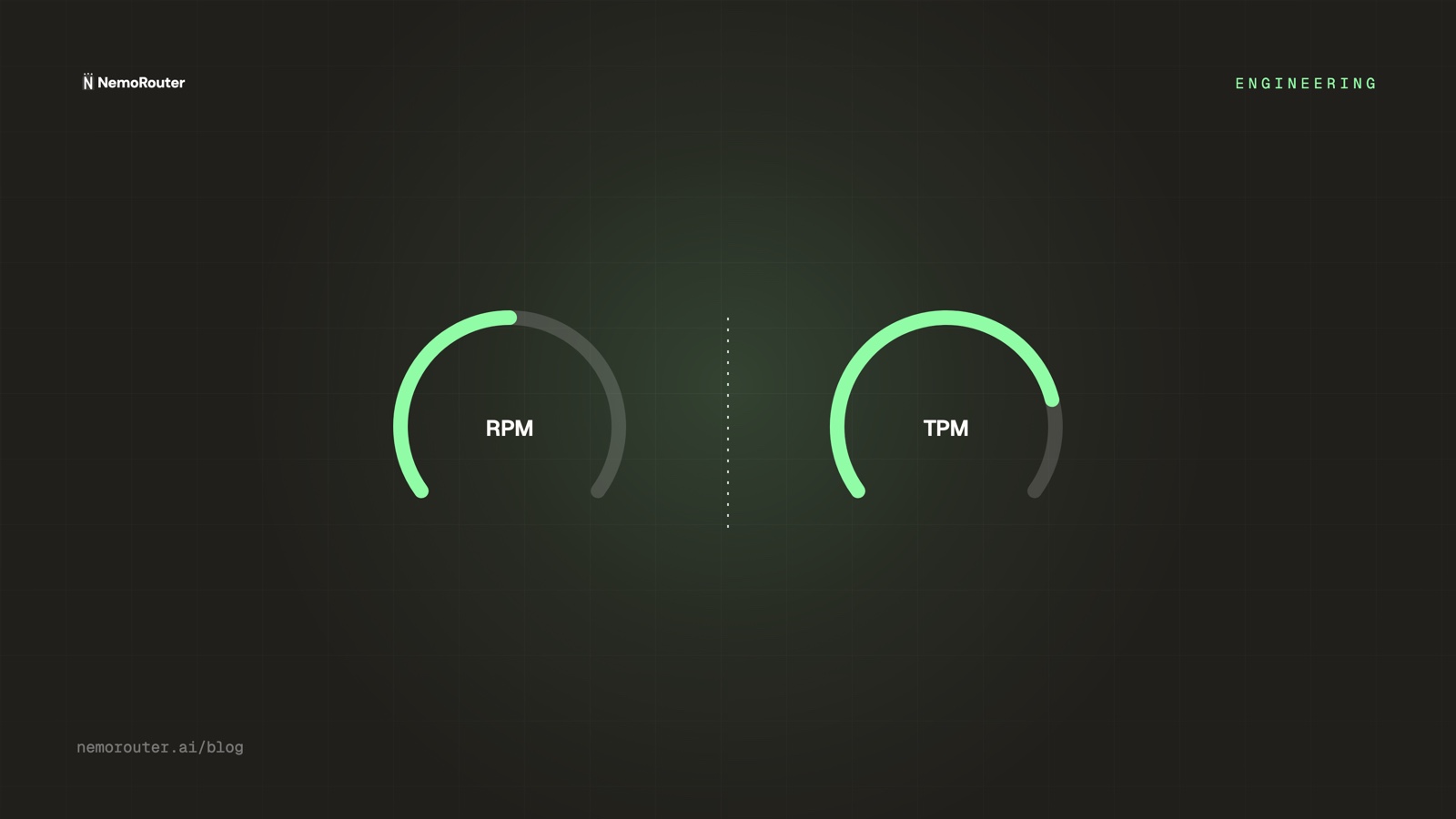
RPM and TPM Rate Limiting Per Key, Team, and Org
Engineering

RPM and TPM Rate Limiting Per Key, Team, and Org

Understand how RPM and TPM limits resolve per key, team, and org on an LLM gateway, why every 429 response names its source, and how budgets prevent loops.

nRouter team
11 minRead →
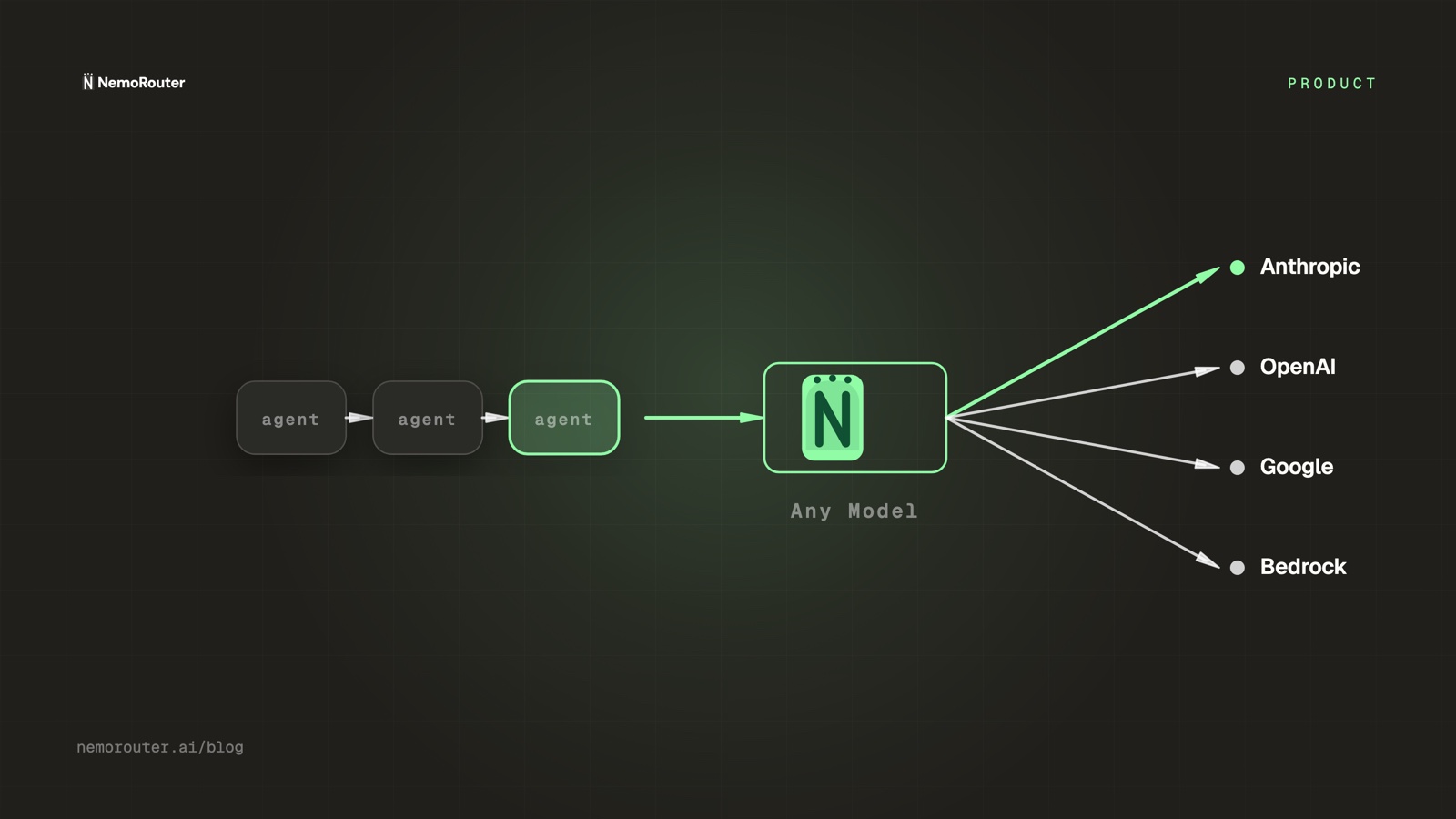
One Key Per Agent Role: Budgets That Stop a Runaway Agent
Product

One Key Per Agent Role: Budgets That Stop a Runaway Agent

An agent sends hundreds of calls without a human in the loop, so the loop bug you have not written yet is a billing event. Give each agent role its own key with its own rate ceiling and spend cap, enforced at the gateway rather than in the agent code that has the bug.

nRouter team
11 minRead →