Tag

security

6 posts tagged "security".

Editorial Guide

Enterprise Security Architecture: Zero Egress, Encryption & Isolation

Security is the foundational prerequisite for adopting enterprise generative AI at scale. Enterprise security architecture encompasses air-gapped data plane execution, end-to-end encryption in transit and at rest, zero prompt retention guarantees, and strict kernel-level tenant isolation. Protecting proprietary intellectual property, employee credentials, and sensitive customer conversations requires defense-in-depth across the entire network, compute, and database topology.

Key Engineering Challenges

Third-Party Model Training on Customer Data

Unprotected API usage risks exposing proprietary enterprise code, private customer conversations, and legal documents to public model retraining corpora and external third-party logging sinks.

Man-in-the-Middle and Payload Interception Risks

Sensitive inference payloads traversing unencrypted or inadequately authenticated internal network segments can be intercepted, inspected, or manipulated by unauthorized actors.

Shared Database Multi-Tenancy Leaks and Cross-Talk

Flawed database isolation logic can allow malicious actors or compromised service tokens to query other tenants' private request logs, financial balances, or virtual keys.

Exfiltration via Malicious and Hallucinated Model Outputs

Adversarial completions attempting to execute unauthorized local shell commands or exfiltrate backend environment variables must be blocked before reaching client runtimes.

Architecture Taxonomy & Core Components

Postgres Row-Level Security (RLS)

Strict multi-tenant isolation enforced at the database kernel level; NOBYPASSRLS connection pooling.

Air-Gapped Cortex Compute

Sidecar operates with zero public internet egress and zero database access, linked only via mTLS 1.3.

End-to-End Encryption

TLS 1.3 with HSTS preloading in transit, AES-256 for persistent records, and Key Vault secret sealing.

nRouter Defense-in-Depth Security Framework

nRouter enforces an uncompromising security framework across every layer of the architecture. All database transactions execute over tenant-pinned connections with PostgreSQL Row-Level Security (RLS) and NOBYPASSRLS enforcement, eliminating cross-tenant leakage risks. The nrouter-cortex guardrails sidecar operates completely air-gapped—zero public egress and zero database access—communicating exclusively with the gateway over internal mTLS 1.3. Upstream provider credentials remain encrypted in Azure Key Vault, and strict enterprise zero-retention data policies ensure prompt content is never persisted without explicit consent.

Review our security whitepaper, architectural boundaries, and penetration testing certifications in the guides below.

Posts

Latest first

Inline LLM Guardrails: Redact, Block, or Flag Every Request
Engineering

Inline LLM Guardrails: Redact, Block, or Flag Every Request

How an LLM gateway runs active PII redaction, prompt-injection detection, and keyword blocklists inline on every request, with key > team > org precedence.

nRouter team
10 minRead →
No BYOK: One nRouter Key Instead of Ten Provider Keys
Company

No BYOK: One nRouter Key Instead of Ten Provider Keys

Bring-your-own-key sounds customer-friendly and mostly relocates work to you. nRouter issues one key and credits and manages every provider account — here is the reasoning, the blast-radius math, what the choice costs you, and who should pick a BYOK gateway instead.

nRouter team
10 minRead →
Who Rotated That Key? An Audit Trail That Answers in One Query
Engineering

Who Rotated That Key? An Audit Trail That Answers in One Query

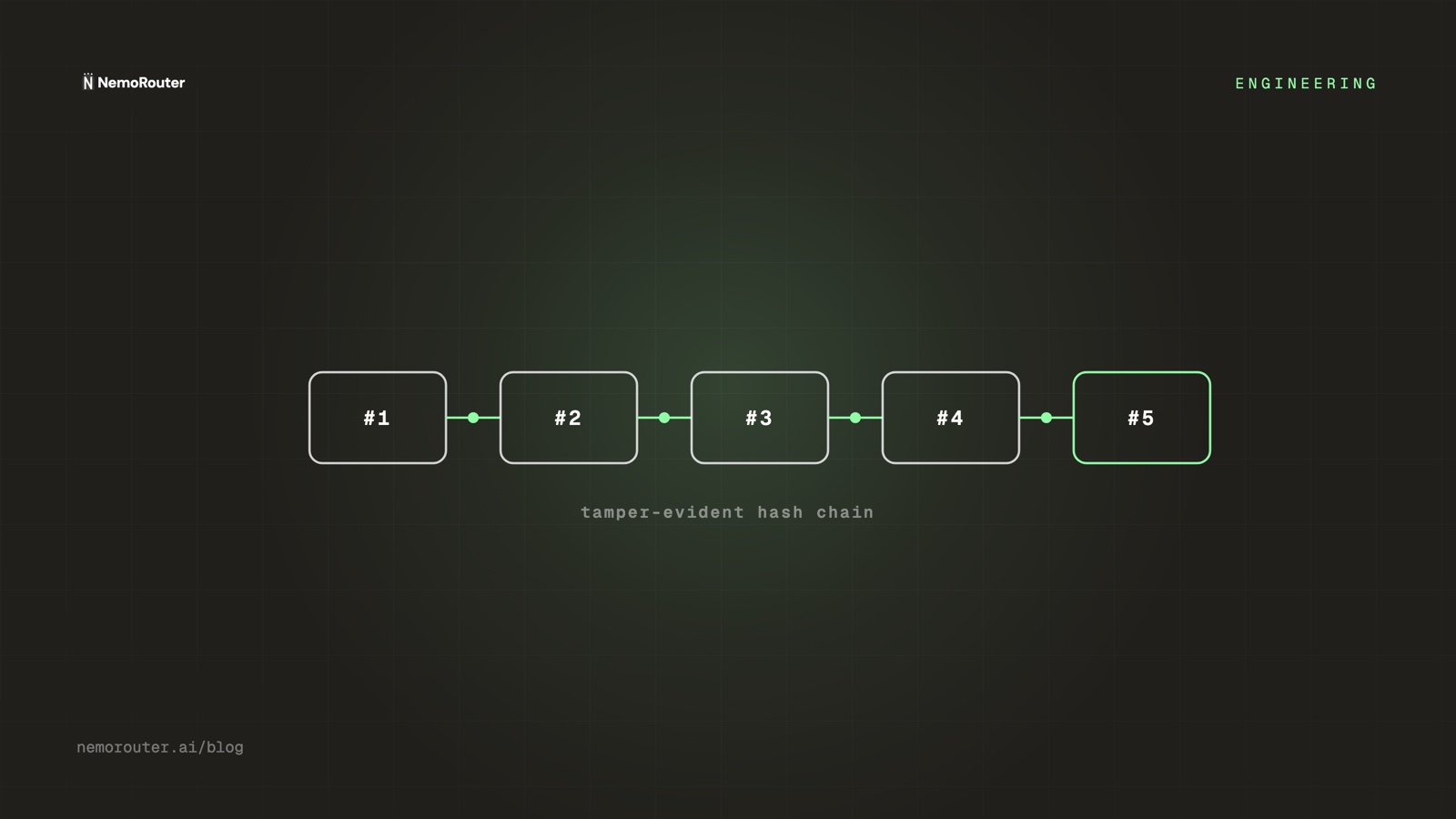
"Who rotated that key, and from where?" should be a filter, not an archaeology project. Here is the audit-trail contract we hold ourselves to on an LLM gateway: complete actor attribution, one shared client-IP path, append-only entries, and reads that are role-scoped and tenant-isolated.

nRouter team
10 minRead →
SOC 2 for an LLM Gateway: The Evidence an Auditor Asks For
Guides

SOC 2 for an LLM Gateway: The Evidence an Auditor Asks For

A criterion-by-criterion checklist for putting an LLM gateway through SOC 2 — access control, audit attribution, retention, encryption, tenant isolation and availability — with the honest current state of each control on nRouter.

nRouter team
11 minRead →
Org, Team, Member: Scoping Keys, Budgets, Guardrails
Engineering

Org, Team, Member: Scoping Keys, Budgets, Guardrails

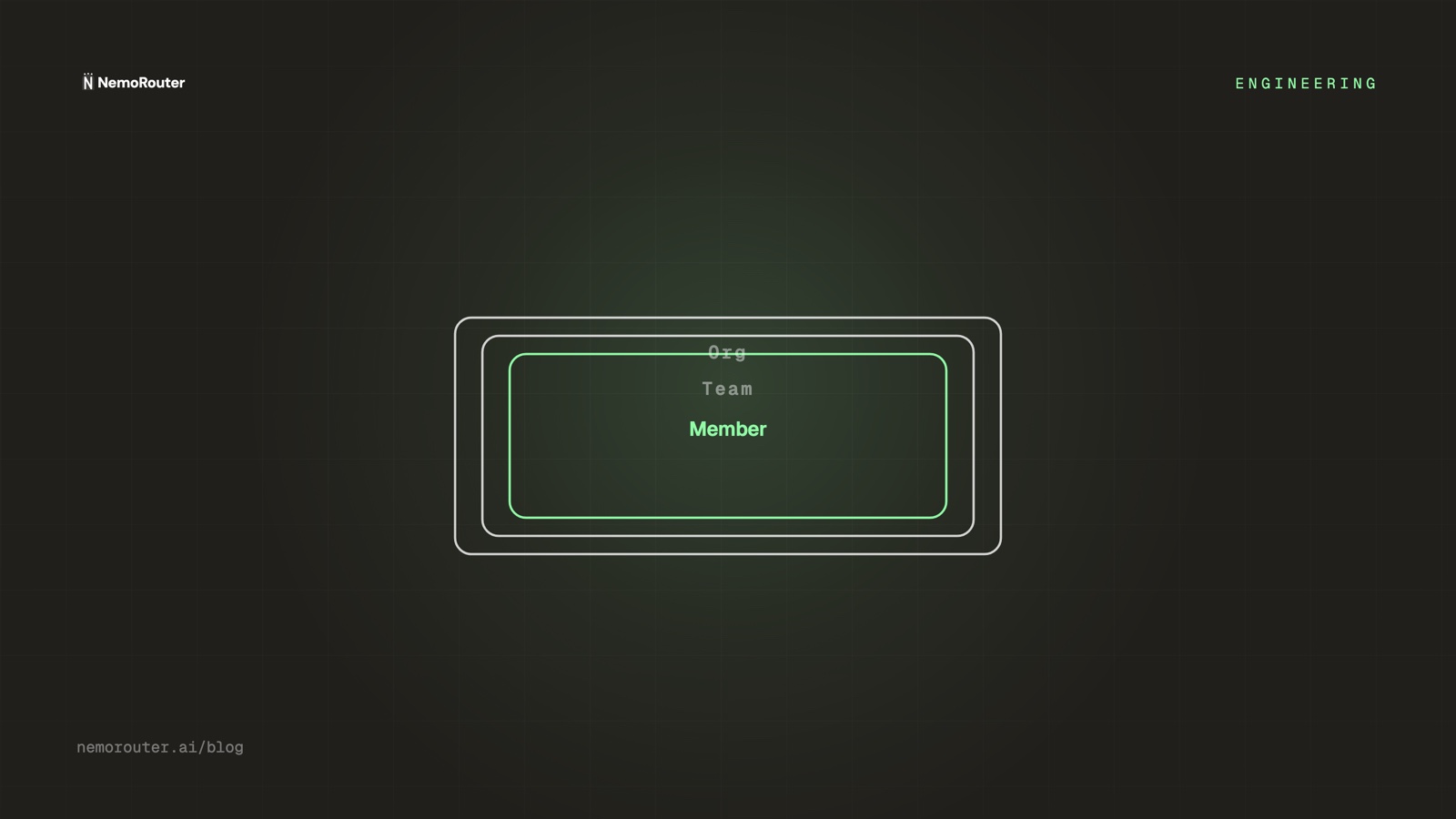
How keys, budgets, and guardrails scope across org, team, and key tiers on an LLM gateway, and why attribution is read from key hashes, never user headers.

nRouter team
12 minRead →
Virtual Keys vs Master Key: Scoping a Key Per Job
Guides

Virtual Keys vs Master Key: Scoping a Key Per Job

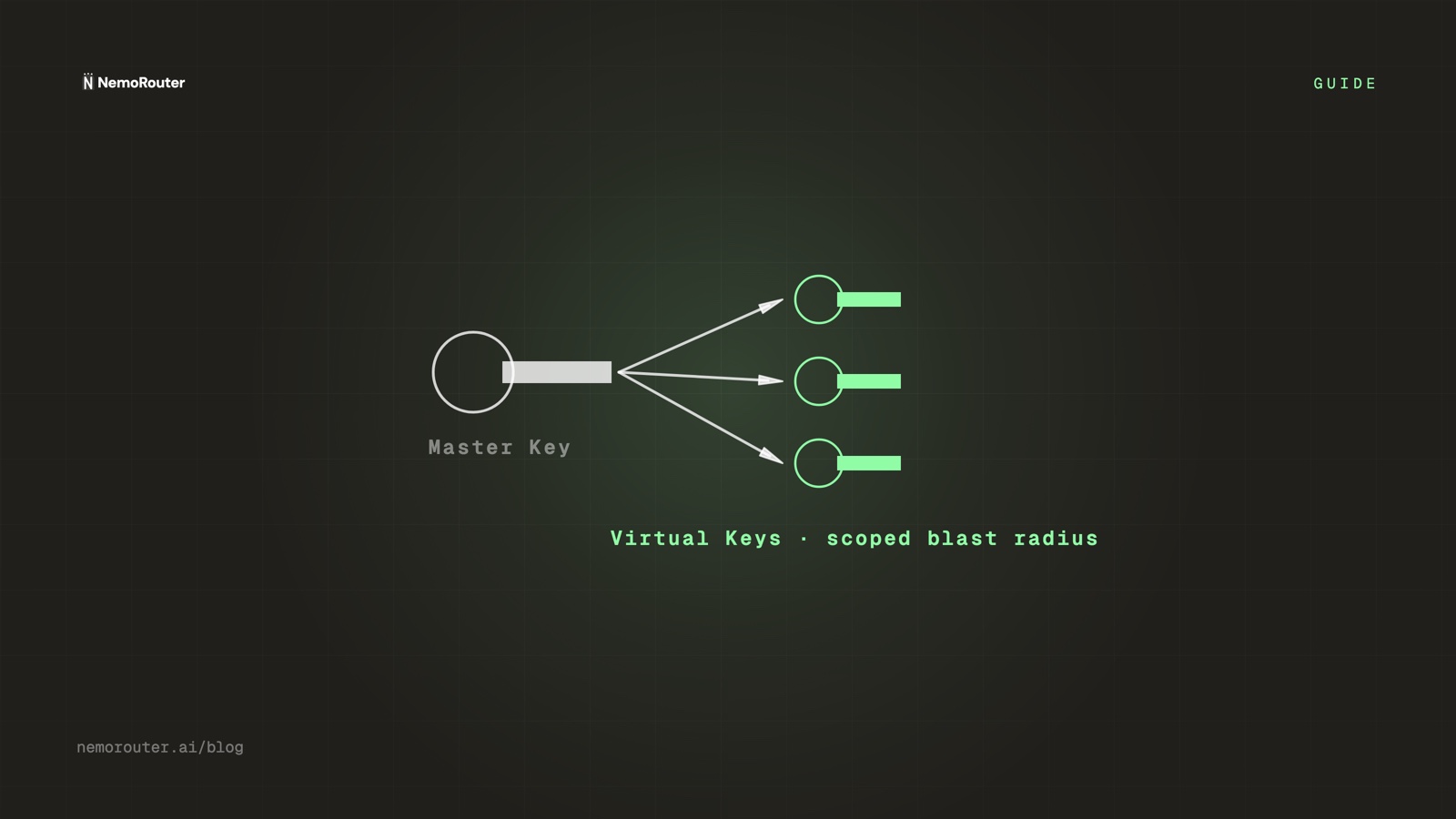
A management credential and an inference credential are different tools with different blast radii. Here is how to issue one virtual key per environment-and-service pair, narrow it with the four scope fields, cap it, and rotate it without downtime.

nRouter team
11 minRead →