Write-Time PII Redaction in LLM Logs, Without Losing Debug Detail
Learn how write-time redaction, typed placeholders, and metadata scrubbing keep LLM request logs fully debuggable without storing sensitive customer PII.
Navigating the evolving regulatory landscape of artificial intelligence requires compliance frameworks that enforce auditable data controls directly in code. Whether satisfying GDPR data sovereignty mandates, HIPAA Protected Health Information (PHI) safeguards, or SOC 2 Type II operational trust principles, enterprises deploying LLMs need verifiable audit trails and robust privacy guarantees.
Persisting personal customer conversations in external data lakes or AI logs complicates compliance with GDPR erasure requests and European data residency laws across international borders.
Inadvertently forwarding unredacted medical record numbers, diagnoses, or patient identifiers to non-BAA model providers constitutes severe HIPAA regulatory breaches and hefty financial penalties.
Security auditors mandate non-repudiable, tamper-evident audit logs documenting every administrative action, permission change, and credential minting event throughout the platform lifecycle.
Legacy gateway providers frequently gate essential compliance tools (such as audit logs, SSO, and PII redaction) behind exorbitant Enterprise custom contract paywalls.
Append-only audit trail capturing all virtual key operations, membership updates, and billing actions.
Automated de-identification of medical records, social security numbers, and contact details before egress.
Granular policy selector: zero-logging, metadata-only, full-logging, or PII-redacted storage.
nRouter builds regulatory compliance directly into its architecture rather than treating it as an enterprise upsell. Every nRouter tier—from Pay as you go to enterprise—includes full compliance capabilities: Microsoft Presidio PII scrubbing, append-only SOC 2 audit logs, and granular data retention policies. Organizations can enforce Zero-Logging mode to ensure no prompt or completion content ever touches persistent storage. All underlying infrastructure is SOC 2 Type II certified, enabling enterprises to build HIPAA-eligible and GDPR-compliant AI applications.
Explore our compliance documentation, SOC 2 control mappings, and HIPAA implementation guides below.

Learn how write-time redaction, typed placeholders, and metadata scrubbing keep LLM request logs fully debuggable without storing sensitive customer PII.

The fields that make an LLM request log worth keeping, the content that turns it into a liability, and how a gateway's built-in logs compare with running your own self-hosted trace store.

How an LLM gateway runs active PII redaction, prompt-injection detection, and keyword blocklists inline on every request, with key > team > org precedence.

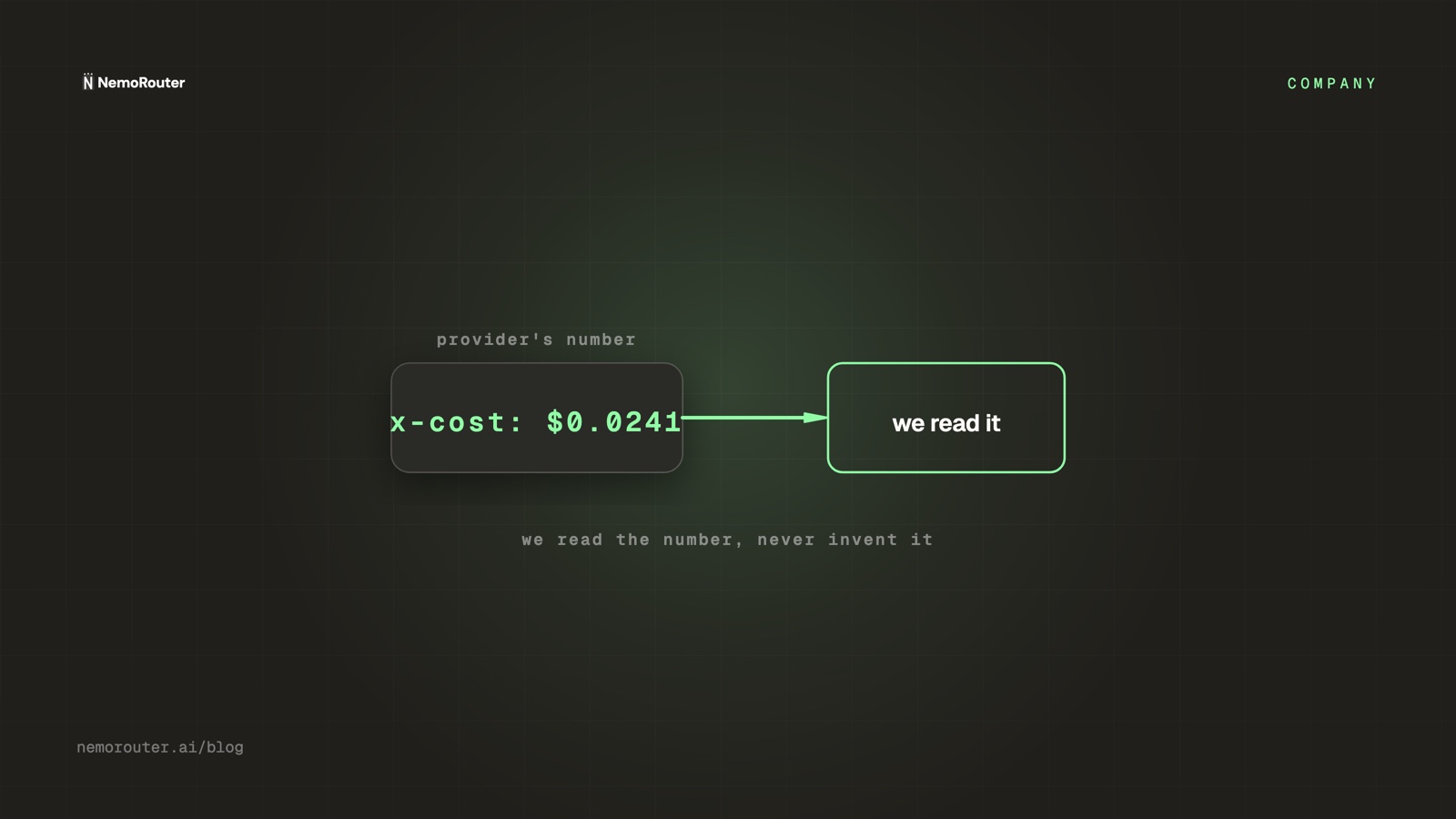
Why nRouter reads the settled LLM cost directly from providers instead of guessing, and why unknown model costs are reported as unpriced rather than as $0.

nRouter has no sandbox, no sample dataset, and no demo mode. The dashboard figure, the playground response, the cost header and the ledger row are all produced by the same live path a paying request takes. The cost of that honesty is that there is nothing to look at until you have paid for a call.

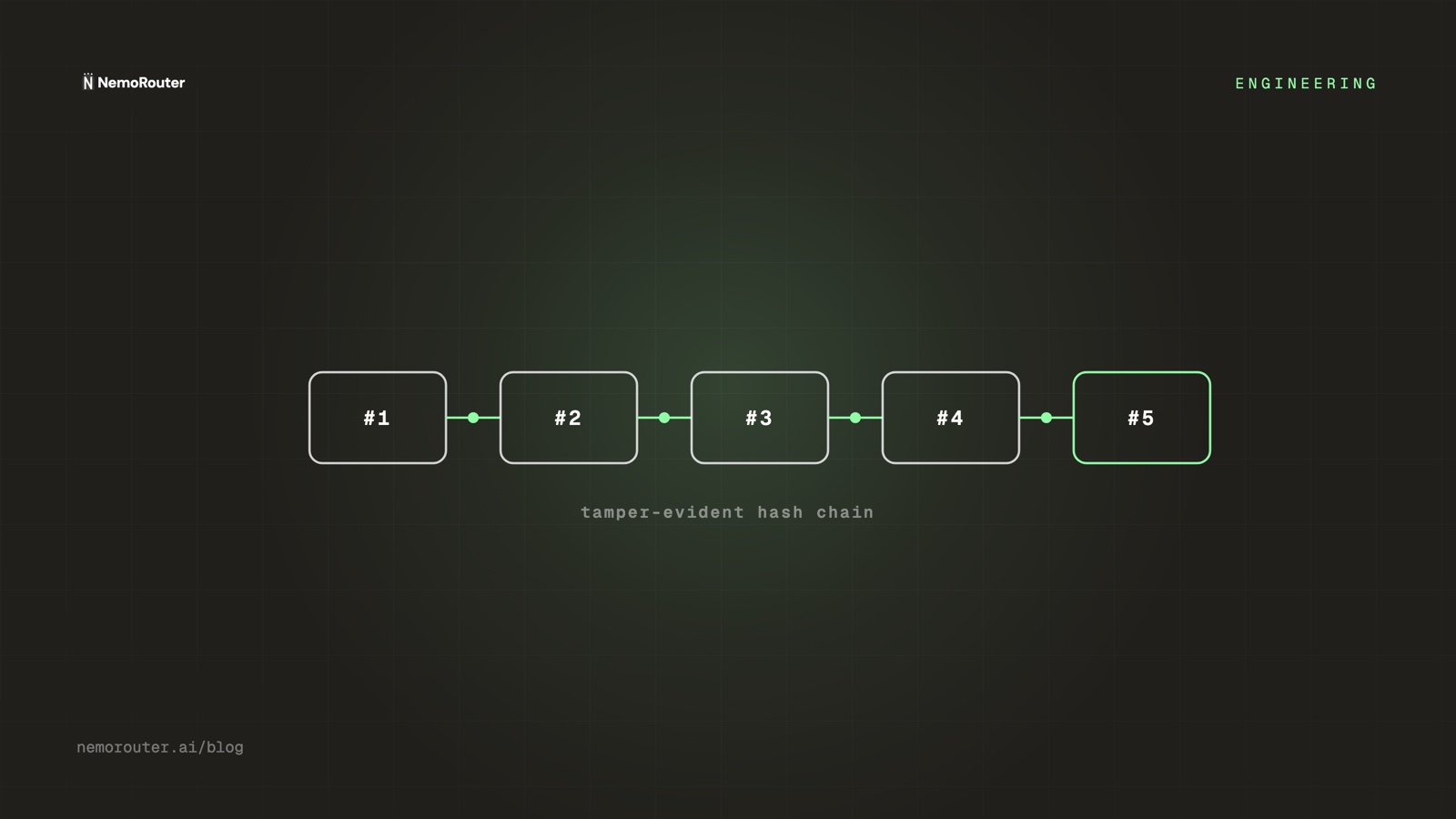
"Who rotated that key, and from where?" should be a filter, not an archaeology project. Here is the audit-trail contract we hold ourselves to on an LLM gateway: complete actor attribution, one shared client-IP path, append-only entries, and reads that are role-scoped and tenant-isolated.

A criterion-by-criterion checklist for putting an LLM gateway through SOC 2 — access control, audit attribution, retention, encryption, tenant isolation and availability — with the honest current state of each control on nRouter.