

Company
Four Outcomes That Get an LLM Gateway Funded
Build the internal business case for an LLM gateway on four quantifiable outcomes: total spend reduction, cost per call, tail latency, and developer speed.
nRouter team
10 minRead →At nRouter, we believe enterprise infrastructure software should be built with engineering rigor, transparent economics, and zero vendor marketing fluff. Our product philosophy centers on three core principles: code-first implementations, cost-honest pricing with no hidden token markups, and democratized access to enterprise-grade governance without artificial tier paywalls across all customer tiers.
The market is flooded with thin wrappers and marketing-heavy platforms that offer superficial demos while failing to solve hard systems engineering problems under real production load.
Forcing security-conscious startups to compromise on data privacy because they cannot afford $2,000/month Enterprise licenses is unethical and dangerous for the industry as a whole.
Publishing selective benchmarks without disclosing test methodology, concurrency parameters, or raw telemetry misleads engineering teams evaluating infrastructure options for production.
Proprietary SDKs and bespoke API protocols are designed to trap customers in specific vendor ecosystems rather than empowering architectural flexibility and independence.
Commitment to strict OpenAI wire compatibility and open-standard OpenTelemetry distributed tracing.
Every single account receives identical access to all guardrails, RBAC, and observability features.
All published latency and throughput claims are accompanied by open, reproducible test scripts.
We build nRouter for the engineers who ship production AI systems. We reject per-token markups, offering all models at exact provider list prices with a transparent 4% platform fee on credits. We reject feature gating: every customer on every plan receives enterprise guardrails, dual-axis RBAC, budget ceilings, and audit logs from day one. We build in Rust for uncompromising performance, and we prove our claims with open, reproducible benchmarks. Our mission is to provide the world's most reliable, cost-honest LLM infrastructure.
Read our engineering retrospectives, architectural design decisions, and founder letters below.
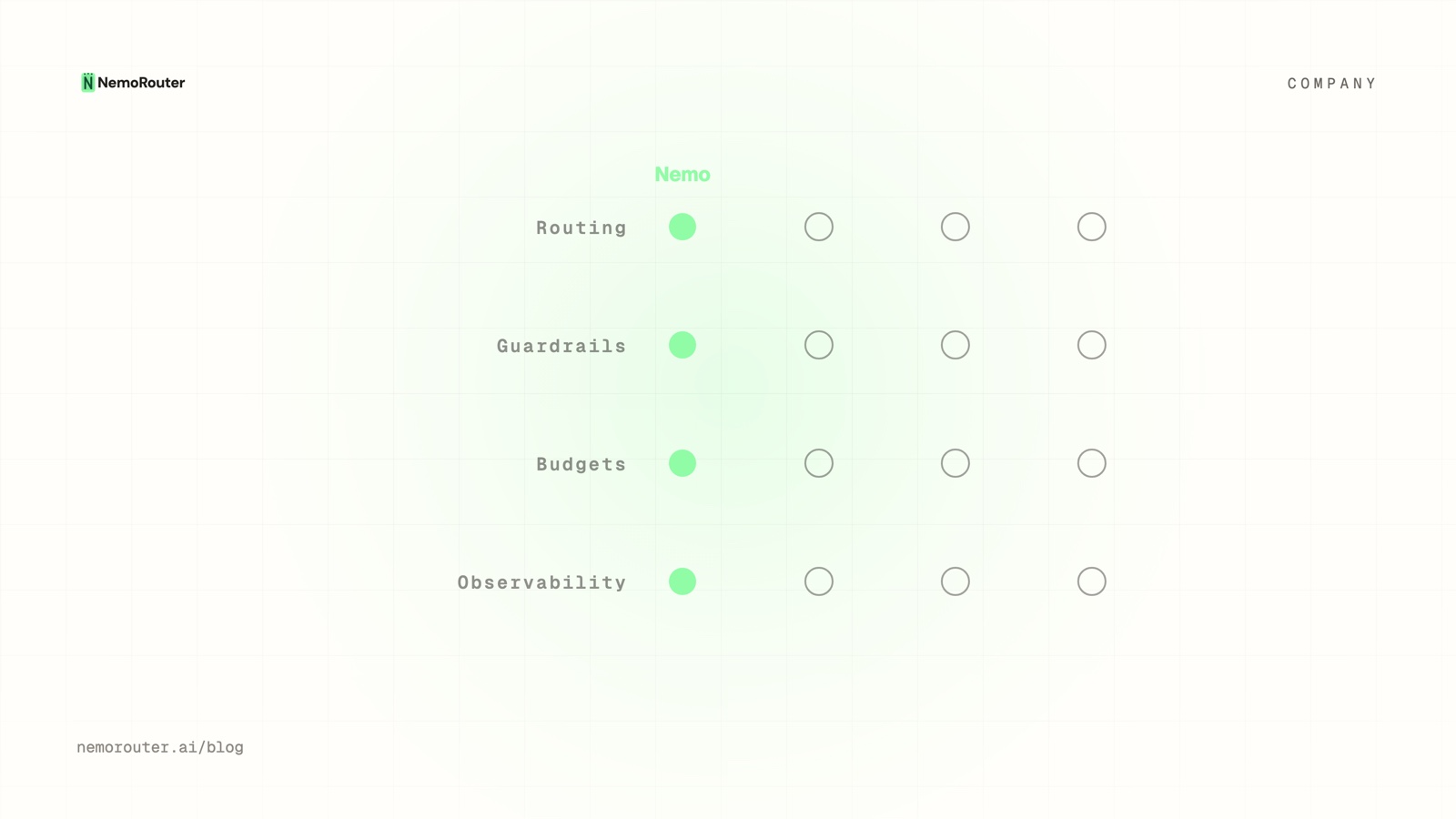
Build the internal business case for an LLM gateway on four quantifiable outcomes: total spend reduction, cost per call, tail latency, and developer speed.
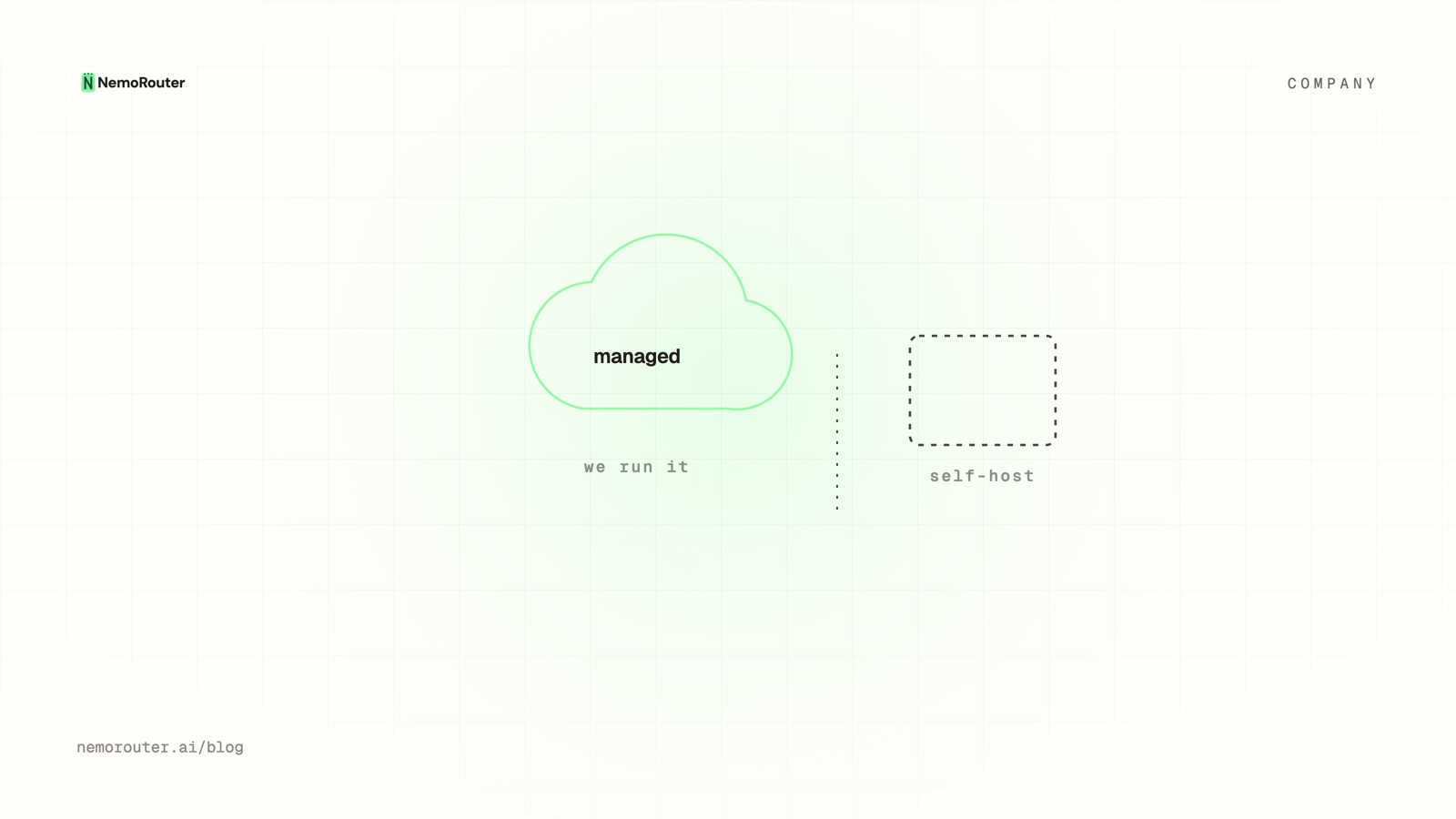
Why nRouter is a managed LLM gateway rather than self-hosted software: the operational burden of proxy hosting, and when running your own infra still wins.
Guardrails, audit trails, budgets, evals, A/B tests and prompt management are on every nRouter plan. Plans change the monthly allowance and the rate limits, never the feature set — here is the reasoning, the fee math, and what the bet costs us.
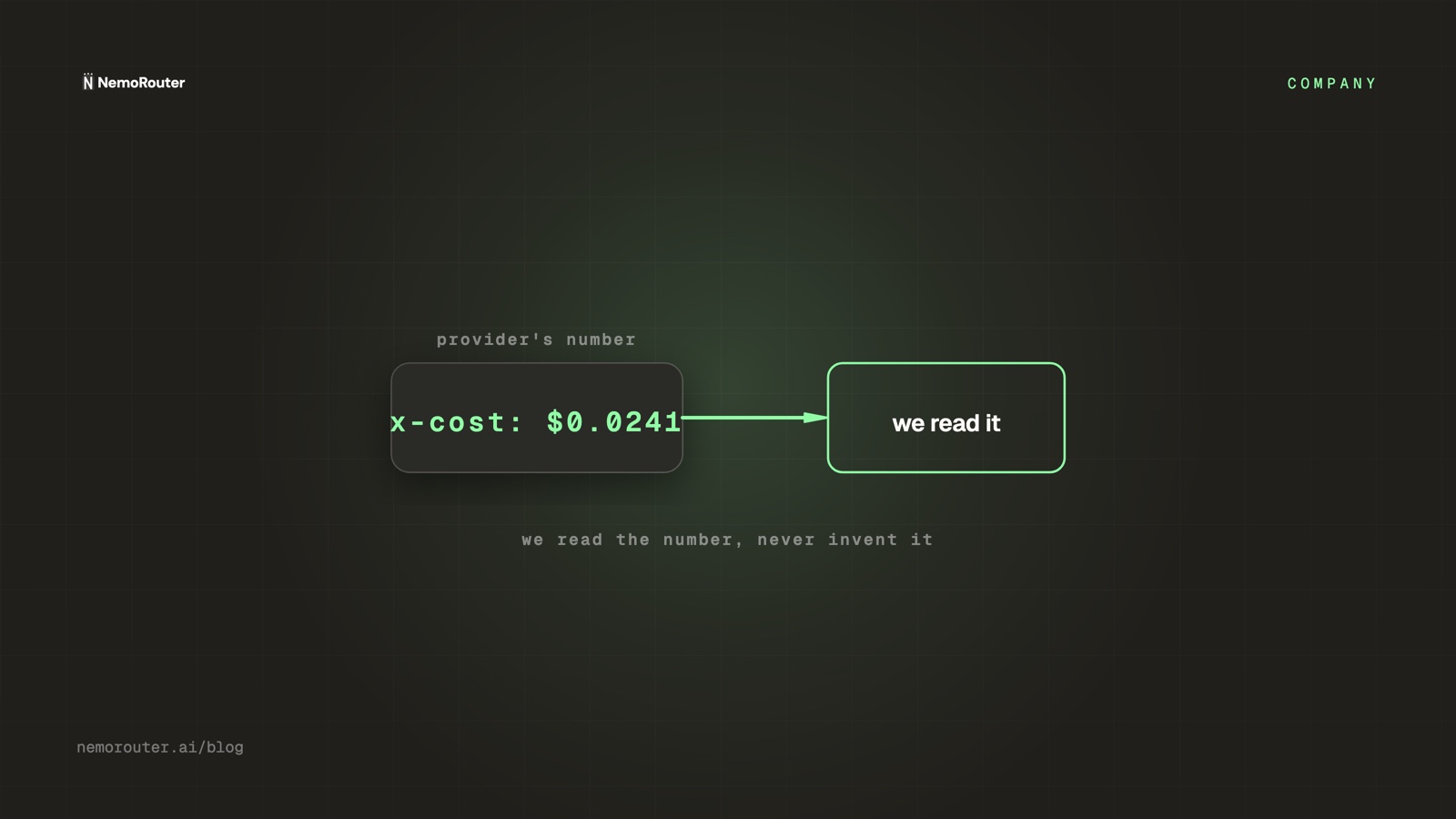
Why nRouter reads the settled LLM cost directly from providers instead of guessing, and why unknown model costs are reported as unpriced rather than as $0.
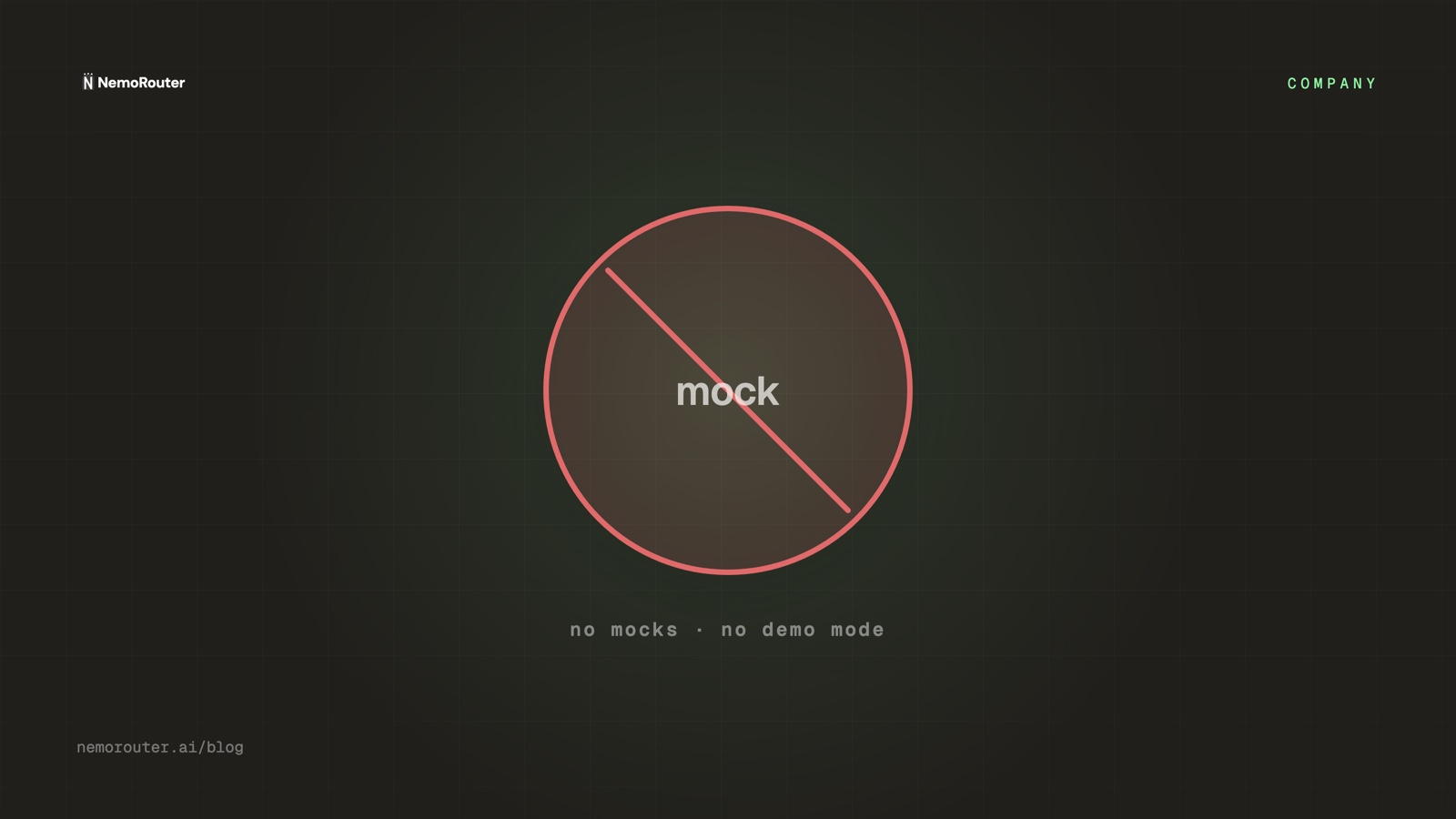
nRouter has no sandbox, no sample dataset, and no demo mode. The dashboard figure, the playground response, the cost header and the ledger row are all produced by the same live path a paying request takes. The cost of that honesty is that there is nothing to look at until you have paid for a call.

Bring-your-own-key sounds customer-friendly and mostly relocates work to you. nRouter issues one key and credits and manages every provider account — here is the reasoning, the blast-radius math, what the choice costs you, and who should pick a BYOK gateway instead.

A gateway can take its cut two ways: silently, inside the per-token rate you can never decompose, or visibly, as a platform fee added at purchase. nRouter does the second, so every credit you buy is spendable at the provider's own settled cost.
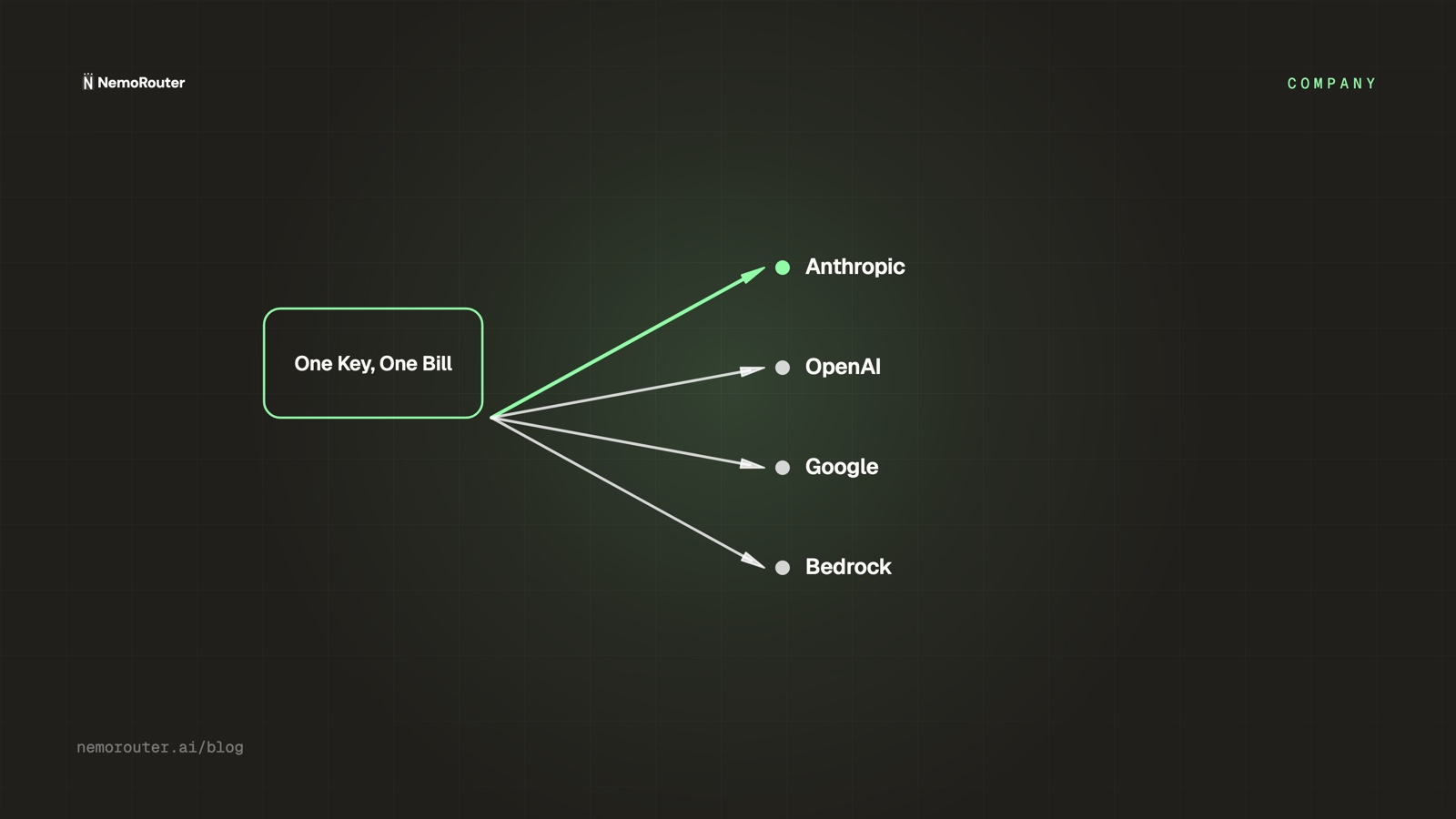
The engineering case for nRouter: routing is solved, but tenant isolation, non-negative credits, guardrails, and unified billing across providers are not.