Inline LLM Guardrails: Redact, Block, or Flag Every Request
How an LLM gateway runs active PII redaction, prompt-injection detection, and keyword blocklists inline on every request, with key > team > org precedence.
Enterprise security requires non-negotiable guardrails on every LLM inference request. Zero-retention AI guardrails inspect, moderate, and redact data within the active request pipeline before sensitive tokens egress to third-party model providers. Operating with sub-millisecond execution overhead, in-path guardrails protect organizations from prompt injections, sensitive data exposure, and toxic completions without persisting customer payloads.

Adversarial techniques such as indirect prompt injection and prompt leaks seek to manipulate model instructions and exfiltrate internal system context or proprietary corporate data.
Developers and end-users routinely paste API keys, JWT tokens, social security numbers, and private customer records into prompt interfaces, creating severe compliance liabilities.
Synchronous guardrail inspection can introduce hundreds of milliseconds of latency if poorly architected, severely degrading streaming user interfaces and interactive chat responsiveness.
Traditional architectures reserve funds or consume model provider quotas before guardrail inspection, forcing enterprises to pay for malicious or refused prompt attempts.
Stateless, air-gapped container running over mTLS 1.3 with zero database connectivity and zero egress.
Concurrent PII tokenization, credential pattern matching, and toxic content scoring in sub-millisecond time.
Synchronous inspection pipeline guaranteeing $0 credit hold and $0 provider spend on blocked requests.
nRouter integrates AI guardrails natively into Preflight Phase 3 via its private sidecar, nrouter-cortex. Communicating over internal mTLS 1.3 with zero external internet egress and zero database access, Cortex scores prompt injection risk, moderates toxicity, and redacts PII using Microsoft Presidio and optimized pattern matchers. If a request exceeds configurable safety thresholds, the Rust gateway immediately halts execution with an HTTP 400 response and an x-nr-guardrails: blocked header. Because credit reservation (Phase 4) runs strictly after Phase 3 passes, blocked requests cost exactly $0.00.
Learn how enterprise teams implement zero-retention guardrails, configure regex-based secret scanning, and satisfy SOC 2 Type II compliance.

How an LLM gateway runs active PII redaction, prompt-injection detection, and keyword blocklists inline on every request, with key > team > org precedence.

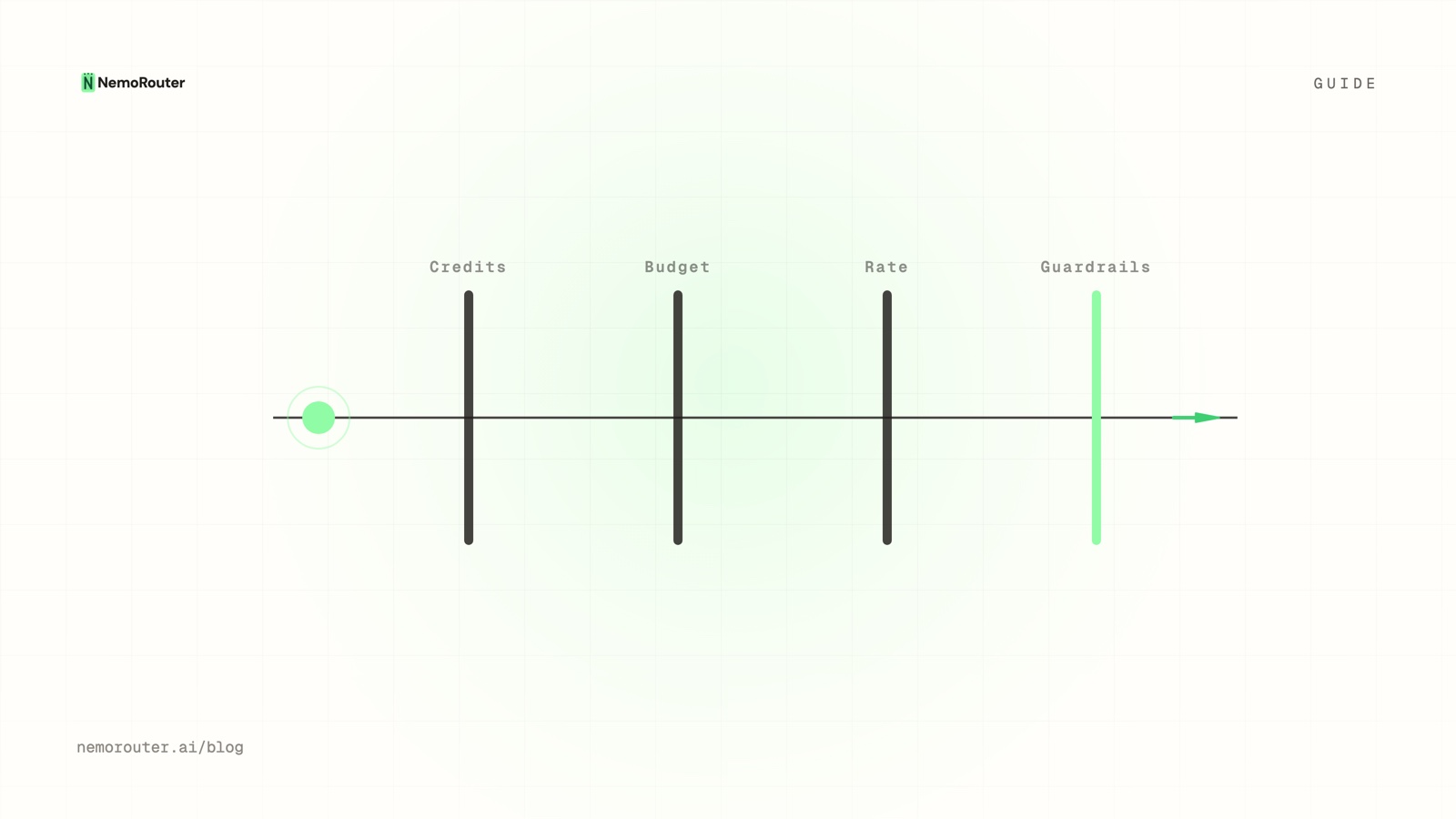
Every request through an LLM gateway clears four independent gates before a provider ever sees it — credit balance, budget cap, RPM/TPM rate limit, and guardrails. Each has its own status code, its own scope, and its own fix.

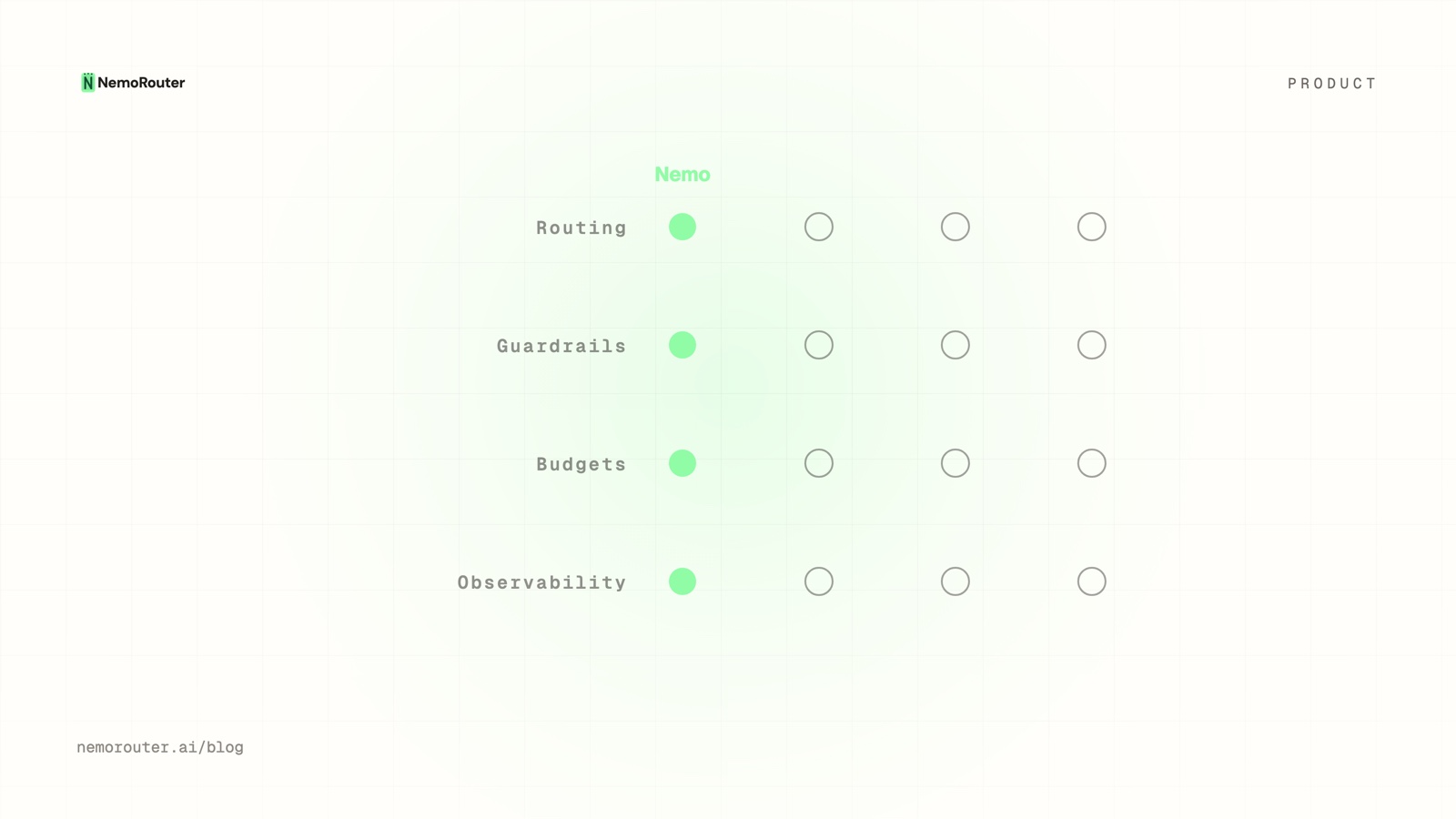
Eight axes that actually matter when picking an LLM gateway in 2026. Shortlist matrix across OpenRouter, Portkey, Helicone, nRouter. Decision tree by buyer profile, 90-minute evaluation.