

Engineering
Secure LLM Gateway: API Keys, Tool Calls, and JSON Validation
Learn how a secure LLM gateway protects API keys, controls tool calls, validates JSON responses, and helps teams build safer production AI applications.
Suresh
10 minRead →Autonomous AI agents represent the future of software automation, executing multi-step reasoning, external tool calling, and persistent task execution. However, operating agentic architectures in production presents unprecedented infrastructure challenges: compounding latency, recursive execution loops, unpredictable token consumption, and cascading provider rate limits. Resilient agentic infrastructure requires deterministic gateway controls to keep autonomous workflows reliable and cost-contained.
Autonomous agents can become trapped in self-referential loops or hallucinated tool execution chains, consuming thousands of dollars in tokens before developers notice or intervene.
Multi-agent frameworks spawn hundreds of parallel subagents simultaneously, overwhelming standard HTTP client pools and triggering provider 429 rate limit errors.
In sequential tool-calling workflows, proxy delays accumulate at every reasoning step, causing multi-agent workflows to experience unacceptable end-to-end execution times.
Agents ingesting untrusted web content or database records are vulnerable to indirect prompt injections that can hijack agent reasoning and trigger unauthorized tool execution.
High-throughput socket multiplexing preventing TCP connection exhaustion during parallel agent swarms.
Guarantees each agentic step holds exact funds prior to execution, preventing runaway overdrafts.
Scans external tool responses for indirect prompt injection vectors before feeding them back to model context.
nRouter is engineered specifically to power high-concurrency agentic workflows. Built in asynchronous Rust, the gateway effortlessly sustains massive spikes in parallel requests from multi-agent frameworks like LangGraph, AutoGen, and CrewAI. Preflight Phase 4 credit holds enforce per-key budget caps, instantly halting recursive loops if spend thresholds are breached. In-path guardrails inspect both initial prompts and incoming tool execution outputs for adversarial injections, safeguarding autonomous agent autonomy without sacrificing performance.
Discover how engineering teams build reliable, cost-controlled coding assistants, autonomous research agents, and customer support swarms with nRouter.
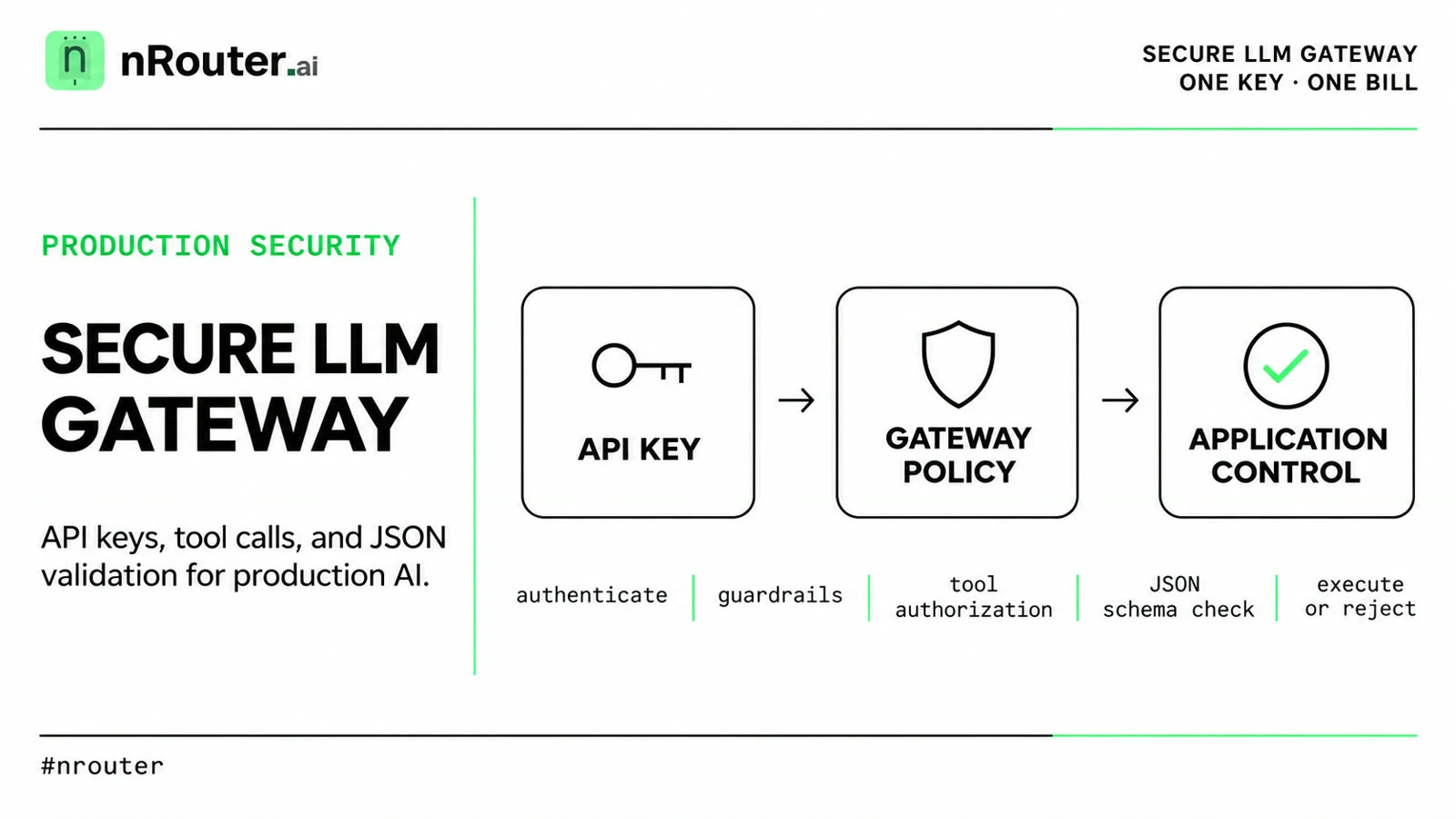
Learn how a secure LLM gateway protects API keys, controls tool calls, validates JSON responses, and helps teams build safer production AI applications.
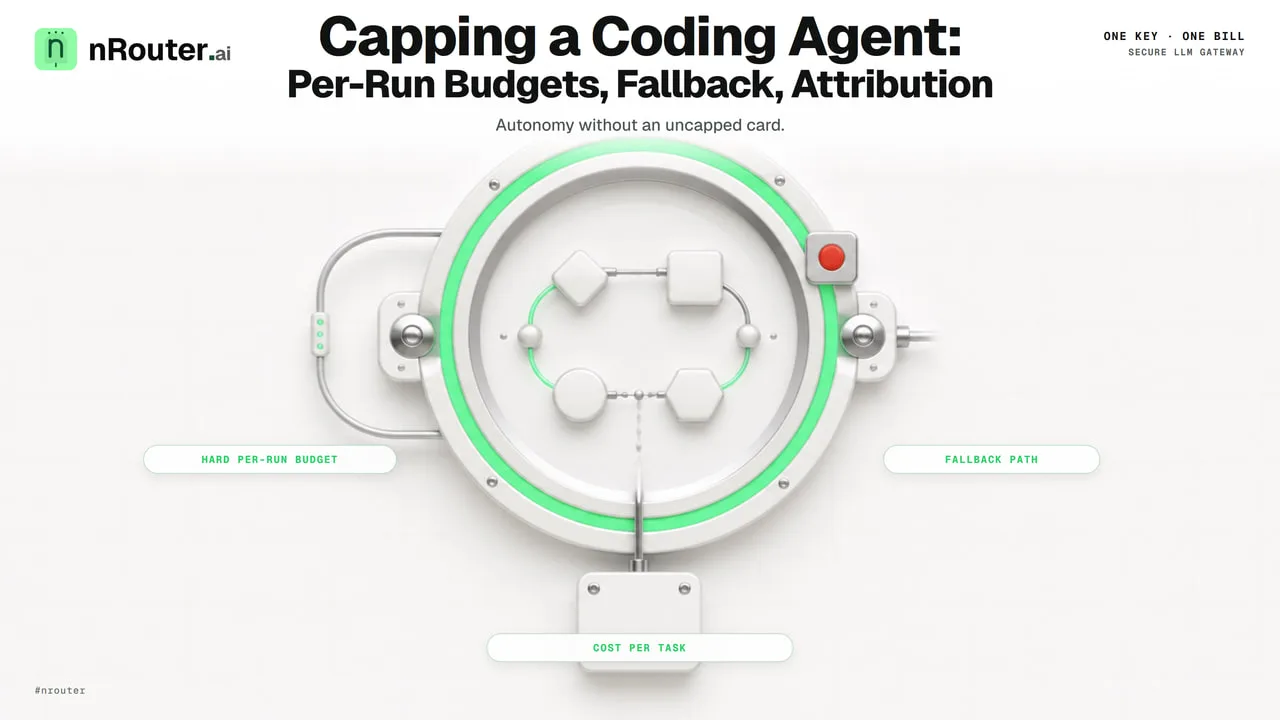
A coding agent turns one task into hundreds of model calls. Here is how a gateway gives each run a hard ceiling that holds under burst, a fallback path that does not strand a half-finished edit, and a cost you can read per task.
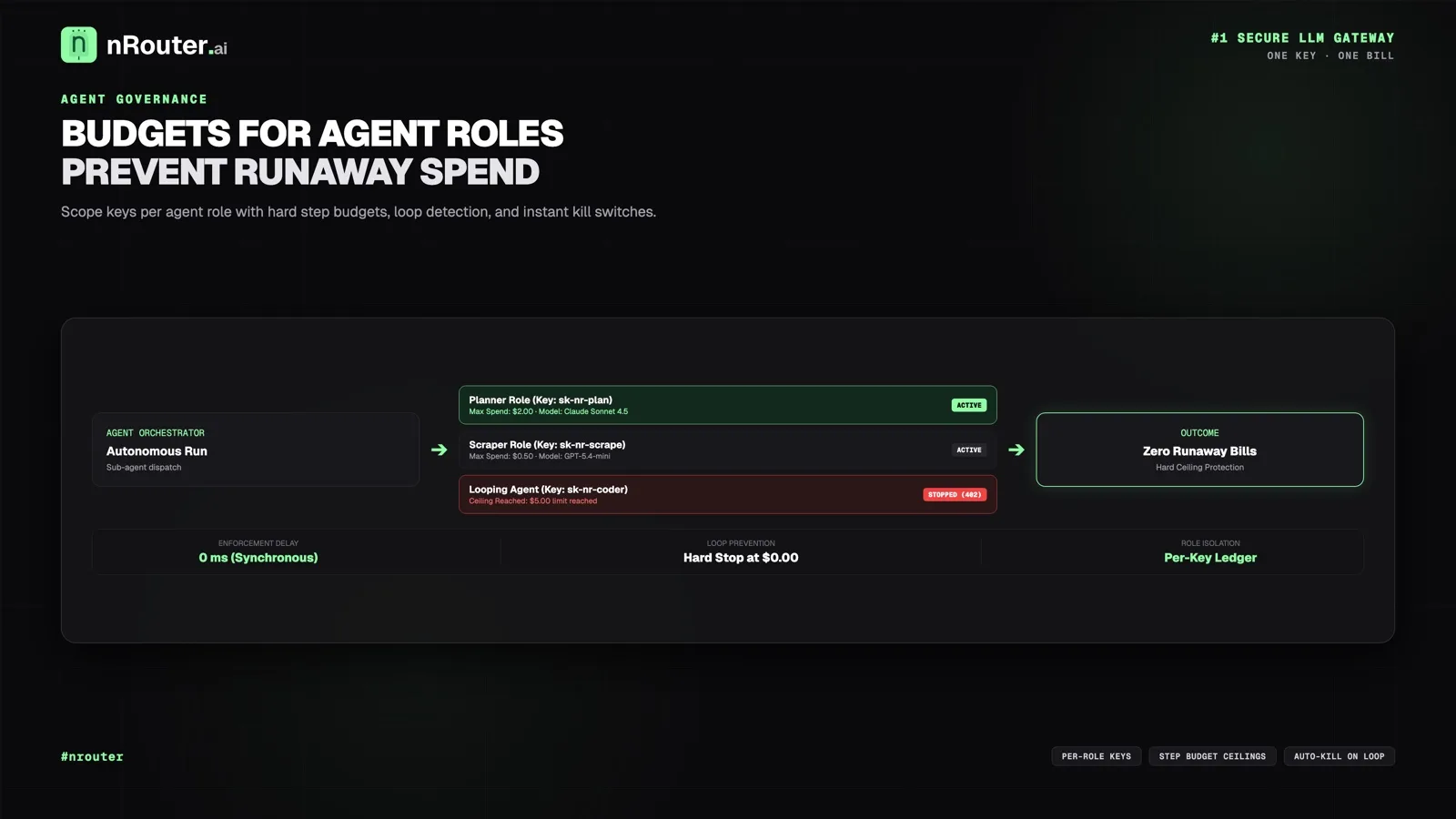
An agent sends hundreds of calls without a human in the loop, so the loop bug you have not written yet is a billing event. Give each agent role its own key with its own rate ceiling and spend cap, enforced at the gateway rather than in the agent code that has the bug.
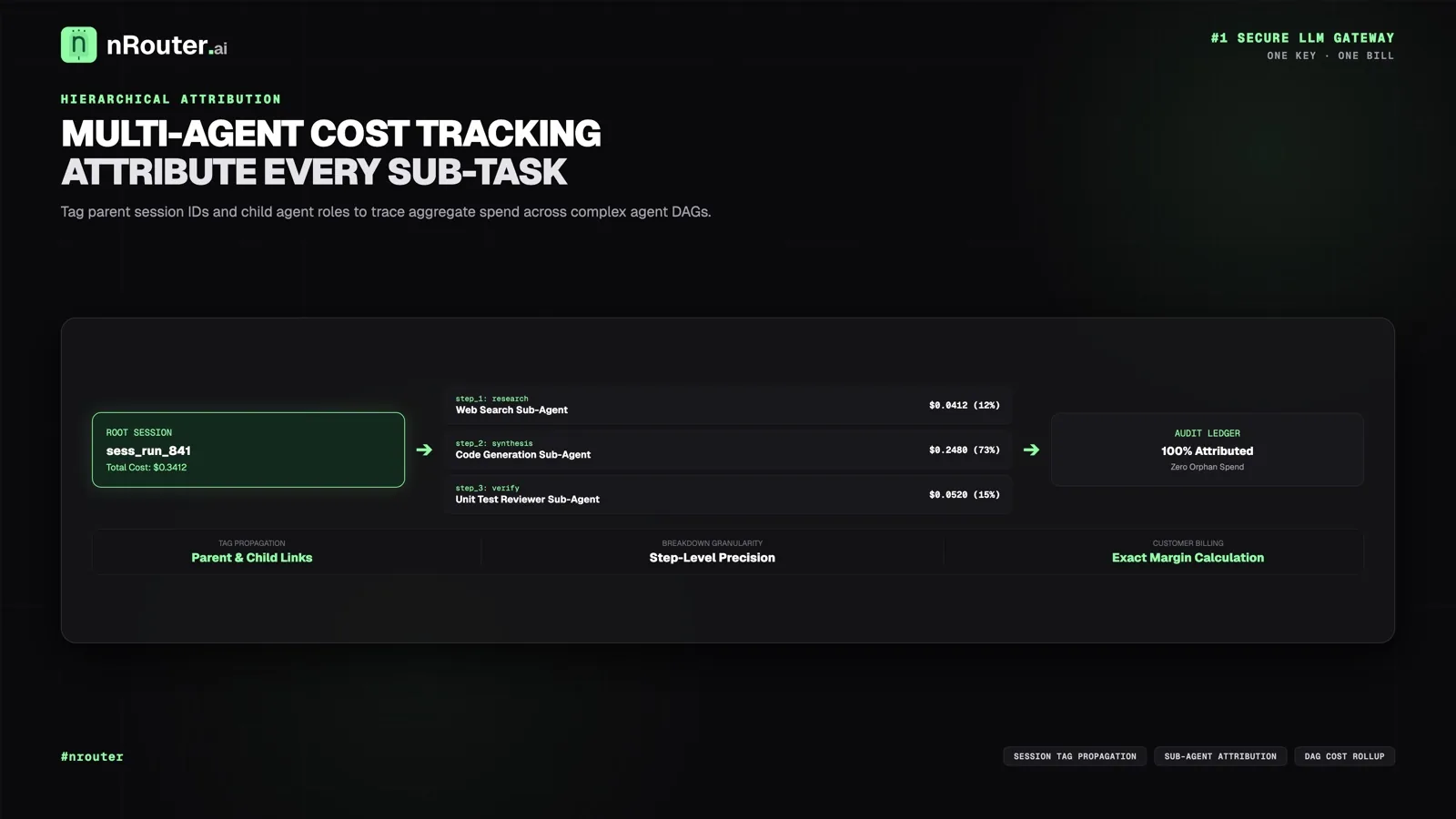
Attribute LLM spend across multi-agent workflows by role, run, and step, reconcile usage against the credit ledger, and enforce hard gateway budget caps.
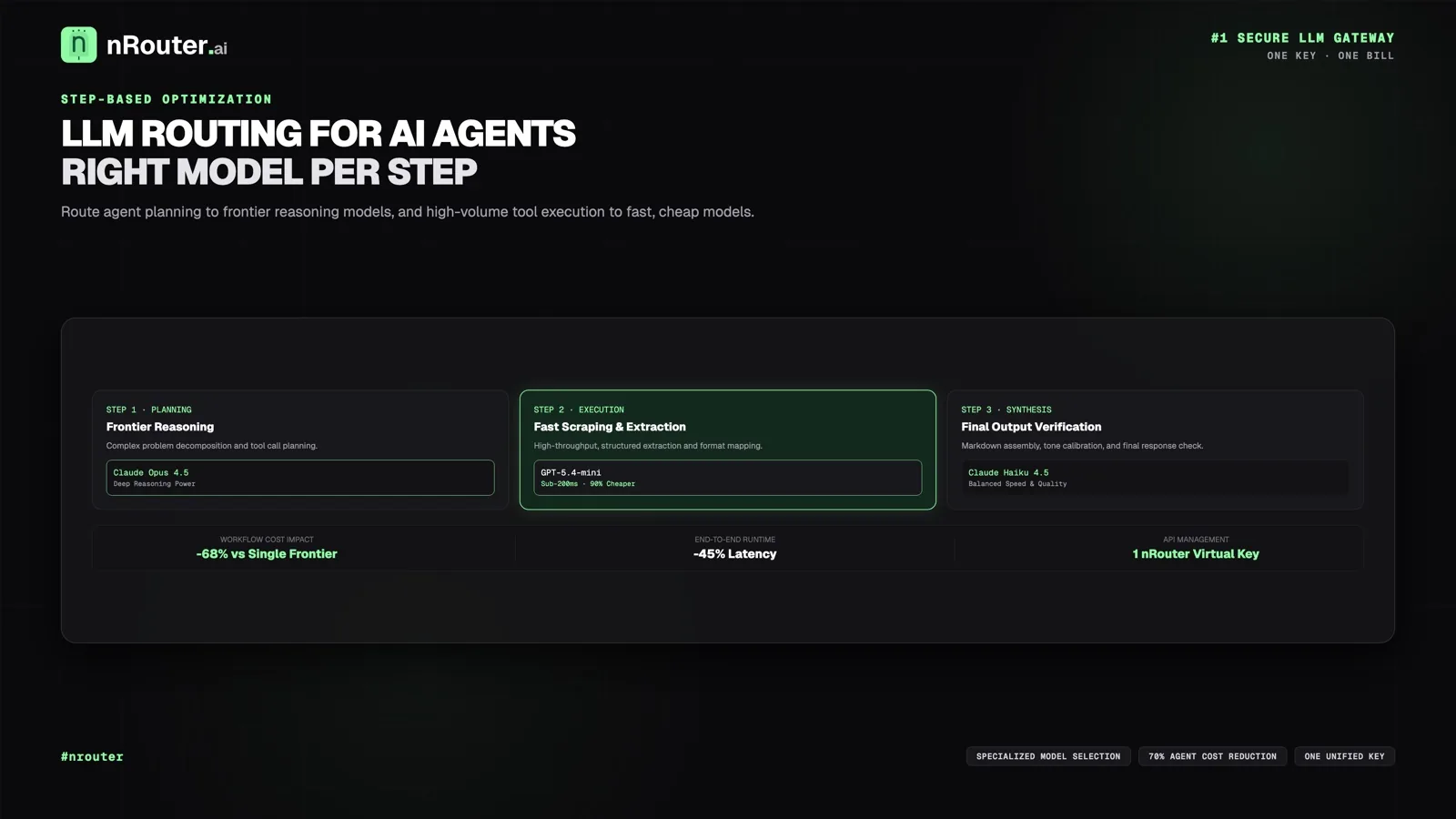
Route each agent step to the model that fits its complexity, survive mid-chain provider outages, and capture one settled cost per run with an LLM gateway.